If you couldn't get time off over Christmas, January is a good month for an aurora trip. Once the December 24, 2026 full moon passes, dark skies return in the first week of January, and by mid-month the sun starts to peek over the horizon again even in Tromsø.
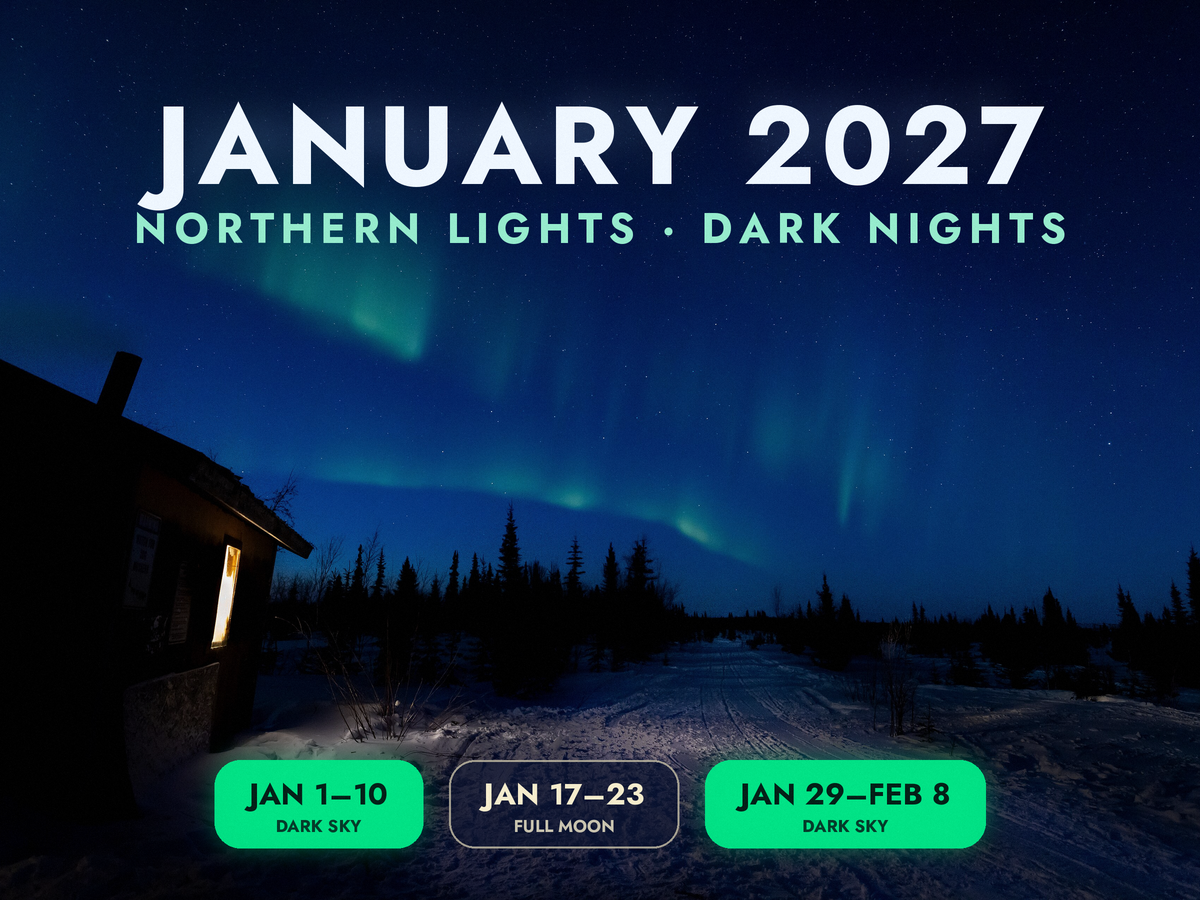
Here's the short answer. If your dates are flexible, start with the nights of January 1–10 and January 29–February 8, 2027. From January 17–23, a bright moon stays up for the entire dark part of the night. Below I also cover what's different about January: when polar night ends, how much darkness you still get, and how to keep your phone working when it's −25°C outside.
The January 2027 moon schedule
All times are in UTC.
- Full moon: December 24, 2026, 01:28
- New moon: January 7, 2027, 20:24
- Full moon: January 22, 12:17
- New moon: February 6, 15:56
The phase alone doesn't tell you much. What matters is whether the moon is above the horizon while it's dark. So for six popular destinations (Tromsø, Abisko, Rovaniemi, Reykjavík, Fairbanks, and Yellowknife), I calculated, night by night, how much of the fully dark period (Sun more than 18° below the horizon) has the moon below the horizon. Dates refer to the evening the night begins.
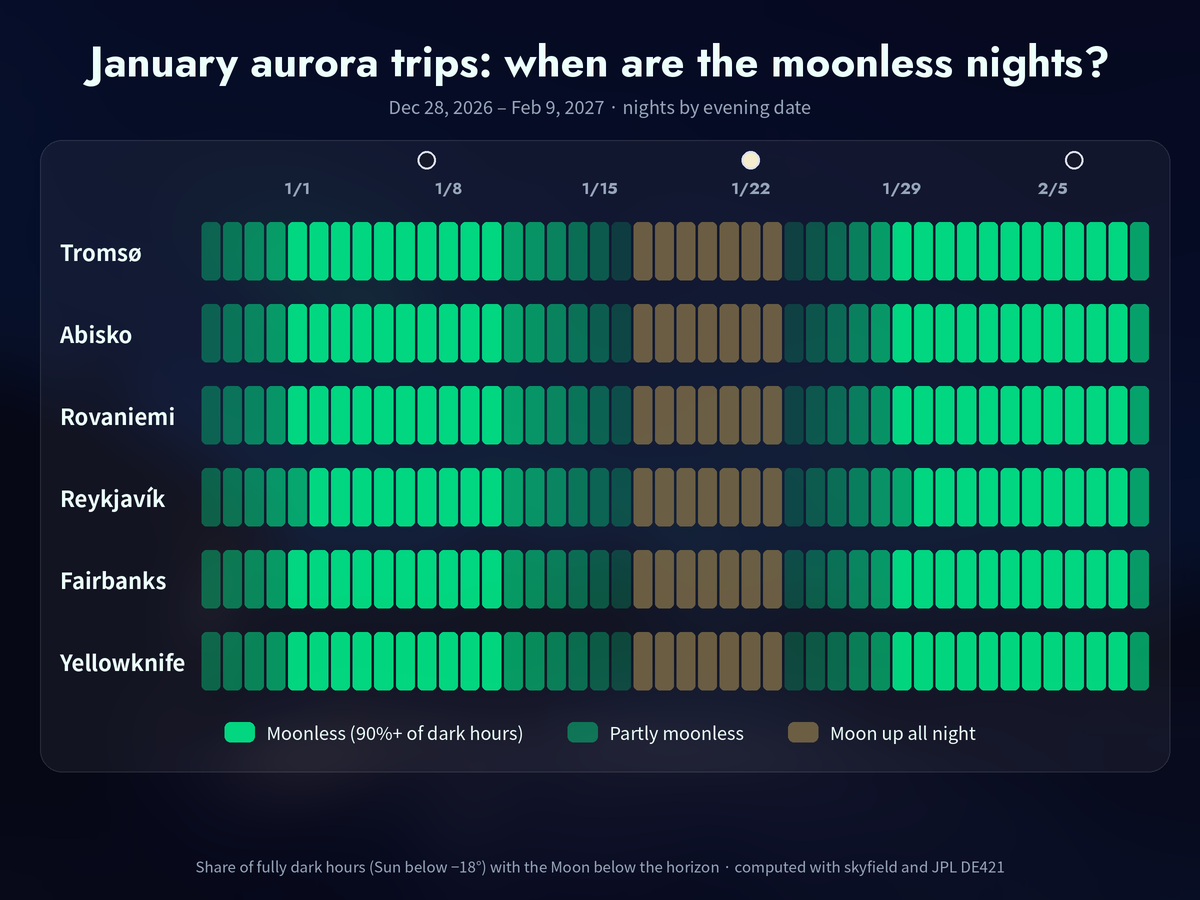
Best nights: moonless for 90%+ of the dark hours
- January 1–10 (from the 2nd in Reykjavík)
- January 29–February 8 (from the 30th in Reykjavík)
Nights with the moon up the whole time it's dark
- January 17–23 (all six destinations)
The nights in between, January 11–16 and January 24–28, are only partly dark. In mid-January the moon rises in the evening and sets late; after the full moon it rises later each night. On those nights, plan to be out before moonrise or after moonset.
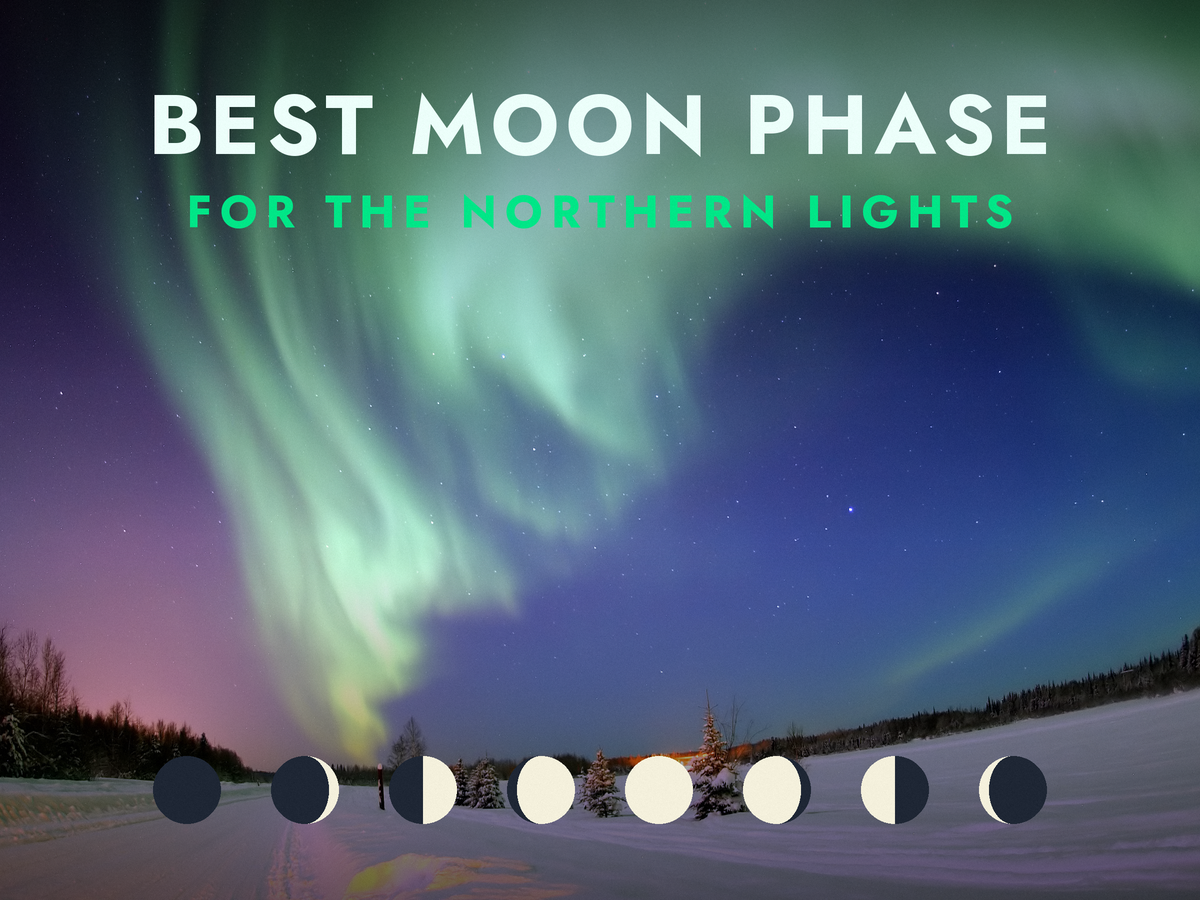
Like December's, the January 22 full moon is a close one. By my calculation the Earth–Moon distance at full moon is about 357,600 km, so it will be a bit brighter than usual. If that week is your only option, work with the moonlight rather than against it. I covered how in the best moon phase to see the northern lights.
Daylight comes back in January, but the nights stay long
January is when the sun returns to the far north. By my sunrise and sunset calculations, polar night ends with the first sunrise on January 7 in Abisko and January 15 in Tromsø. That assumes a flat horizon, so in places surrounded by mountains you may not actually see the sun for a few more days. Rovaniemi, Reykjavík, Fairbanks, and Yellowknife sit near or south of the Arctic Circle, so they have short days all winter instead of polar night.
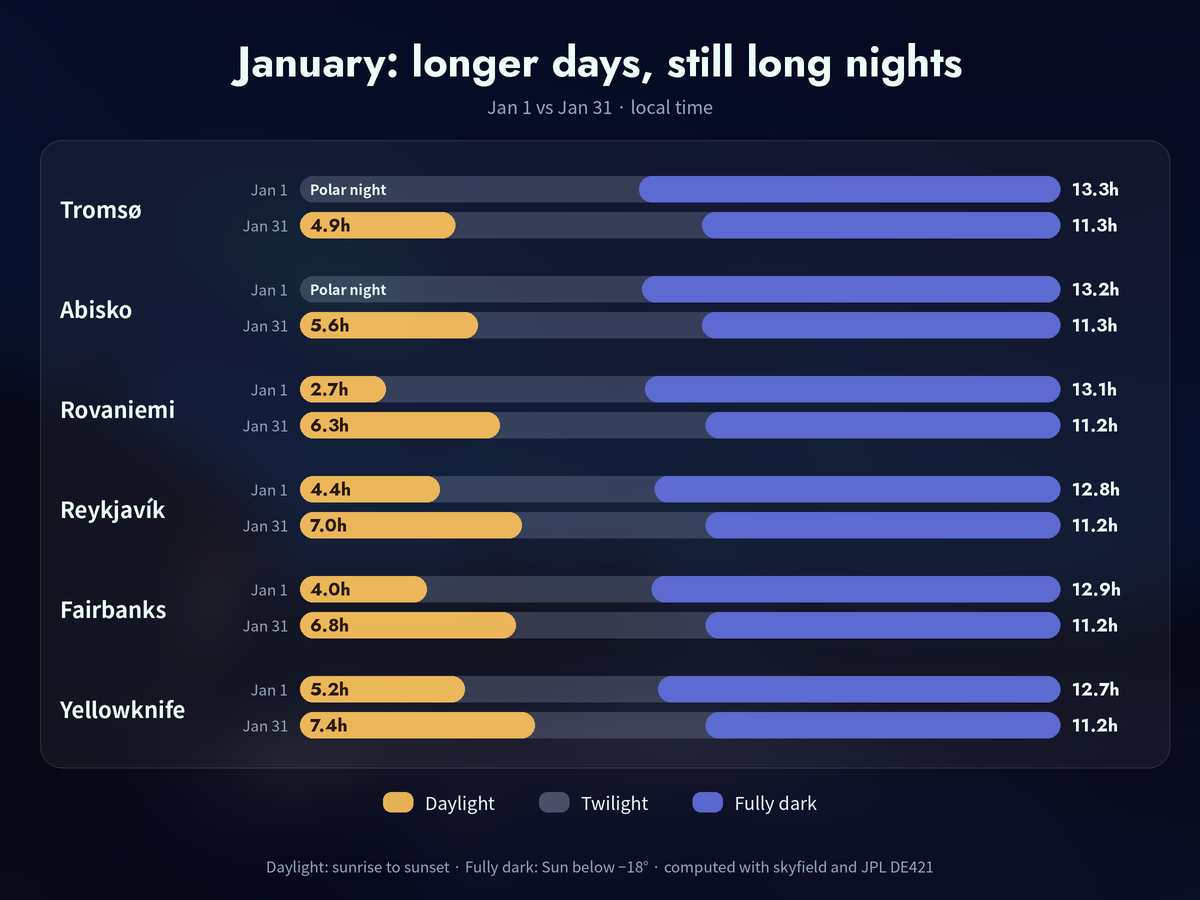
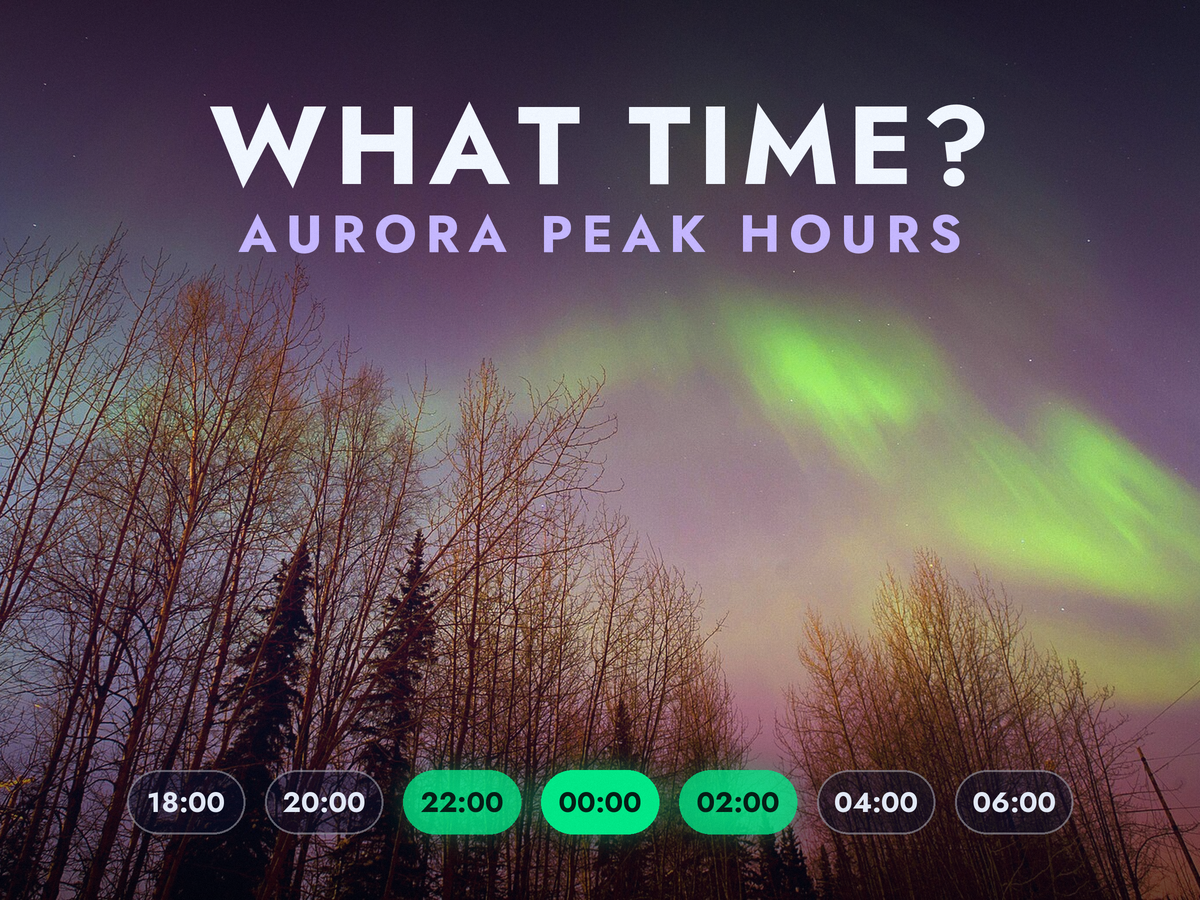
Longer days don't eat into your aurora time much. Full darkness drops from 12.7–13.3 hours on January 1 to 11.2–11.3 hours on January 31, about two hours. The busiest part of the night, around magnetic midnight, is still in the middle of the night: around 23:40 in Tromsø and around 2:20 a.m. in Yellowknife in January. I listed the times for each destination in the best time of night to see the northern lights.
If anything, late January daylight makes the trip easier. On January 31 the sun rises in Tromsø at 9:30 and sets at 14:25. You can stay out late, sleep in, and still have time for dog sledding or a fjord trip. For more on how polar night and midnight sun shape the season, see planning aurora viewing around polar day and polar night.
The real January variable: the cold
January is deep winter, but how cold it gets depends a lot on where you go. Environment and Climate Change Canada's 1991–2020 normals put Yellowknife's January daily mean at −25.5°C (−13.9°F). The Norwegian Meteorological Institute's normal for Tromsø in January is −3.0°C (26.6°F). Same month, same aurora trip, completely different packing lists.
Coastal Tromsø is milder, but its normal January precipitation is 108 mm, so snow and cloud are common. On the coast, booking several nights and picking the clear one matters most. Inland, it's about having the gear to handle the cold.
Your phone will give up before you do
While you wait for the aurora, your phone usually tires out first. Apple says iPhone is designed for ambient temperatures between 0° and 35°C (32° to 95°F). Colder than that, battery life can drop temporarily and the device may turn off, though the battery returns to normal once it warms up. Keep refreshing a forecast in your hand at −25°C and you may have no battery left when the aurora finally breaks out.
Here's what I do on January nights:
- Keep your phone and power bank in an inside jacket pocket, warmed by your body. Take the phone out only to shoot.
- Check the forecast and cloud cover indoors and decide when to head out, instead of opening apps over and over outside.
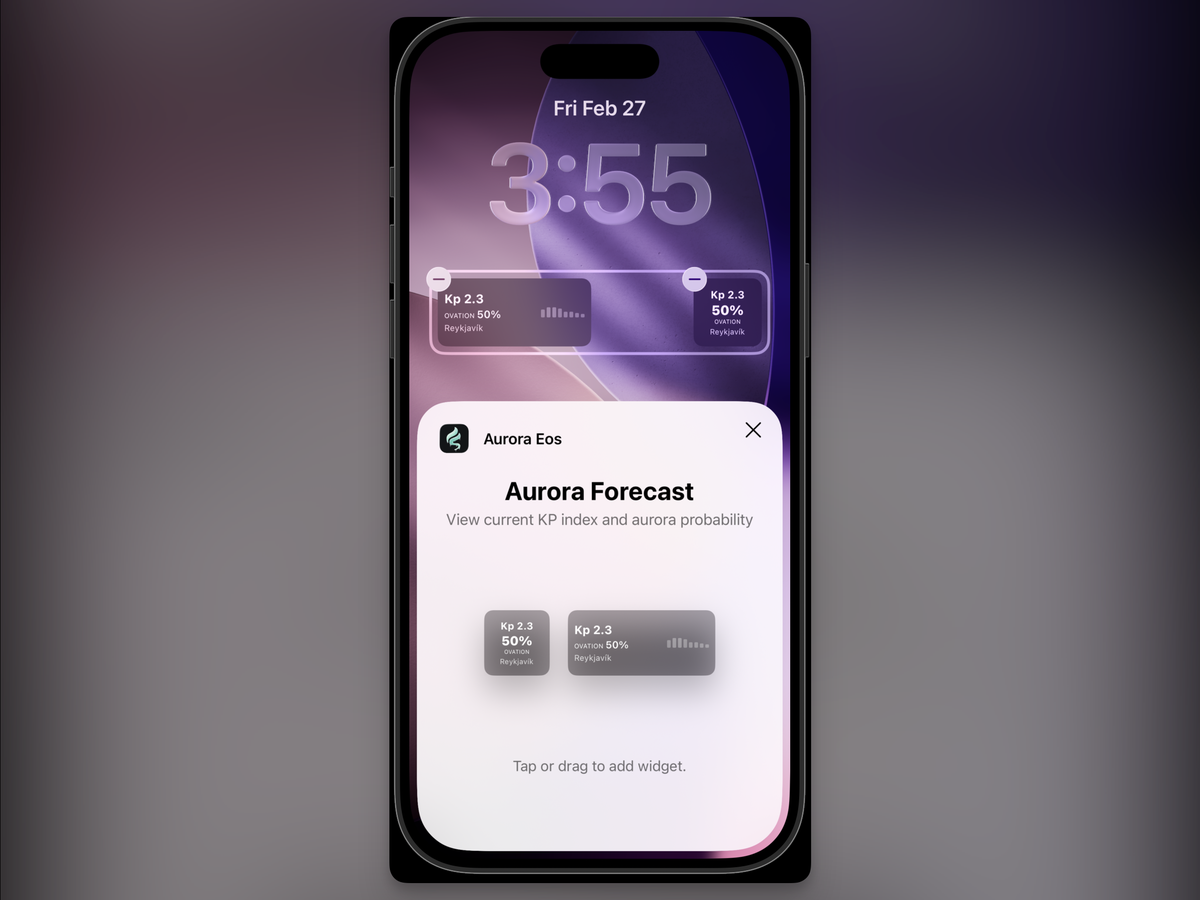
- Outside, glance at a lock screen widget for the Kp index and aurora probability. You can read it with gloves on.
- Take several short shots and put the phone away again. My camera settings are in how to photograph the northern lights with your phone.
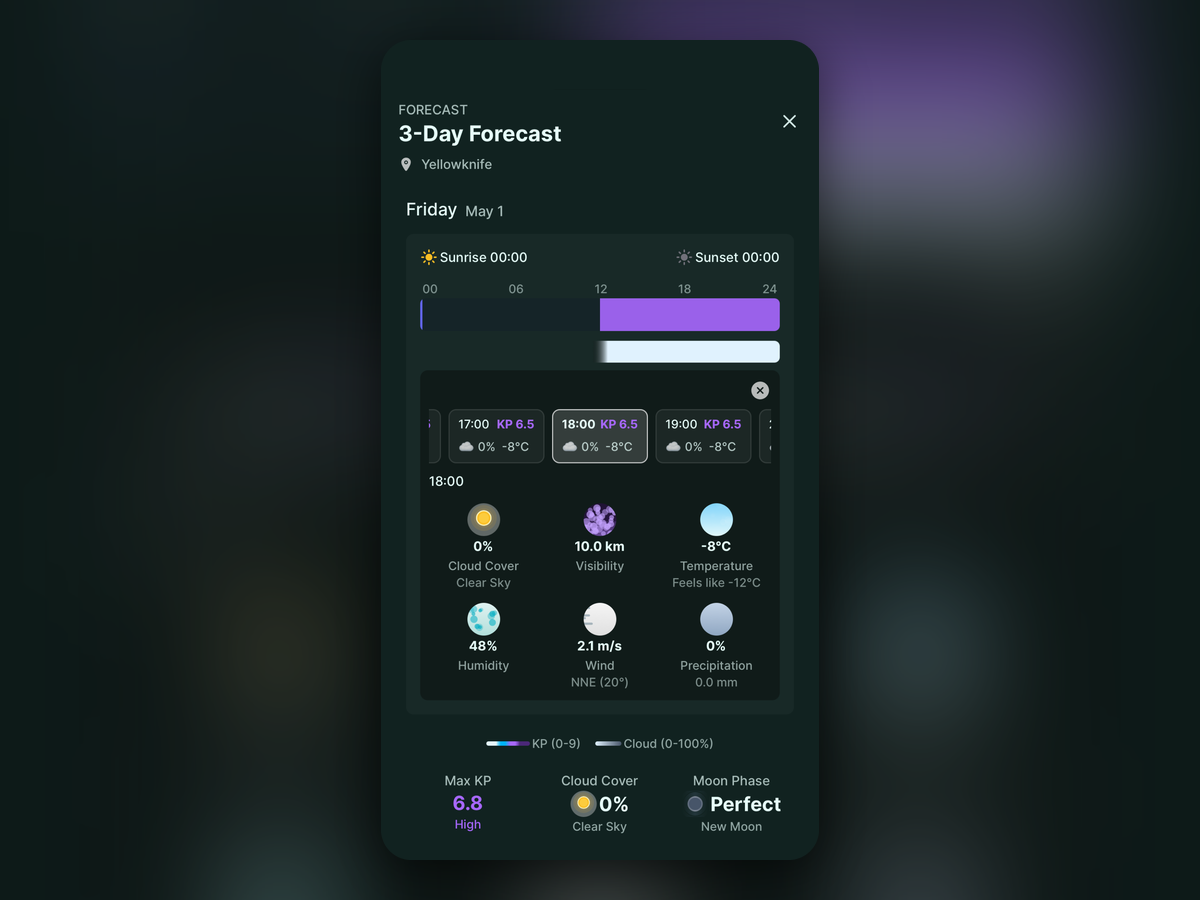
The 3-day forecast in Aurora Eos shows hourly cloud cover and visibility along with the temperature and how cold it feels. I use it to see whether the most active hours overlap with the coldest part of the night, and to decide when to go out and how long to stay. Widget setup is covered in build your own aurora forecast widgets.
Pick your dates by the calendar, your night by the forecast
The moon and the sun can be calculated now, but aurora activity and clouds only become clear close to your trip. A month out, I only check NOAA's 27-day outlook for recurring activity. From three days out, I follow the Kp and geomagnetic storm forecasts. On the night itself, I watch the solar wind and the clouds together.
To see what a given Kp number means where you're going, check what Kp index you need to see the northern lights. Big storms are often forecast days ahead, so turning on geomagnetic storm forecast alerts makes them harder to miss.
Summary
- The longest runs of moonless nights in January 2027 are January 1–10 and January 29–February 8.
- From January 17–23, the full moon is up for all of the dark hours.
- Polar night ends on January 7 in Abisko and January 15 in Tromsø, but every destination still has over 11 hours of full darkness at the end of January.
- January is deep winter. Keep your phone in an inside pocket and check a widget instead of the app outdoors.
For November and December dates, see the best time to see the northern lights in November and December 2026. If you haven't picked a destination yet, start with how to choose a northern lights destination.
Aurora Eos is 30% off through March, the end of aurora season. Don't miss the lights.
Sources
- Apple Support — If your iPhone or iPad gets too hot or too cold: 0–35°C operating range, temporarily shorter battery life in the cold
- Environment and Climate Change Canada — Canadian Climate Normals 1991–2020: Yellowknife Airport January daily mean −25.5°C
- Yr (Norwegian Meteorological Institute) — Tromsø statistics: January normal temperature −3.0°C, normal precipitation 108 mm
- NOAA SWPC — 27-day Outlook: 27-day geomagnetic activity outlook
- Moon phases, moonless share of the night, sunrise and sunset, and fully dark hours: my own calculations with the NASA JPL DE421 ephemeris (Python Skyfield). Magnetic midnight: my own calculation with AACGM-v2 at 110 km
- Cover photo: Wikimedia Commons — Aurora over Paniqsigvik shelter cabin at Selawik National Wildlife Refuge by Lisa Hupp, U.S. Fish and Wildlife Service, public domain, cropped and color graded