When people pick a northern lights destination, the first thing they look at is latitude. The thinking is that the farther north you go, the better your odds. That's not wrong, but between November and March, any city inside the auroral oval has plenty of chances to get an aurora right overhead. What actually ruins most trips is clouds.
It was the same when I saw the aurora for the first time in Canada. A clear sky was rarer than a good aurora forecast. So in this post I'm skipping latitude and comparing six places on weather, travel logistics, the moon, and how many nights you should stay.
From November to March, dark hours are about the same everywhere
You need a properly dark sky to see the aurora. Once the sun drops more than 12 degrees below the horizon, most auroras are easy to spot. Using that threshold, I calculated the dark hours per day for six cities, based on the 15th of each month.
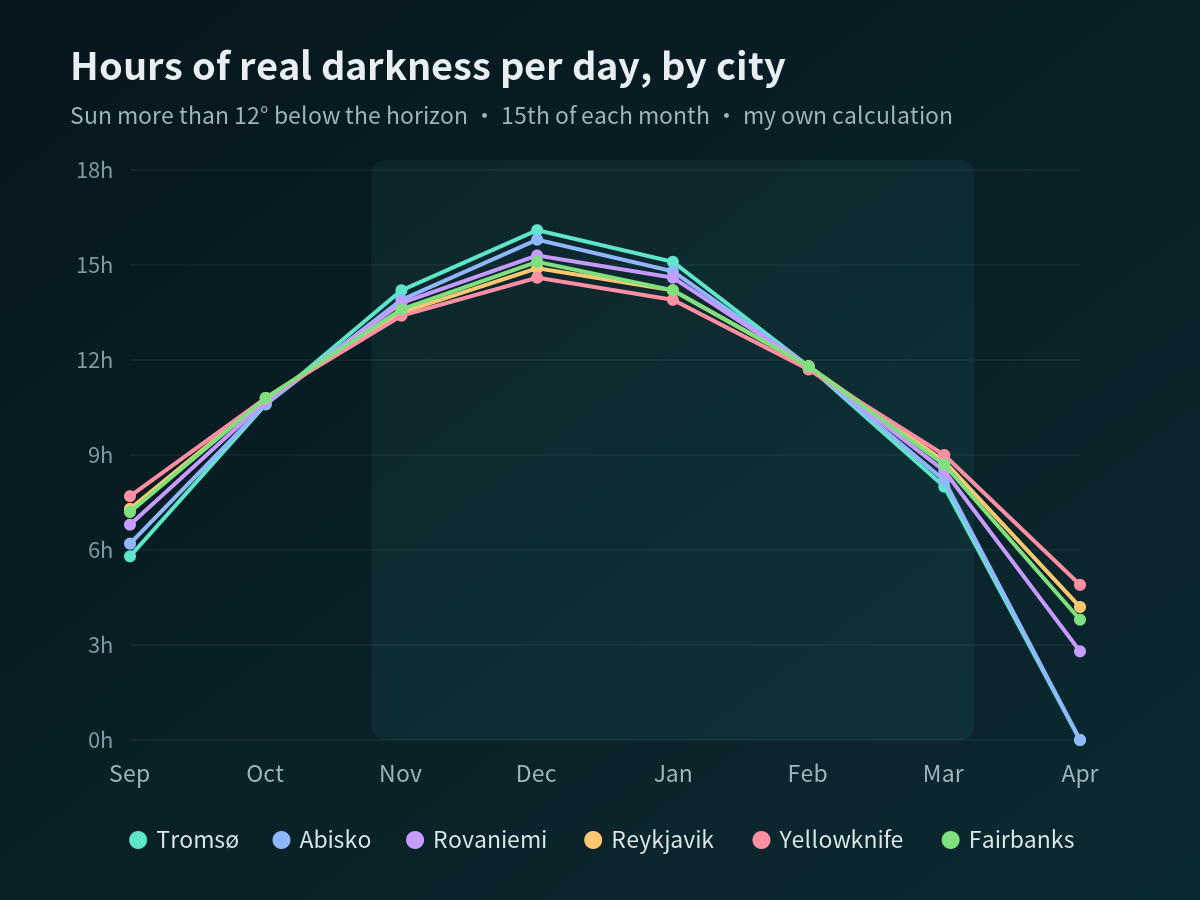
In December, Tromsø gets about 16 hours and Yellowknife about 14.6 hours, a gap of a bit over an hour and a half. November, January, and February don't differ much between cities either. By mid-April, though, truly dark nights almost disappear in Tromsø and Abisko. In other words, the farther north the city, the earlier its season ends, not the later.
So from November through early March, you'll get enough darkness in any of these cities. If you're going in late March or April, pick somewhere a little farther south, like Yellowknife or Reykjavik. I wrote more about how dark hours change through the seasons in Planning Your Aurora Viewing Season Around Polar Day and Polar Night.
Comparing the six places on weather and travel
All six sit inside the auroral oval, the band where auroras show up most often, or right on its edge. The three Scandinavian spots are close to each other, Iceland is out in the middle of the Atlantic, and Yellowknife and Fairbanks are in the North American interior. From the US, Fairbanks is a domestic trip (no passport needed) and Yellowknife is a short hop via Canadian hubs like Calgary, Edmonton, or Vancouver. Scandinavia and Iceland both mean a transatlantic flight, with Iceland being the closest from the East Coast.
Tromsø (Norway)
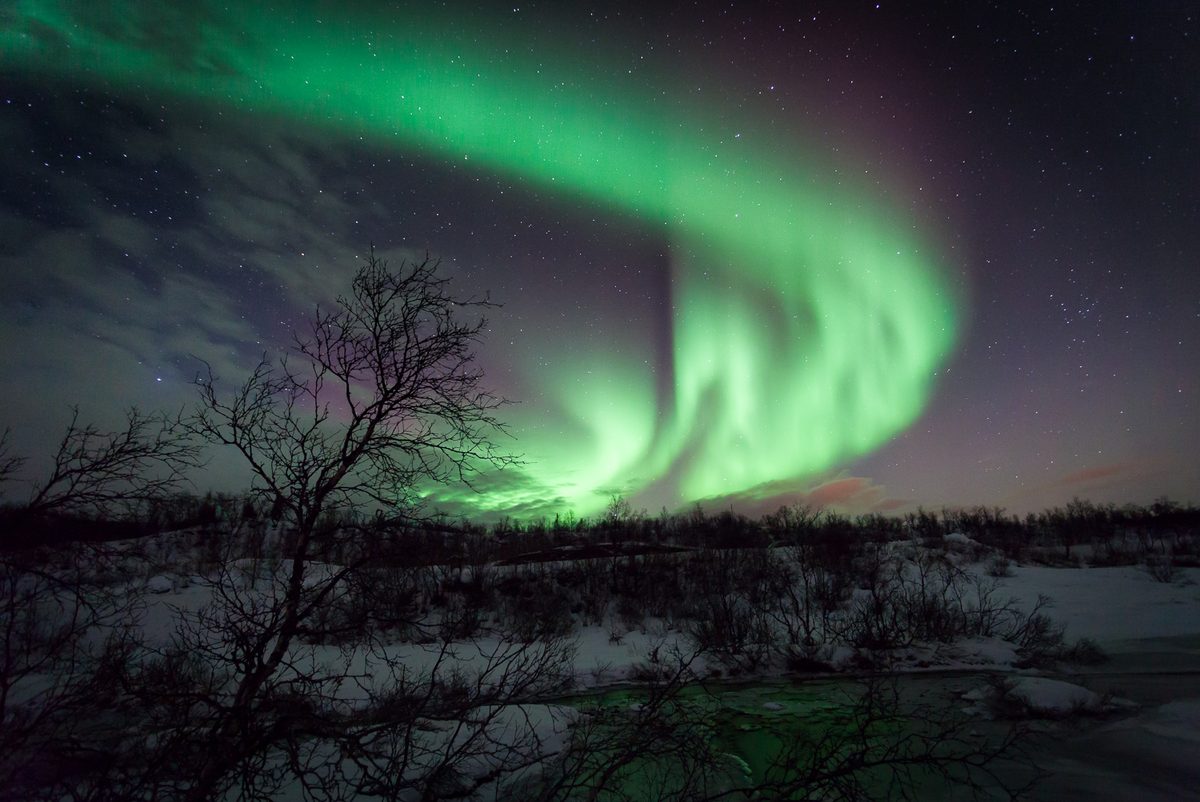
At 69.6 degrees north, the city itself sits right in the middle of the auroral oval. The airport is close to downtown and there are lots of tours, which makes it easy for first-timers. The downside is that it's a coastal city, so it's often cloudy. That's why people in Tromsø drive inland or toward the Finnish border every night. If you're planning to rent a car, think first about whether you're comfortable driving coastal roads in winter. From late November to mid-January it's polar night and the sun doesn't rise, so even midday only gets a brief bluish glow.
Abisko (Sweden)
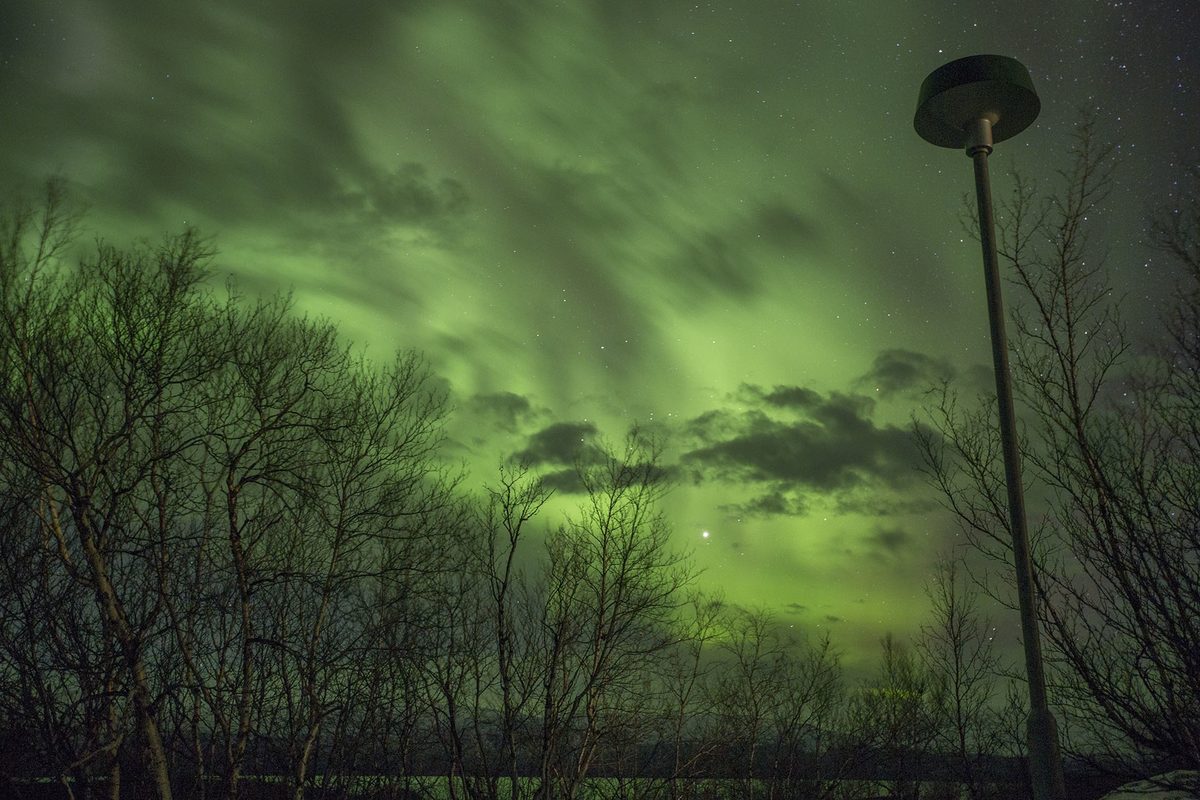
It's a small village just over the mountains east of Tromsø. The surrounding mountains block clouds coming in from the sea, and people have said for a long time that it has clearer skies than the area around it. The Aurora Sky Station up on the mountain is the famous attraction. There aren't many places to stay or eat, which keeps your itinerary simple, for better and for worse. You get there via Kiruna Airport or from Tromsø, and you need to line up train or bus times in advance.
Finnish Lapland (Rovaniemi, Saariselkä, Levi)
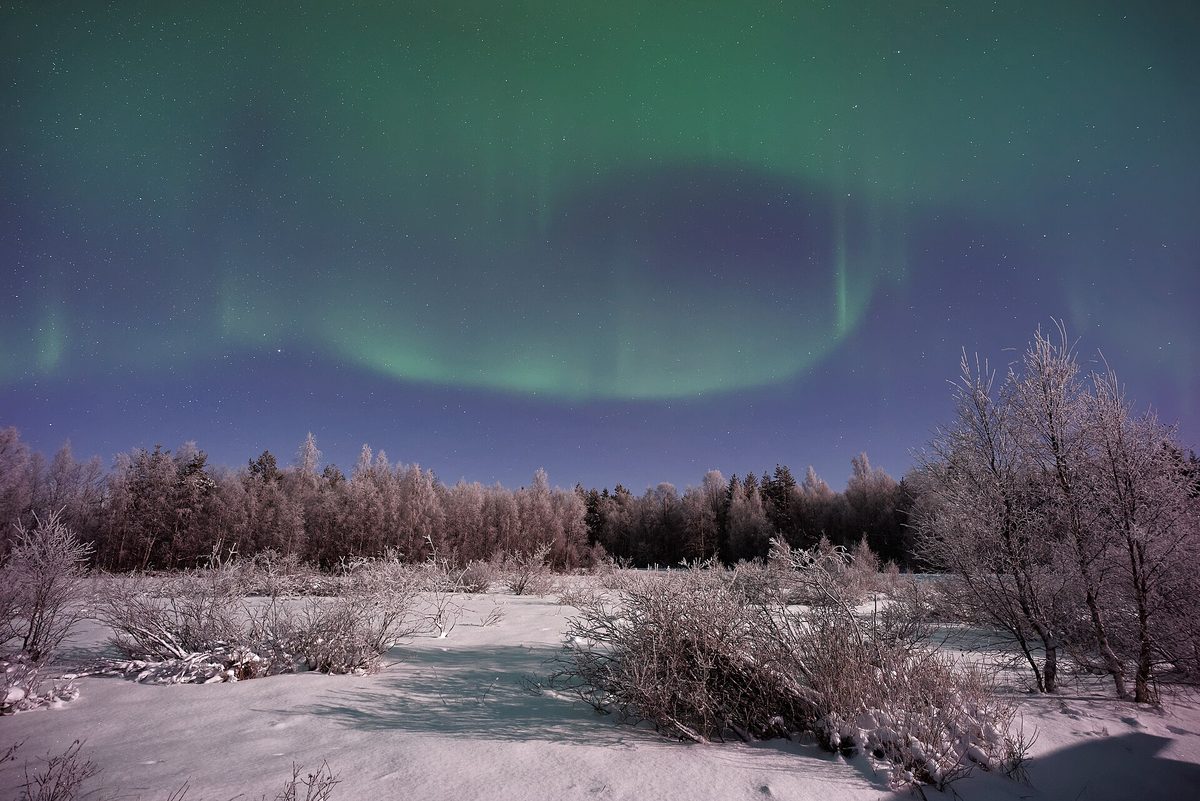
It's inland, so the weather is less moody than on the coast, but it's a lot colder. -4 to -22°F (-20 to -30°C) isn't unusual. Rovaniemi is a city with light pollution, so the sky is darker if you head north to Saariselkä or Levi. There are plenty of ways to wait in the warm, like glass-roof cabins, so it works well for trips with parents or kids.
Iceland
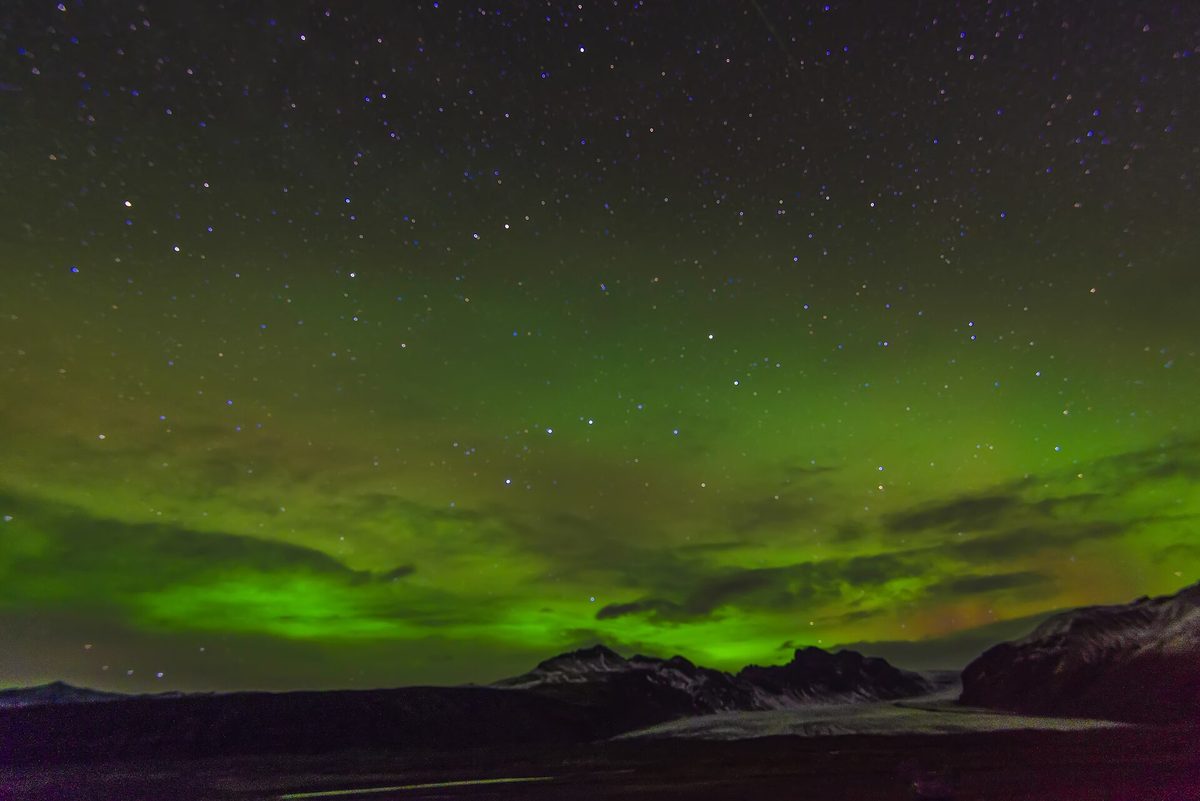
By latitude, Reykjavik sits on the southern edge of the auroral oval. On nights when the aurora is active you can see it from the city, but the weather changes several times a day and it tends to be cloudy. On the other hand, there's an overwhelming amount to see during the day. It's less of an aurora-only trip and more of a road trip around the south coast in a rental car, with a clear night as a bonus. Checking the Icelandic Met Office's cloud forecast map gives you a feel for which direction to head that night.
Yellowknife (Canada)
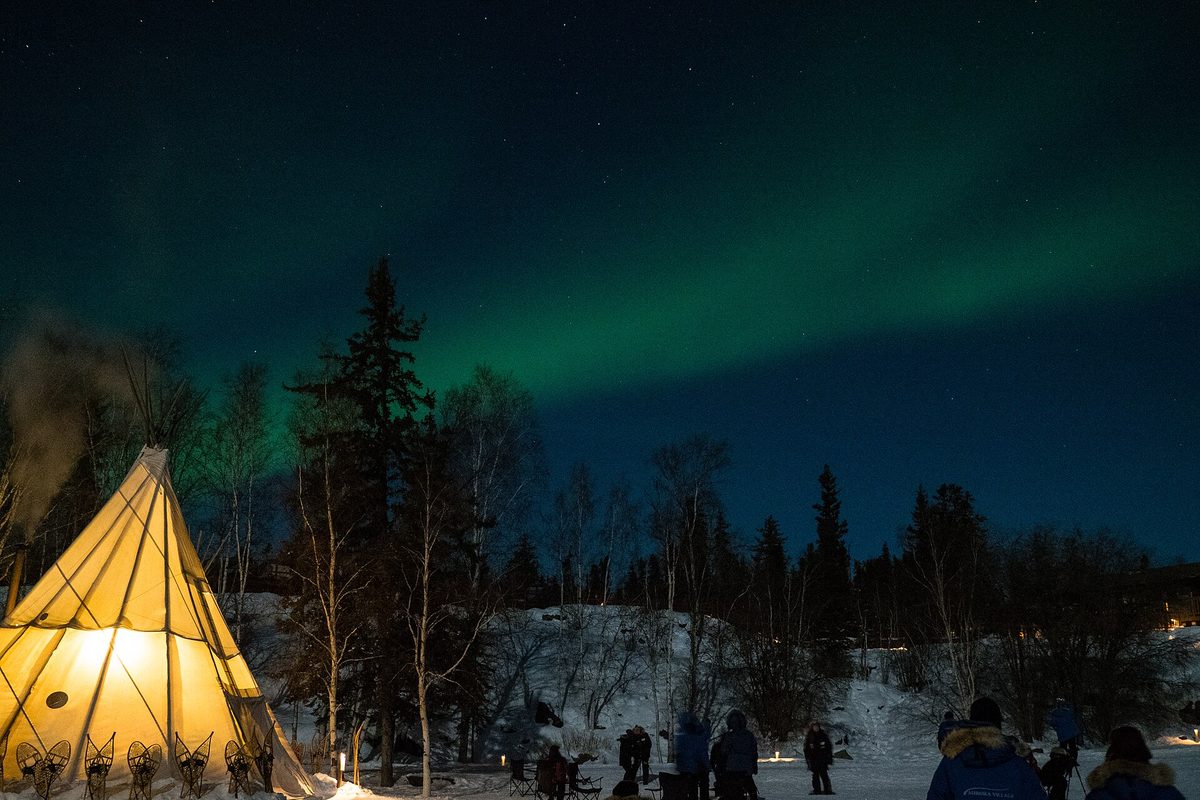
At 62.5 degrees north it's the southernmost of the six, but its geomagnetic latitude is 68.5 degrees, actually higher than Tromsø's. The flat inland terrain means plenty of clear winter days, and it's common to get auroras dancing overhead even on nights with a low Kp. The catch is that midwinter nights drop below -22°F (-30°C). Many tours lend out cold-weather gear, so there's no need to overpack.
Fairbanks (Alaska)
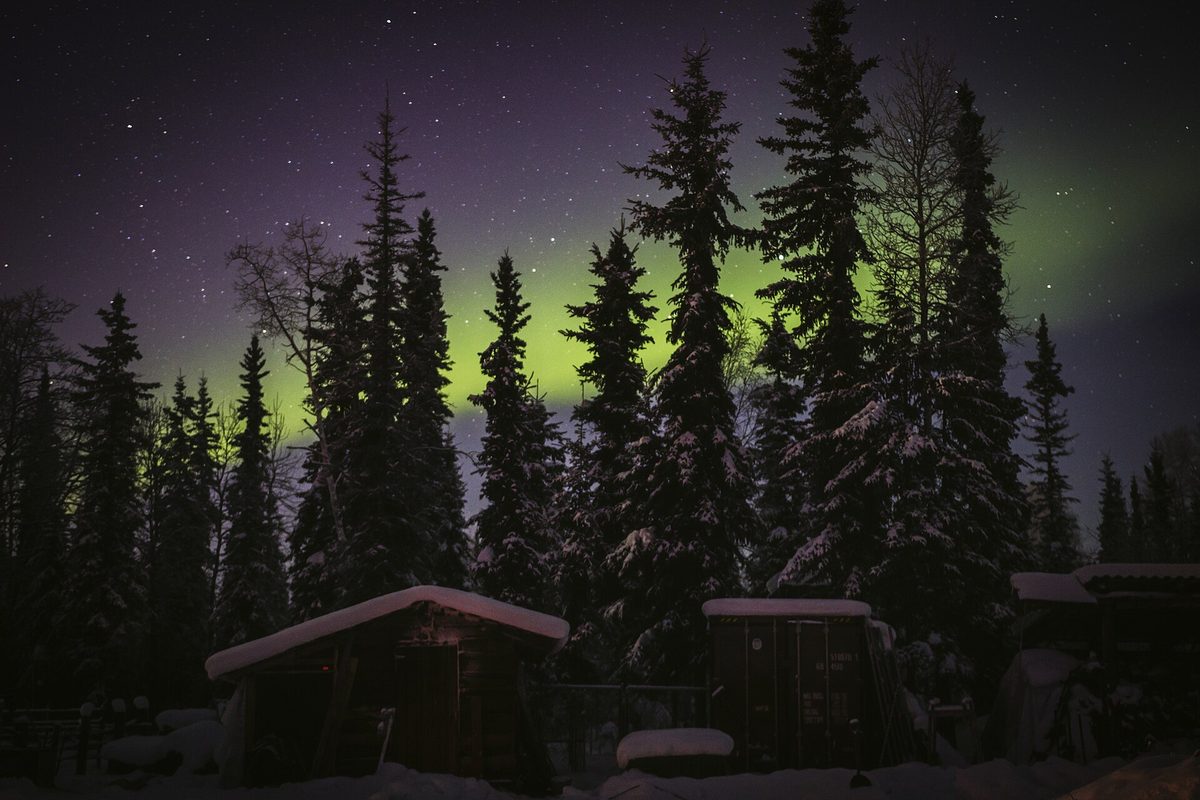
Like Yellowknife, it's inland, so it has lots of clear days and it's cold. It's dark just a short way out of town, and there are options like soaking in the hot springs at Chena while you wait for the aurora. It's also a center of aurora research, to the point that the Geophysical Institute at the University of Alaska runs its own aurora forecast.
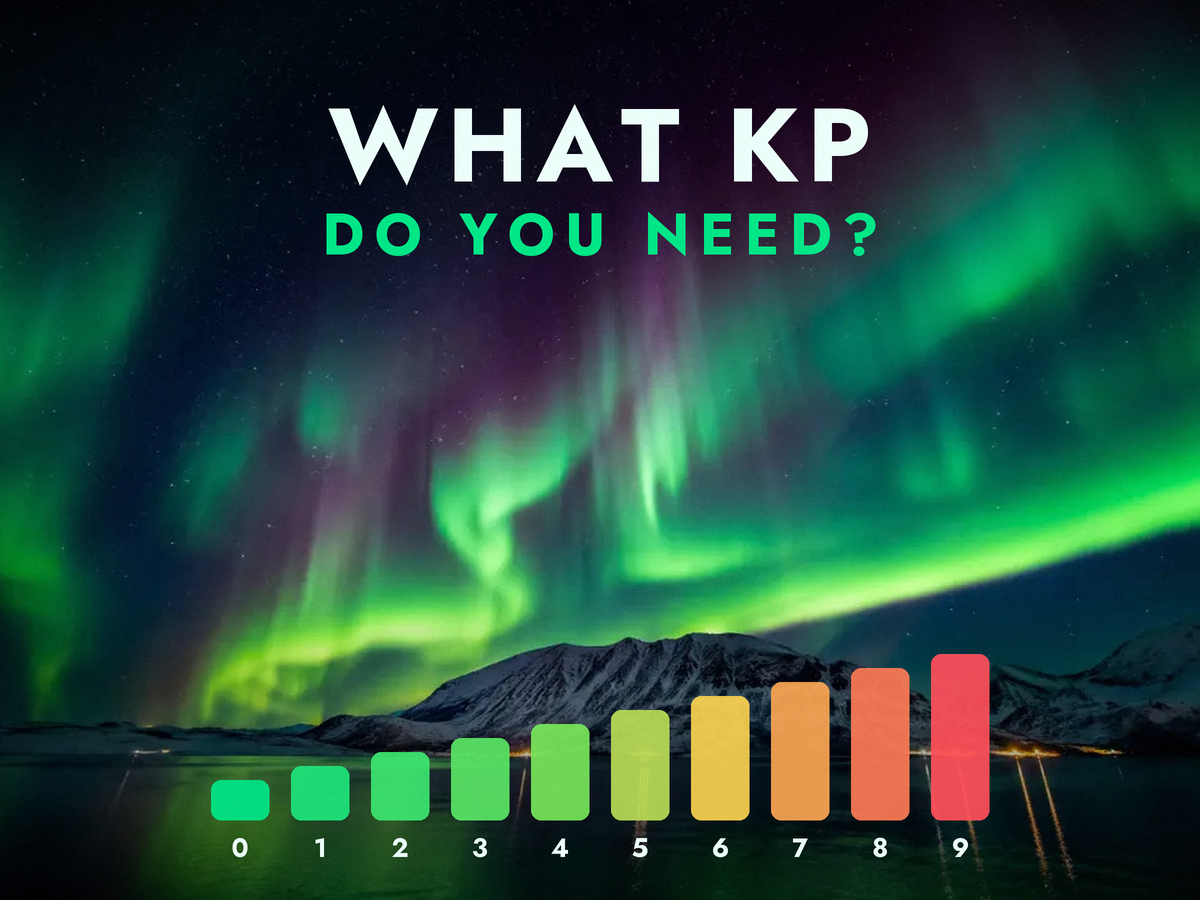
If you ask me where you'll see it best, I tell people to look at the Kp threshold before the region. In Yellowknife and Tromsø there are plenty of nights when the aurora comes overhead even at Kp 0 to 1, while Reykjavik or Rovaniemi need around Kp 2 to see it reliably. I put the thresholds for each city together in What Kp Index Do You Need to See the Northern Lights? Kp Chart by City.
The first dates to cross off your calendar: full moon week
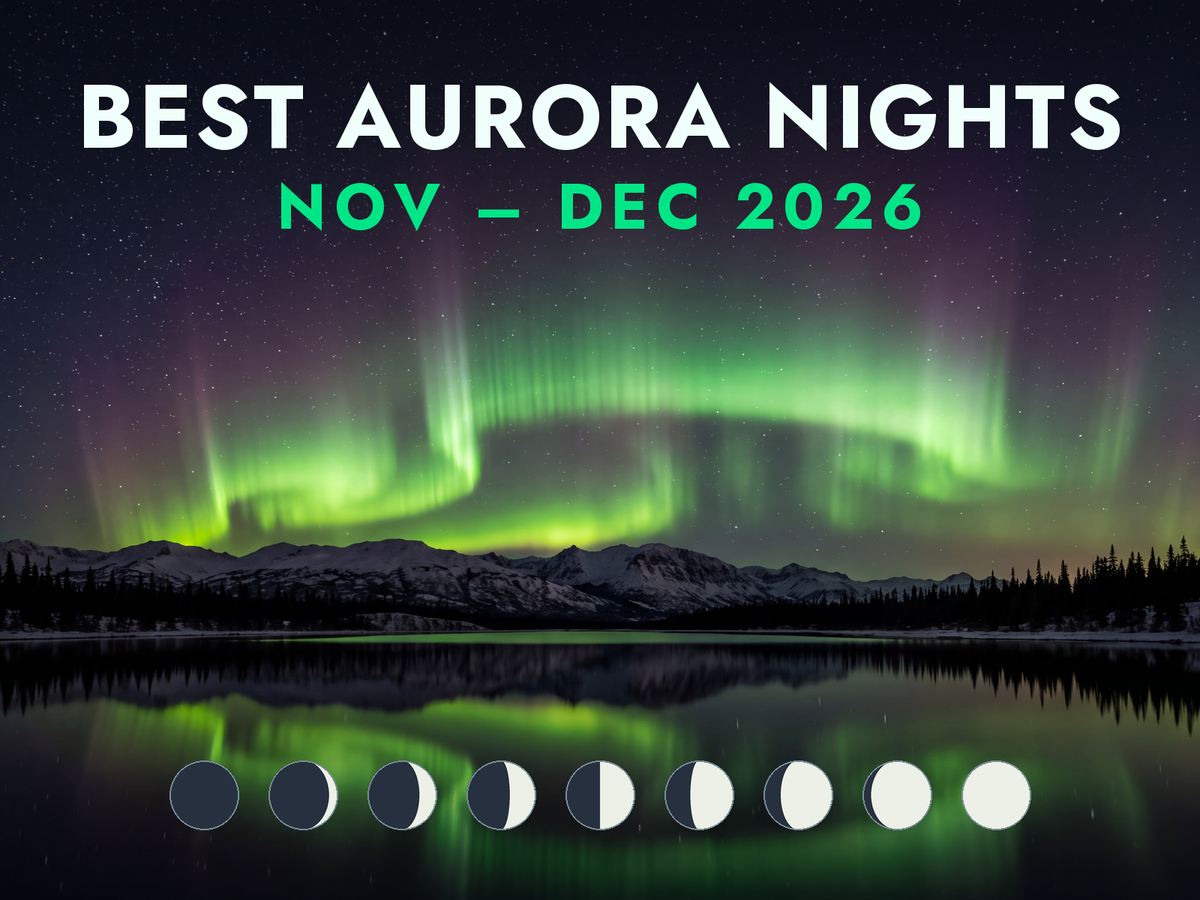
If the darkness is about the same everywhere, the one variable left when picking dates is the moon. For a few days around the full moon, the sky is bright enough to wash out faint auroras and give your photos a hazy sky. New moon weeks are the best time. Here are the full moons and new moons for the 2026-2027 season.
- Full moon: November 24, December 24, January 22, February 21, March 22
- New moon: November 9, December 9, January 7, February 6, March 8
I calculated these dates myself in Norway time, so they may be off by a day in other regions. If you're planning to go over the Christmas holidays, know that Christmas Eve falls right on the full moon this year. I put together a calendar of moonless nights for November and December in Best Dates to See the Northern Lights in November and December 2026.
Late February through March deserves its own mention. Geomagnetic activity tends to pick up around the equinox, and it's less cold than midwinter, so staying out all night is much easier. The reason is the same one I explained in Why Are Auroras More Common Around the Equinox?.
How many nights should you stay?
This is the question I get the most. My answer is at least 3 nights, and 4 or more if you can. If you only plan one night, a cloudy sky that evening ends the trip.
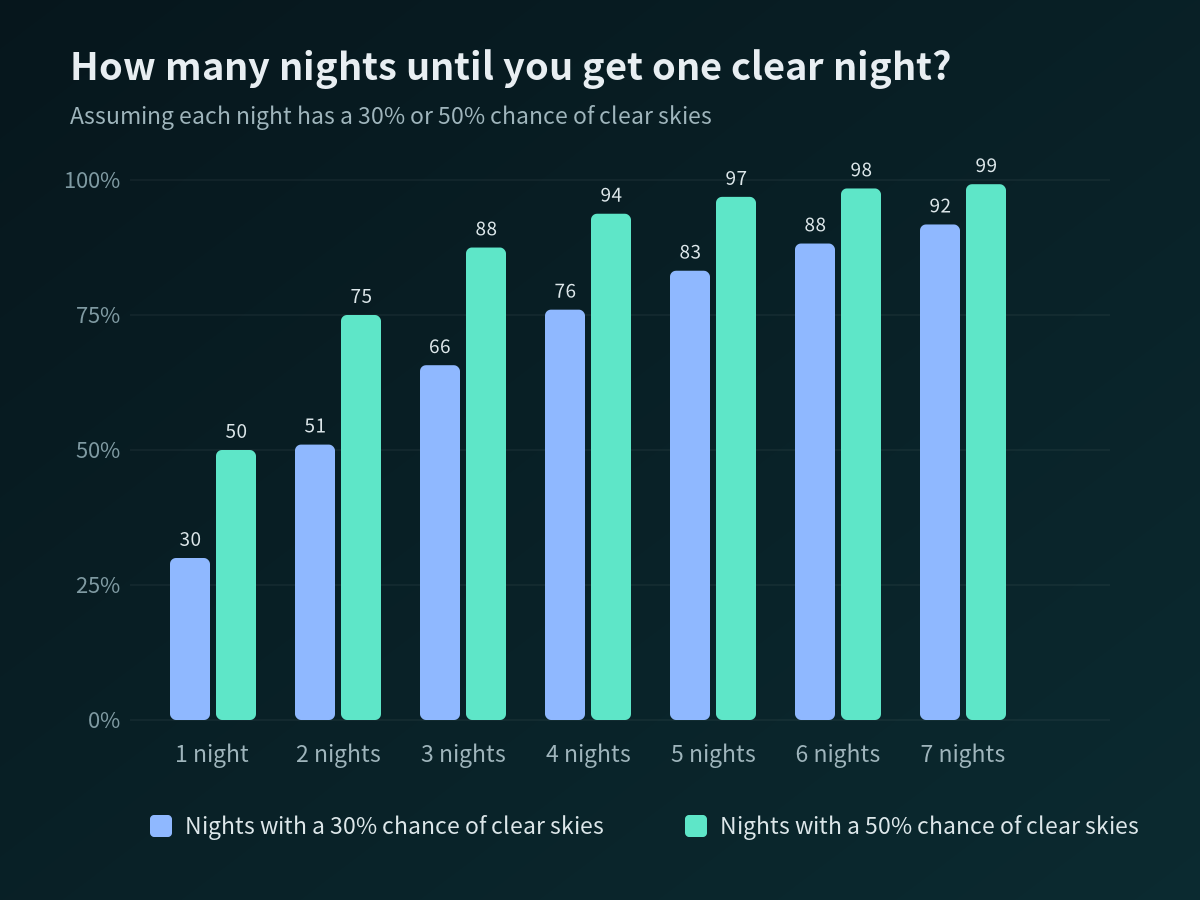
If you assume each night has a fifty-fifty chance of being clear, 1 night gives you 50%, 3 nights 88%, and 4 nights 94%. In a cloudier region where the chance of a clear night is 30%, 3 nights only gets you to 66%, and you need 5 nights to top 80%. In reality weather tends to stick around for days at a time, so it's smarter to be a bit more conservative than this math. The cloudier the place, like Tromsø or Iceland, the longer your trip should be, and at places with lots of clear days like Yellowknife or Fairbanks you can get away with a slightly shorter one.
The order within your trip matters too. You'll be tired from flying on the first night, so skip the ambitious tour and just look at the sky near where you're staying, then decide on tours or rental car drives from the second day on based on the weather. If you pick tours where you can change your booking, you can move around to match the clear nights.
How to pick which night to go out once you're there
Once you've settled on dates and a region, the rest comes down to that night's forecast. In Aurora EOS, I check the viewing conditions on the Earth side along with the aurora conditions first. Clouds, visibility, moon, and dark hours are all on one screen, so I can filter out nights when the aurora is strong but the sky is covered.
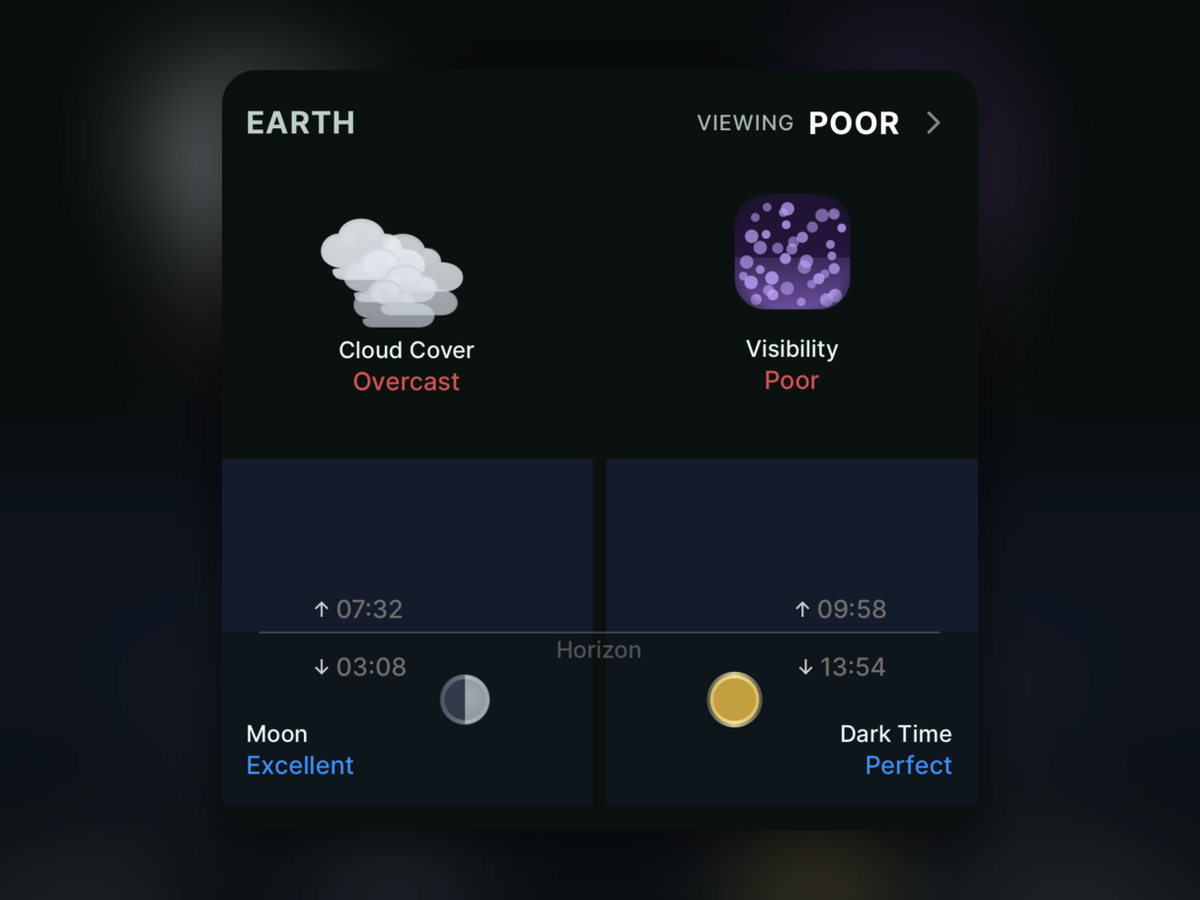
The 3-day forecast shows cloud cover and Kp by the hour, so I use it to decide whether to book a tour for the next day or take a night off. If you're somewhere like Tromsø where you have to move around to find clear skies, it helps to save several viewing spots and compare them. And if you plan to take photos, read How to Photograph the Northern Lights with Your Phone before you leave. More people than you'd think miss the aurora because they're fumbling with settings on site.
FAQ
If I could only pick one place for my first northern lights trip, where should I go?
If the chance of clear nights matters most, go to Yellowknife or Fairbanks. If you also want city conveniences, a variety of tours, and winter scenery, pick Tromsø. If you're worried about the cold or traveling with family, Finnish Lapland is a safe choice.
What month is best for a northern lights trip?
From November to early March there's plenty of darkness, so avoiding the full moon matters more than the month. If you want milder cold, go from late February to early March, and if you want that polar night feel, December is the time.
Can I see the northern lights in 3 nights?
The odds are good, but there's no guarantee. In places with frequent clouds, book 4 to 5 nights and leave yourself room to adjust based on the weather midway through the trip.
References
- Dark hours and full/new moon dates: calculated myself from the NASA JPL DE421 ephemeris (Skyfield)
- University of Alaska Fairbanks Geophysical Institute — Aurora Forecast
- Icelandic Meteorological Office — Aurora forecast: cloud forecast map
Photo credits
- Northern Lights - Aurora Borealis Ringvassøya Tromsø Norway, Svein-Magne Tunli - tunliweb.no, CC BY-SA 4.0, resized
- Northern Lights in Abisko, US Embassy Sweden, CC BY 2.0, resized
- Aurora borealis over Lapland, Vincent Guth, CC0, resized
- Aurora Borealis - Iceland - 2 Nov. 2013, Francisco Diez, CC BY 2.0, resized
- 2018 Aurora Yellowknife Canada, raymond22112376, public domain, resized
- Aurora in Fairbanks, Karthik Sridharan, CC0, resized
- Cover map: made from Natural Earth land data (public domain)