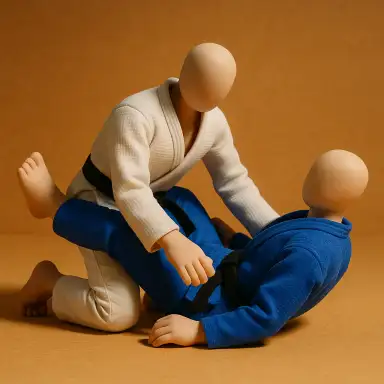
Guard
A foundational position in BJJ where the practitioner uses their legs to control and defend against an opponent from the bottom. It is versatile and can lead to sweeps, submissions, or positional advancements.
43 Guard techniques
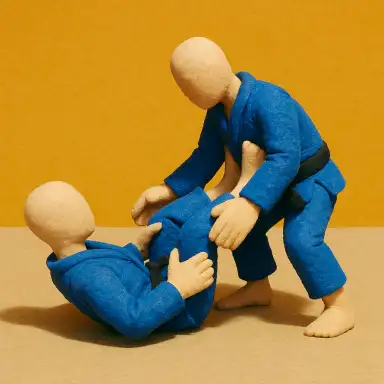 Open Guard
A position where the bottom player uses their legs to control the opponent without fully wrapping them. This versatile position serves as the foundation for many specialized guard variations and offers numerous attacking options.
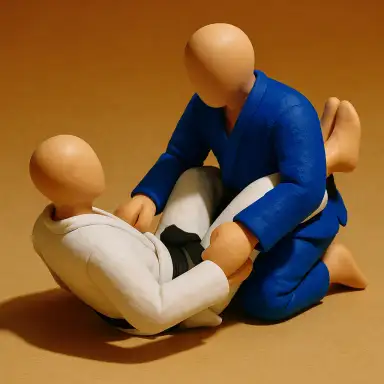 Closed Guard
A defensive position where the bottom player wraps their legs around the opponent's waist and locks their ankles. This position limits the top player's movement while allowing the bottom player to attempt sweeps or submissions.
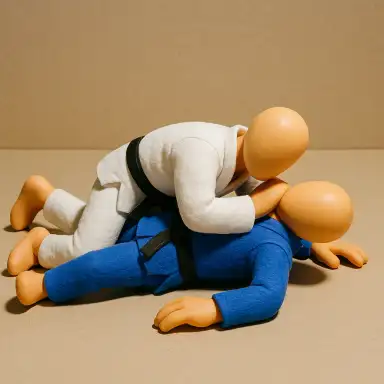 Half Guard
A position where the bottom player controls only one of the opponent's legs with their own legs. This transitional position occurs frequently, with the bottom player typically working for sweeps while the top player attempts to pass.
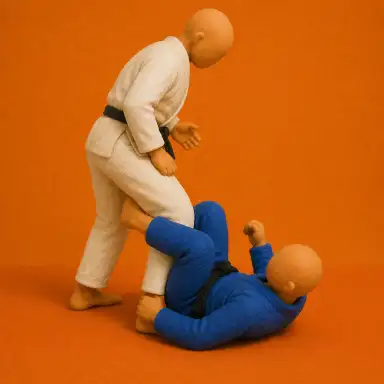 De La Riva Guard
An open guard variation where the practitioner hooks the opponent's leg with their outside foot while controlling the sleeve or collar. This versatile guard offers numerous sweeping and back-taking opportunities.
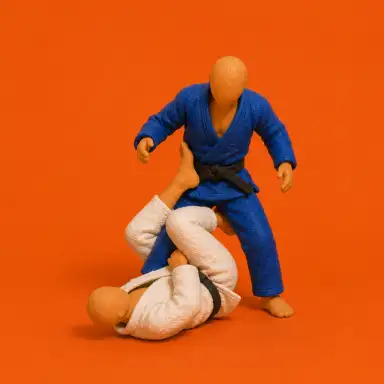 Single Leg X Guard
A variation of X guard focusing on controlling just one of the opponent's legs. This specialized guard is particularly effective for certain sweeps and leg attacks.
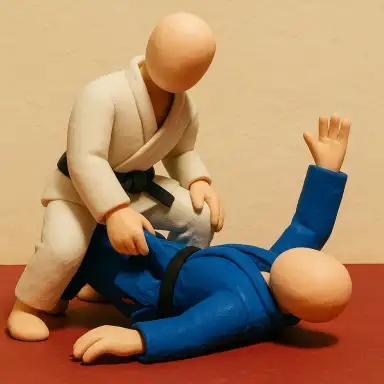 Sweep
A technique used to reverse positions from bottom to top by off-balancing the opponent. These important transitional techniques allow the bottom player to gain a more advantageous position.
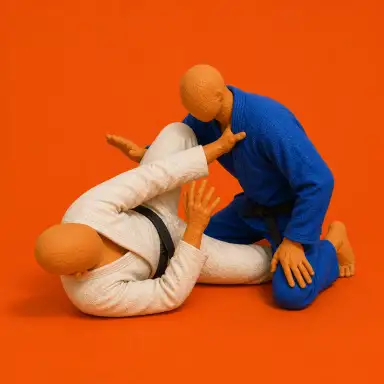 Knee Shield
A half guard variation where the practitioner uses their knee as a barrier against the opponent's pressure. This position prevents weight distribution on the torso and sets up sweeps or transitions.
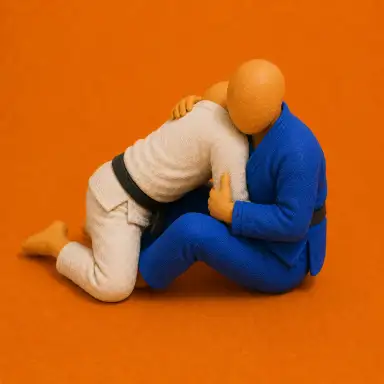 Butterfly Guard
An open guard position where the bottom player places both feet on the inside of the opponent's thighs. This dynamic guard excels at creating leverage for sweeps and elevations.
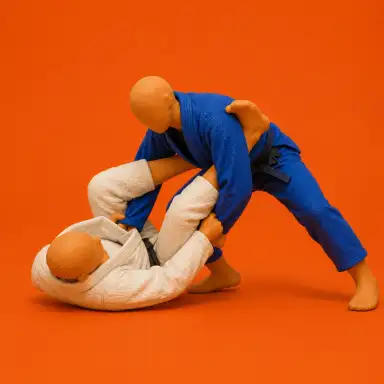 Lasso Guard
A guard variation where the practitioner wraps their leg around the opponent's arm and controls it using the gi sleeve. This provides strong control similar to spider guard but with different attacking options.
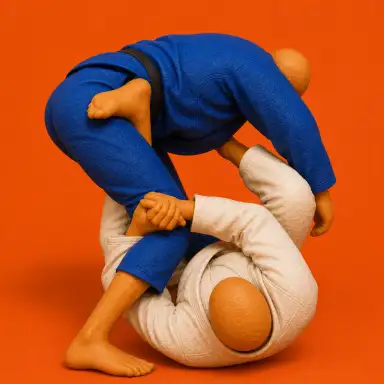 K Guard
A modern open guard where the bottom player creates a scissoring leg frame around the opponent's body and leg. It is commonly used to enter leg locks, back takes, and matrix-style attacks.
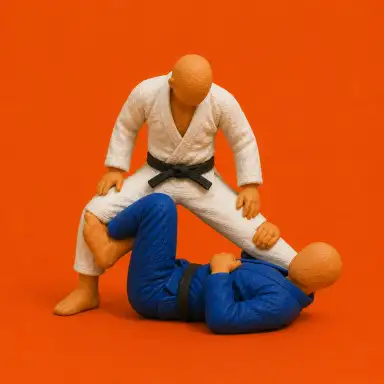 X Guard
A guard position where one of the opponent's legs is elevated between the practitioner's legs in an X formation. This position is excellent for sweeps and leg attacks.
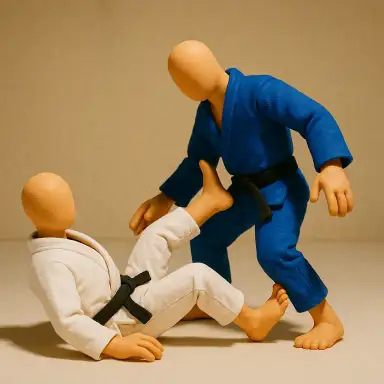 Tripod Sweep
A sweep that uses grips on the opponent's legs combined with off-balancing techniques to topple them. It is effective from various guard positions and often taught to beginners due to its simplicity.
- Deep Half Guard
A half guard variation where the practitioner moves deep under the opponent's center of gravity. This advanced guard offers powerful sweeping options by controlling the opponent's weight distribution.
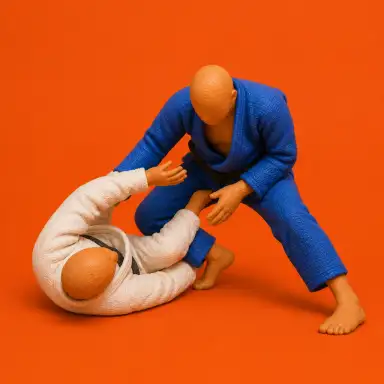 Reverse De Riva Guard
A variation of De La Riva guard with the controlling leg in the opposite position. This specialized guard is effective for certain sweeps and back takes.
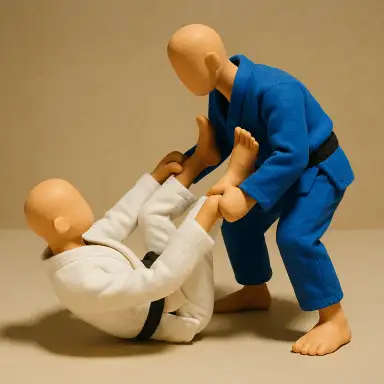 Spider Guard
A guard where the practitioner controls the opponent's arms by grabbing their sleeves and placing feet on their biceps or inside elbows. This guard creates distance and destabilizes the opponent effectively.
- Worm Guard
An advanced lapel guard variation where the practitioner weaves the opponent's lapel around their own leg for enhanced control. This innovative modern technique, popularized by Keenan Cornelius, provides powerful control and sweeping options while severely limiting the opponent's mobility.
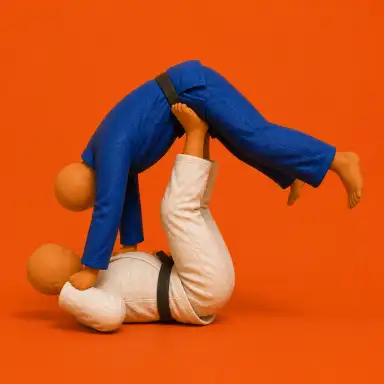 Balloon Sweep
A sweep that lifts and off-balances the opponent with the legs, often sending them forward or overhead. It is commonly used from open guard against a standing or kneeling opponent, and also from closed guard variations.
- Coyote Guard
A half guard system popularized by Lucas Leite, built around the underhook from the bottom. The practitioner comes up on their side into a dog fight position to sweep or take the back.
- Kimura Sweep
A sweep that uses the threat of a Kimura submission to off-balance and reverse an opponent. It is highly versatile and can be executed from positions like closed guard or half guard.
- Kiss Of Dragon
An advanced back-taking technique from open guard that involves inverting under the opponent to secure hooks and control their back.
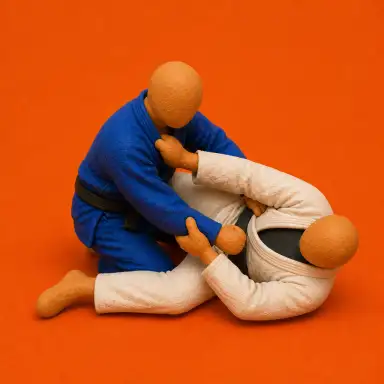 Scissors Sweep
A sweep from closed guard that uses a scissoring motion with the legs to off-balance the opponent and transition to mount or side control.
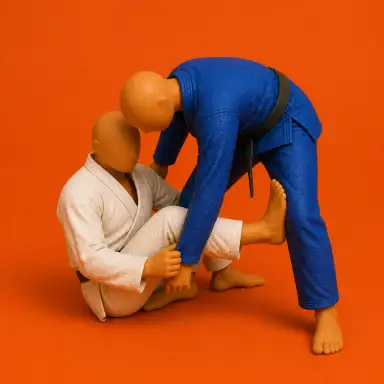 Sit Up Guard
A guard position where the practitioner sits up rather than lying on their back. This starting position is excellent for transitioning to butterfly guard, single leg X, or other attacks.
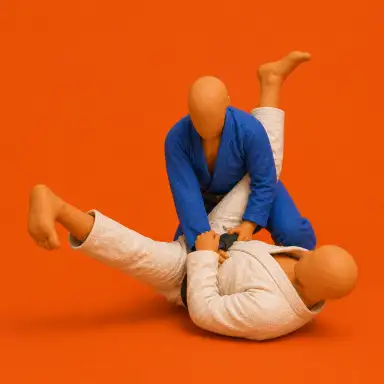 Flower Sweep
A basic closed guard sweep where the practitioner grips the opponent's sleeve or arm and the leg on the same side, then swings the hips like a pendulum to off-balance them. It finishes in the mount position.
- Matrix
An advanced back-taking system that uses leg entanglements to control an opponent's hips and transition smoothly into back control.
- Rubber Guard
A guard variation where the bottom player brings one leg high up to break the opponent's posture. This flexibility-demanding technique popularized by 10th Planet Jiu-Jitsu creates opportunities for submissions and control.
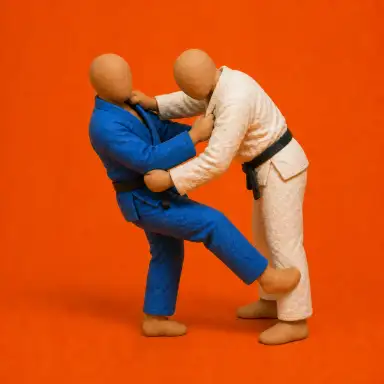 Foot Sweep
A takedown technique that involves sweeping an opponent's foot out from under them while controlling their upper body. It is effective for disrupting balance in standing exchanges.
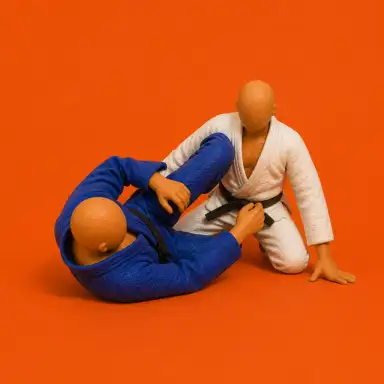 Z Guard
A half guard variation where the bottom player uses their top knee as a shield against the opponent's pressure. Also known as knee shield, this position provides effective defensive options and counter-attacking opportunities.
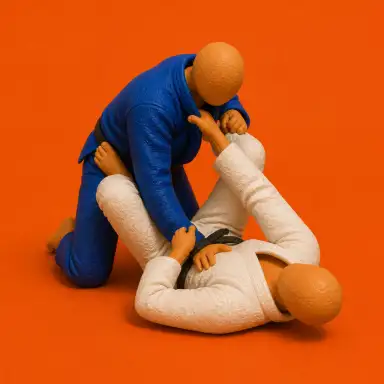 Collar And Sleeve Guard
A fundamental open guard position where the practitioner grips one collar and one sleeve of the opponent. This basic yet effective control method is especially common in gi jiu-jitsu.
- Deep De Riva Guard
An advanced variation of the De La Riva guard where the practitioner moves deeper under the opponent's center of gravity. This position provides strong control and opens opportunities for sweeps and back takes.
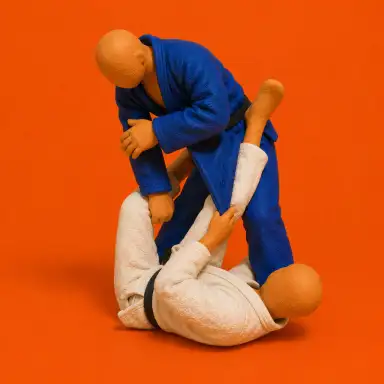 Lapel Guard
A guard that utilizes the opponent's gi lapel for control. This technique uses the long fabric to restrict movement and set up various attacks.
- Octopus Guard
A bottom position where the practitioner sits up beside the opponent from half guard or under side control and reaches an arm around their back. From this angle, it leads to sweeps, back takes, and front headlock attacks.
- Waiter Guard
A guard position resembling a waiter holding a tray, used to set up specific sweeps. This unique position offers an effective control point for transitioning to more advantageous positions.
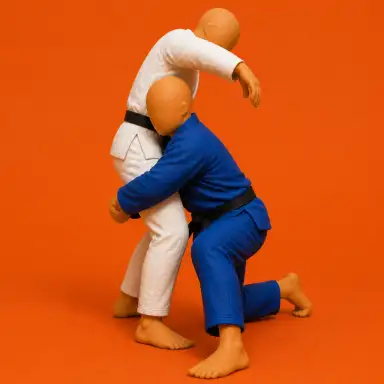 Wrestle Up
A guard transition where the bottom player comes up to a wrestling position instead of staying seated or supine. It is used to attack single legs, body locks, and top position.
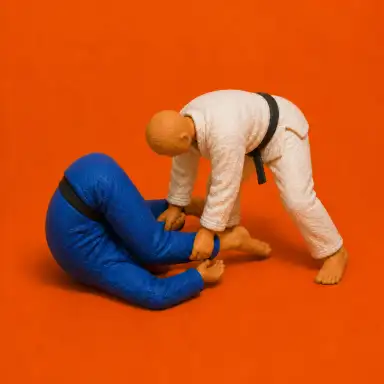 Inverted Guard
A guard position where the practitioner is upside down, using their legs to control the opponent. This modern flexible guard position requires mobility and creates unique attacking angles.
- John Wayne Sweep
A sweep from half guard that uses a combination of hip movement and leverage to off-balance and reverse an opponent, often transitioning into top position.
- Lumberjack Sweep
A sweep against a standing opponent that grips both ankles or heels and pushes the knees with the hips to knock them backward. It commonly appears from closed guard when the top player stands up and breaks the closed guard.
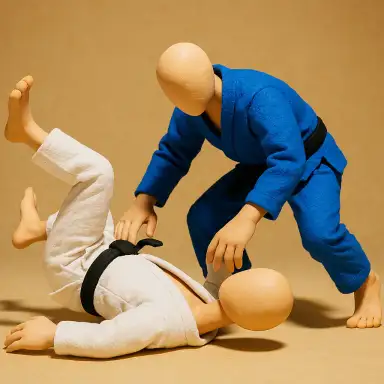 Guard Recovery
The process of regaining a guard position after being passed or losing control. It involves framing, hip movement, and leg placement to re-establish defensive posture.
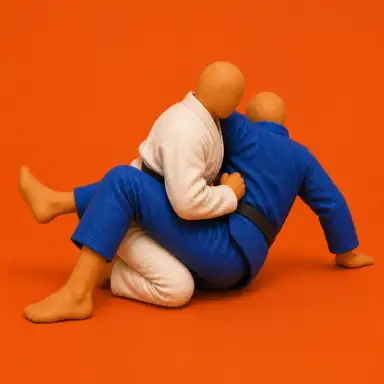 Hip Bump Sweep
A closed guard sweep that uses a sit-up motion and hip drive to knock the opponent over. It pairs well with kimura and guillotine threats when the opponent postures up.
- Pendulum Sweep
A closed guard sweep that uses a swinging leg motion to generate rotational force. By controlling the opponent's arm and angle, the attacker can sweep directly into mount.
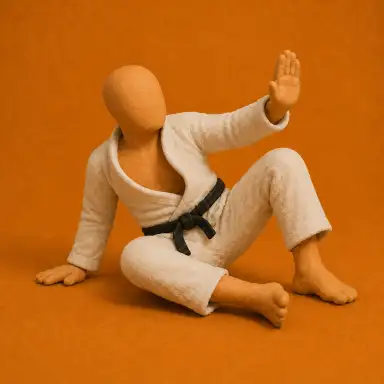 Technical Stand Up
A safe stand-up movement from a seated or grounded position. The practitioner frames, posts, and retracts the leg to stand while protecting distance and posture.
- Waiter Sweep
A sweep from waiter guard or deep half guard that shelves the opponent's leg and uses underneath control to come up into top position.
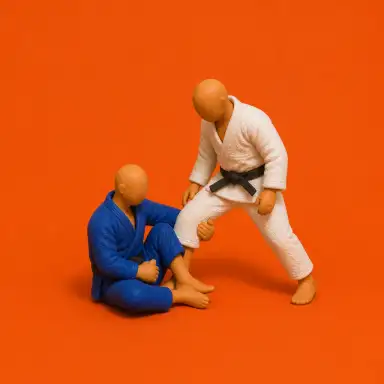 Shin To Shin Guard
A guard where the practitioner places their shin against the opponent's shin for control. This position often serves as an entry point to single leg X guard.
- Squid Guard
A modern guard system inspired by the movement of a squid, controlling the opponent at multiple points. This innovative position creates confusion and offers various attacking options.
Technique videos


Log this technique in your training journal
Post Black Belt: BJJ Journal
Log BJJ training, track belt & stripes, get AI technique picks and Health sync.