Rubber Guard
A guard variation where the bottom player brings one leg high up to break the opponent's posture. This flexibility-demanding technique popularized by 10th Planet Jiu-Jitsu creates opportunities for submissions and control.
How to do the Rubber Guard
When to use it
Rubber guard comes from closed guard once the top player's posture is broken. Use it when your arms alone can't keep him down and you want to trap one arm to set up the omoplata, gogoplata, or triangle choke.
Step by step
- Break the top player's posture from closed guard and wrap an overhook around one of his arms.
- Open your guard, put the overhook-side foot on his hip, and turn your hips out to that side.
- Bring that leg high so your shin runs across his upper back, keeping his head down.
- Grab your own shin or ankle with the overhook arm to lock his head and arm in place.
- Keep the other leg on his hip, then attack: the omoplata, the gogoplata with your shin across his throat, or the triangle choke when his free arm reaches back.
Key details
- The overhook comes first; without it the trapped arm slides out and he postures up.
- Angle your hips out before raising the leg — flexibility helps, but hip angle does most of the work, so never force the knee or hip past its range.
- Gogoplata and omoplata are submissions: apply them slowly in training and let your partner tap early.
Common mistakes
- Holding the leg up with leg strength alone. You tire fast; let the arm grip carry it.
- Staying flat. The leg won't reach and the knee strains; turn onto your side first.
- Forgetting the second leg. If it hangs loose he stacks you; keep it on his hip.
How to pass it
- Keep your posture before the leg climbs: head up, back straight, hands on his hips or biceps.
- If the leg is already high, pull your trapped arm back toward your hip and drive your head up.
- Once the arm is free, step up and pressure his hips so the high leg loses its angle.
- Open the guard and pass, keeping your arms out of omoplata range.
Gi vs no-gi
Rubber guard is mostly a no-gi tool, where there are no collar grips to break posture. In the gi it still works, but collar grips often do the same job more easily.
FAQ
- Do you need to be flexible for rubber guard?
- It helps, but turning your hips out before lifting the leg matters more. If your hip or knee won't go there comfortably, don't force it.
- Is rubber guard bad for your knees?
- It loads the knee if you force the leg up while flat. With a proper hip angle most people train it without trouble; stop if the knee feels strained.
Where Rubber Guard connects
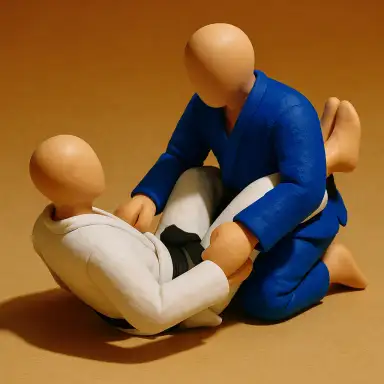
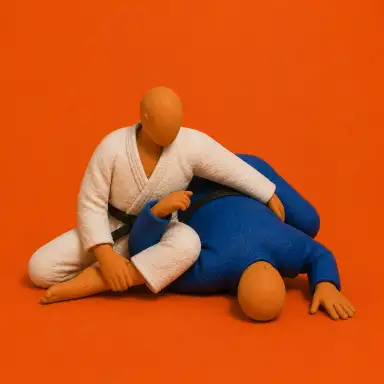
Champions who use it
- 1Watch on YouTubeMason FowlerUnited States · 3 match clips
Technique videos


How to pass it


Sequences with this technique
2 sequences
Every step from entry to finish lives in the app's tech tree.
Related techniques
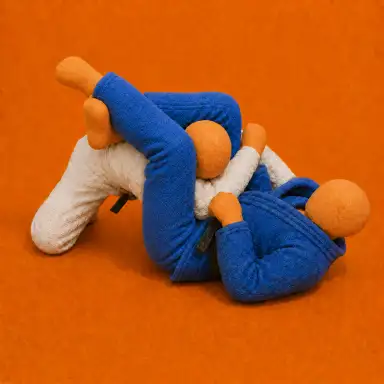
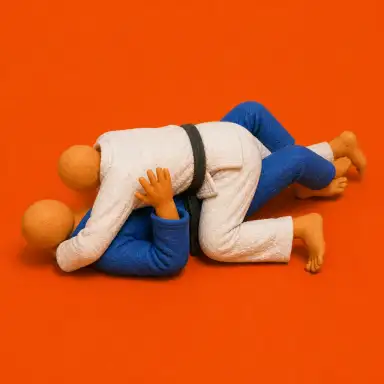
Log this technique in your training journal
Post Black Belt: BJJ Journal
Log BJJ training, track belt & stripes, get AI technique picks and Health sync.