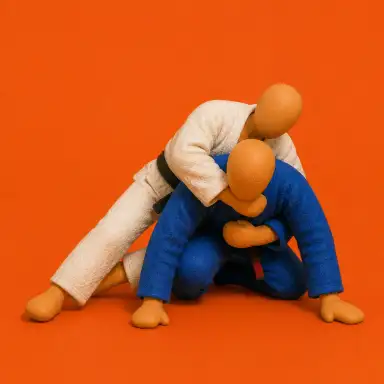
Choke
Any technique that restricts blood flow or air to force a submission. These techniques are among the most effective submissions as they work regardless of the opponent's size or strength.
17 Choke techniques
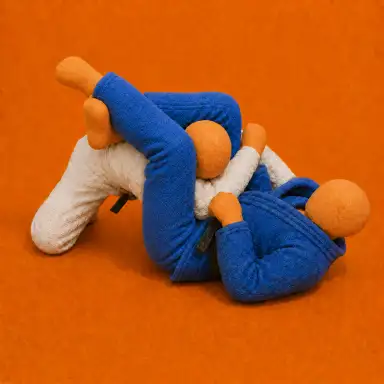 Triangle Choke
A chokehold that uses the legs to form a triangle around the opponent's neck and one arm. This effective blood choke cuts off blood flow to the brain by compressing the carotid arteries.
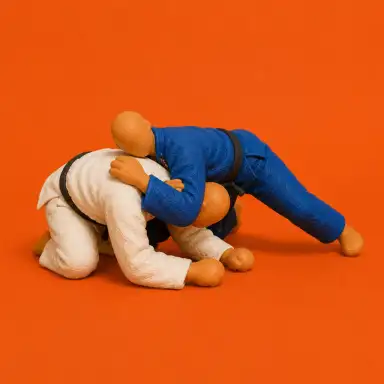 Darce Choke
A variation of the arm triangle applied by wrapping the arm around the opponent's neck and arm from the front. This effective choke is often used during guard passing or wrestling scrambles.
- Guillotine Choke
A front chokehold where the practitioner wraps their arm around the opponent's neck and squeezes. Often used as a counter to takedown attempts, this technique can quickly force a submission.
- Bow And Arrow Choke
A collar choke applied from the back position using the collar and leg control. One of the most effective submissions from back control with a high success rate.
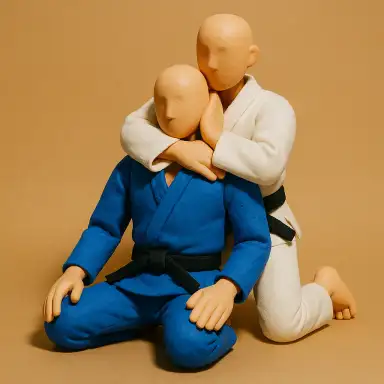 Rear Naked Choke
A choke applied from back control, with one arm wrapped around the opponent's neck. It is one of the most common submissions in jiu-jitsu and MMA.
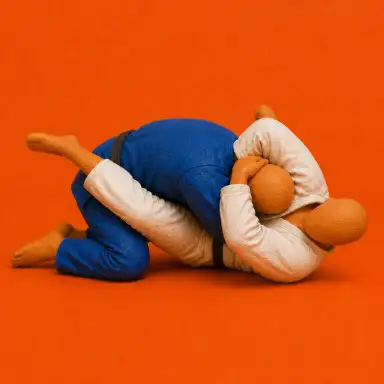 Loop Choke
A collar choke applied by wrapping the gi collar around the opponent's neck. This submission can be applied quickly when the opponent lowers their posture.
- Cross Collar Choke
A gi choke that uses crossed collar grips to compress both sides of the opponent's neck. It is commonly attacked from closed guard, mount, and other collar-control positions.
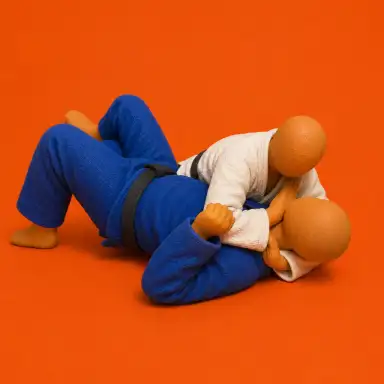 Ezekiel Choke
A choke that uses the attacker's own forearm and sleeve grip to compress the opponent's neck. In the gi, the hand grips inside the opposite sleeve; in no-gi, the attacker grips their own wrist or forearm instead. It can be applied from mount, back, side control, and even from inside the opponent's guard.
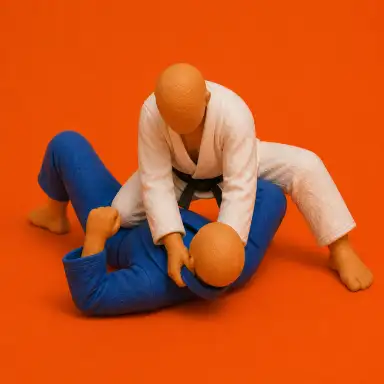 Baseball Bat Choke
A cross-collar choke where both hands grip the opponent's collar in a baseball bat grip formation. This powerful submission can be applied from both top and bottom positions.
- Anaconda Choke
A form of arm triangle where the practitioner wraps their arm around the opponent's neck and arm. Most effectively applied when the opponent is in turtle position.
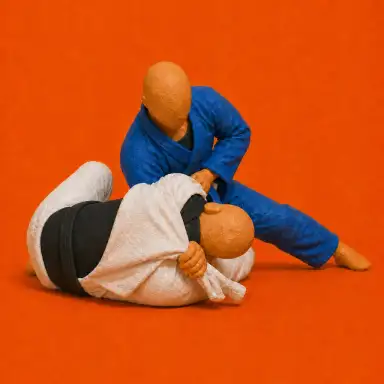 Brabo Choke
An arm-triangle style choke that wraps around the opponent's neck and trapped arm. It is often attacked from front headlock, half guard, or top pressure positions.
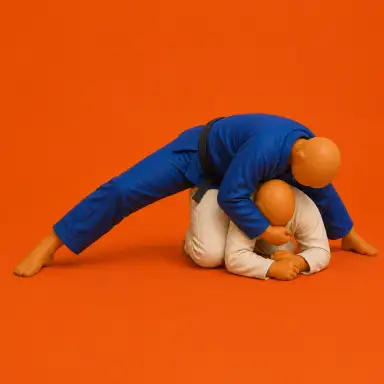 Clock Choke
A lapel choke performed when the opponent is in turtle position. The practitioner grips the collar and walks their legs around like clock hands to tighten the choke and apply pressure.
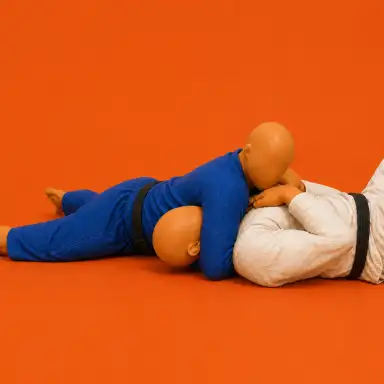 North South Choke
A neck choke applied from the north-south position. The attacker wraps an arm around the opponent's neck and uses chest pressure and hip positioning to close the space, with arm-in variations also used.
- Buggy Choke
A relatively new and unconventional submission applied from bottom positions like side control or mount. It utilizes a modified triangle configuration with the arms to create pressure on the opponent's neck while in an otherwise disadvantageous position.
- Canto Choke
A gi choke that uses the opponent's lapel, fed across the neck, to constrict the neck. It can be applied from top positions like side control, and is also commonly set up from guard and half guard. It combines leverage with lapel control for a tight finish.
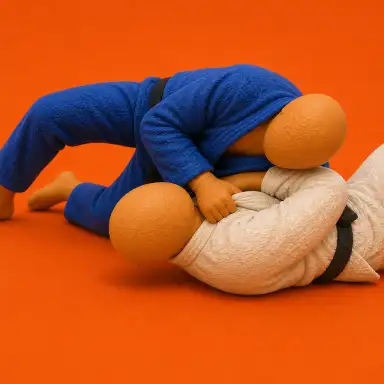 Paper Cutter Choke
A gi choke usually applied from side control using one collar grip and shoulder pressure. The finishing motion cuts across the neck while the top player keeps the opponent pinned.
- Von Flue Choke
A counter choke usually applied from side control when the opponent holds a guillotine grip. The attacker uses shoulder pressure and head position to compress the opponent's neck.
Technique videos


Related techniques

Log this technique in your training journal
Post Black Belt: BJJ Journal
Log BJJ training, track belt & stripes, get AI technique picks and Health sync.