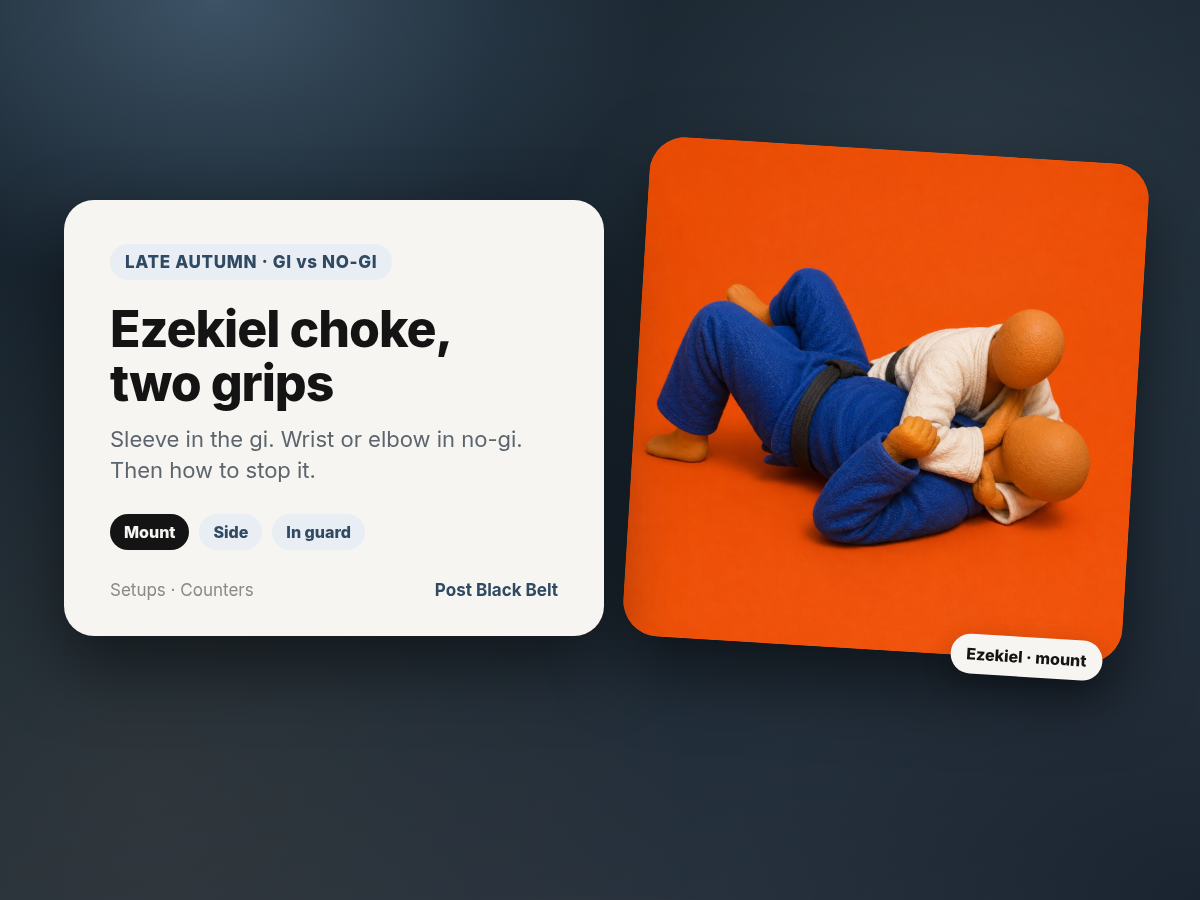
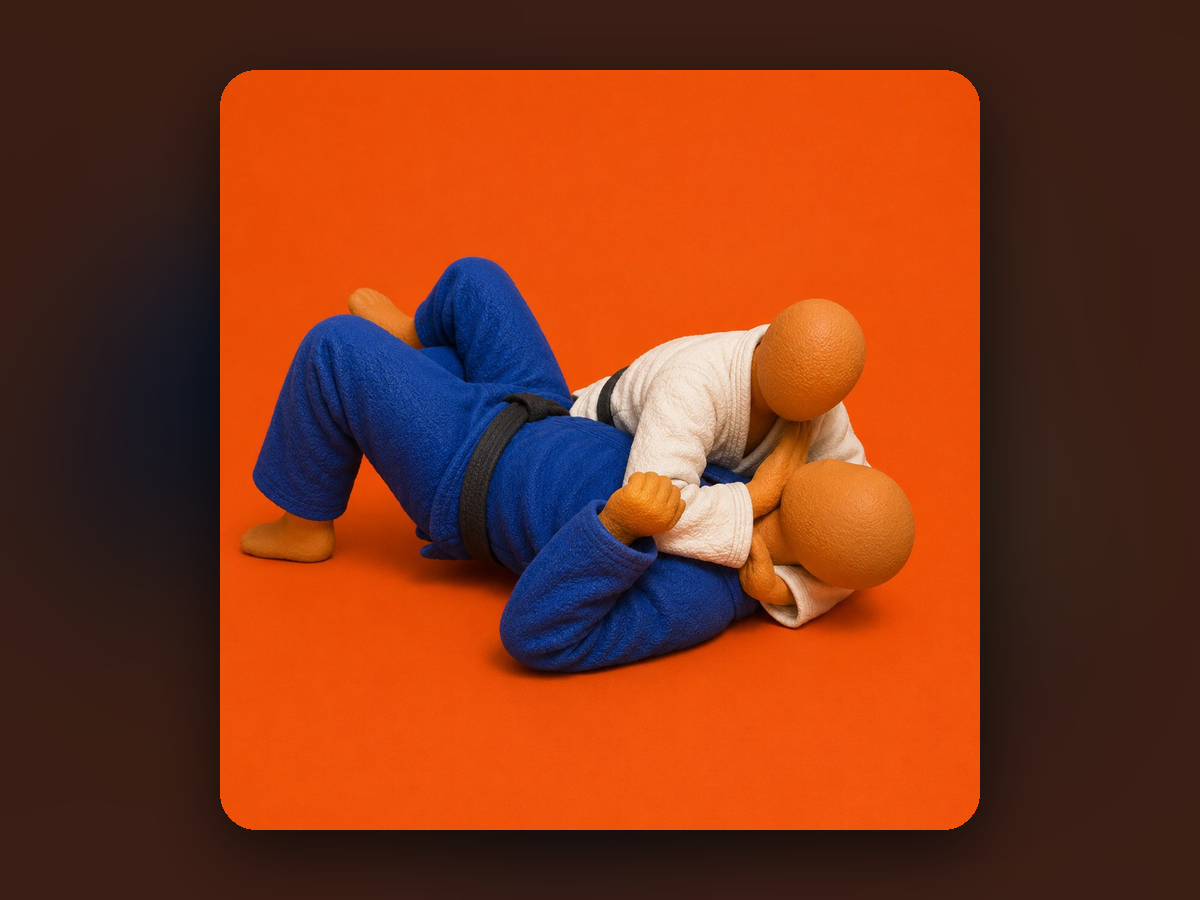
The Ezekiel choke uses one forearm to compress the opponent's neck, while the other arm locks that grip in place. In the gi, the locking hand goes inside the opposite sleeve. In no-gi, there is no sleeve, so the attacker grips their own wrist or forearm instead. It is most common from mount, but the same structure also works from side control and from inside the opponent's guard.
The Ezekiel choke technique page already has the basic description. This post does not replace that page. It covers the mechanics, the grip difference between gi and no-gi, setups by position, and how to defend and escape.
How the Ezekiel choke works
The key is that the attacker chokes with their own arms. One forearm crosses the opponent's neck, and the other hand locks that forearm in place while adding pressure. Unlike a collar choke, it does not finish by gripping the opponent's gi. The handle is the attacker's own sleeve, or their own wrist or forearm.
That is why the same structure can be kept in no-gi. It can be applied from mount, side control, back control, and even from inside the opponent's guard. The sections below focus on mount, side control, and inside the guard.
Gi vs no-gi: only the grip changes
In the gi, the locking hand goes inside the opposite sleeve. In no-gi there is no sleeve, so the attacker grips their own wrist or forearm instead. Some grips hook the inside of the elbow to hold it. The forearm that compresses the neck stays the same. Only the locking grip changes.
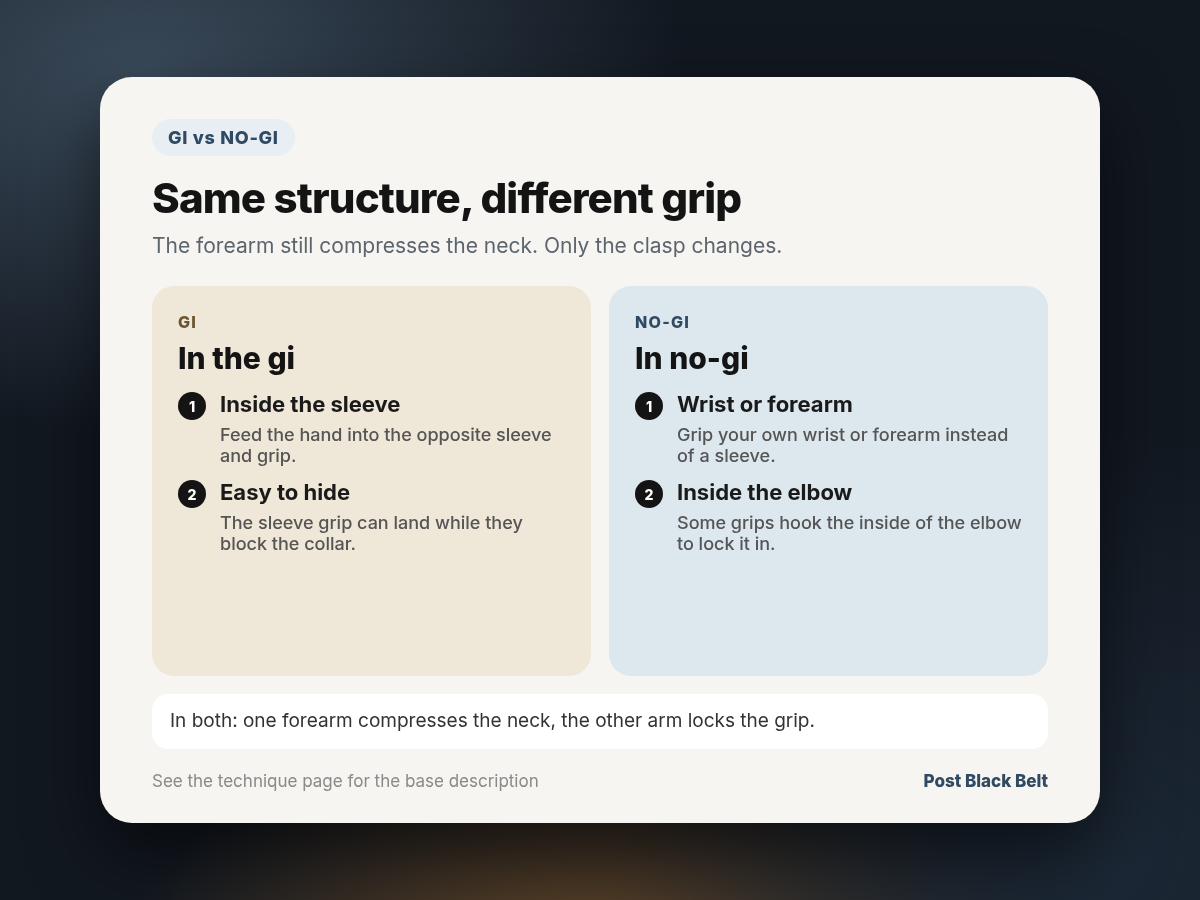
Because the structure is the same, the timing in no-gi is easier to find if the gi version is already familiar. If most of the training is no-gi and a gi goes on later, the first thing to notice is that a handle has appeared — the sleeve. The sleeve grip can also land while the opponent is busy blocking the collar.
Mount, side control, and inside their guard
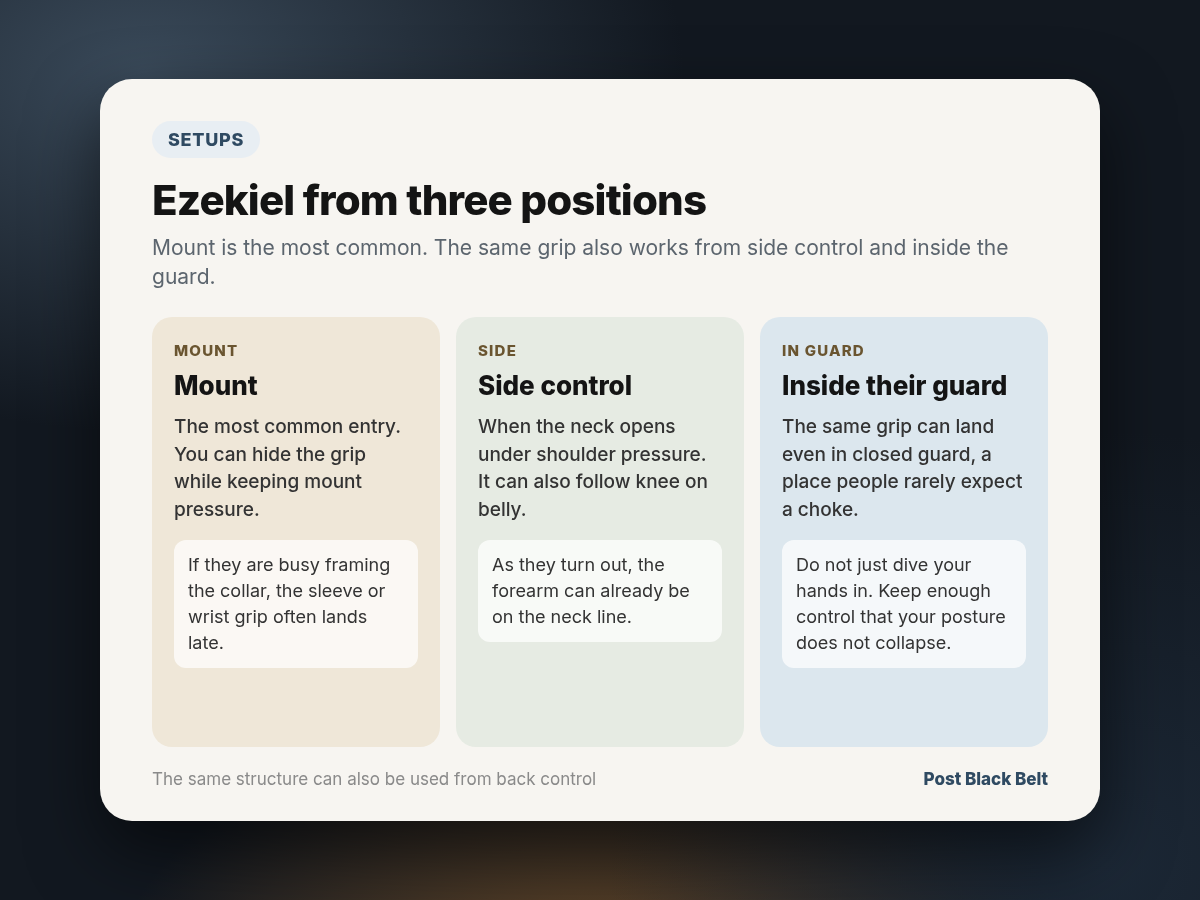
The most common position is mount. The hand can be fed to the sleeve or wrist while pressure is kept from the top. When the person on the bottom is busy framing the collar, the sleeve grip often lands in that gap.
From side control, the same grip is available when the neck opens under shoulder pressure. It can also follow knee on belly. As they turn out to escape, the forearm is sometimes already on the neck line.
The same grip can land even from inside the opponent's closed guard. A choke is rarely expected there, so the reaction is often late. That does not mean the hands should just dive in. If only the upper body folds forward, posture collapses. Confirming control first, then feeding the grip, is the safer order.
How to defend and escape
The first job is to stop the grip from finishing: interrupt the hand going into the sleeve, or the hand trying to catch a wrist. If the forearm is already coming across the neck, tuck the chin and frame under the choking forearm. Then peel the sleeve grip in the gi, or break the wrist or forearm clasp in no-gi, until the pressure drops. After the pressure eases, escape mount or side control.
Bridging first while the choke is already tight usually just moves the body with the neck still locked. Details vary from person to person, so this section only covers the order. For the actual mechanics, it is more accurate to watch how athletes solve the same situation in the How to escape it videos on the technique page.
Some counters also go to a wrist lock on the choking hand. That is not clearly a default escape. It is better studied in the counter videos.
If you want to keep going in the app
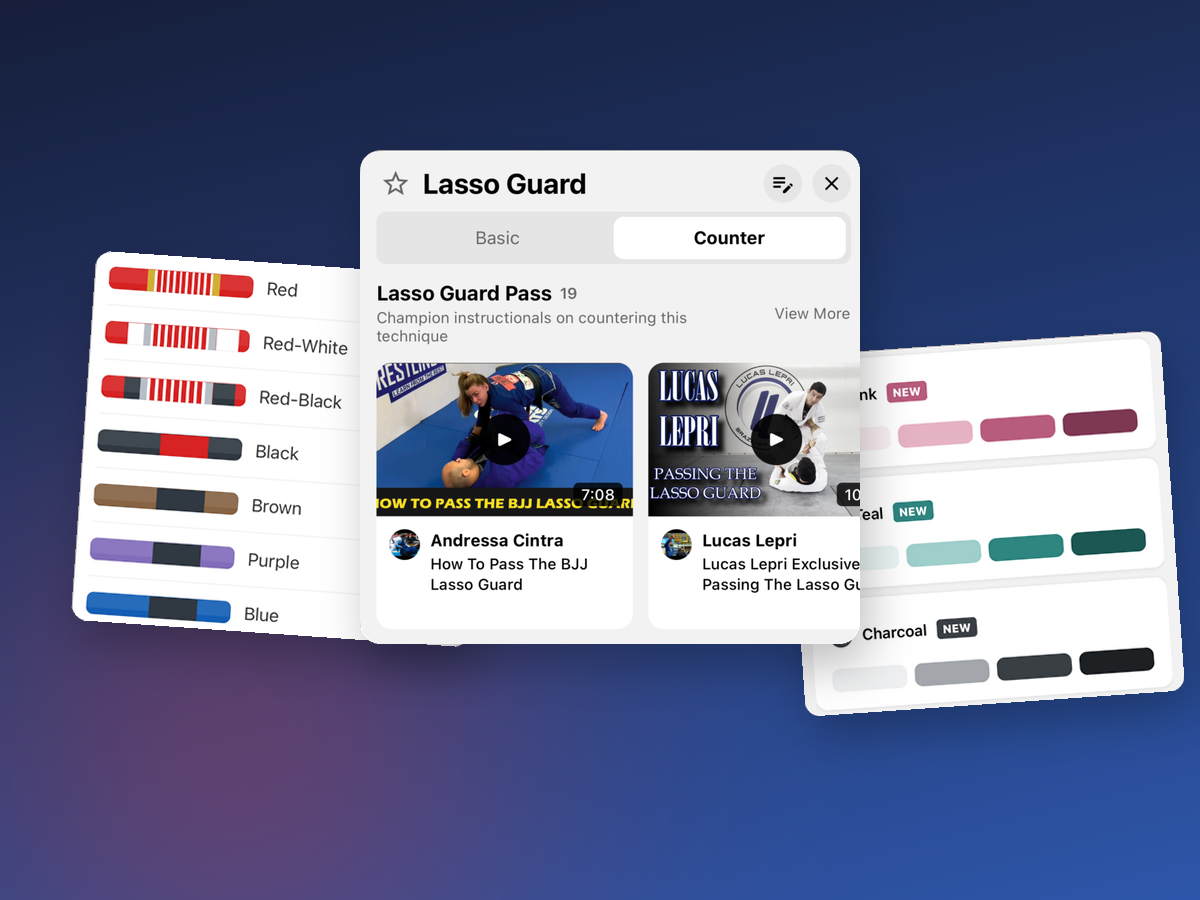
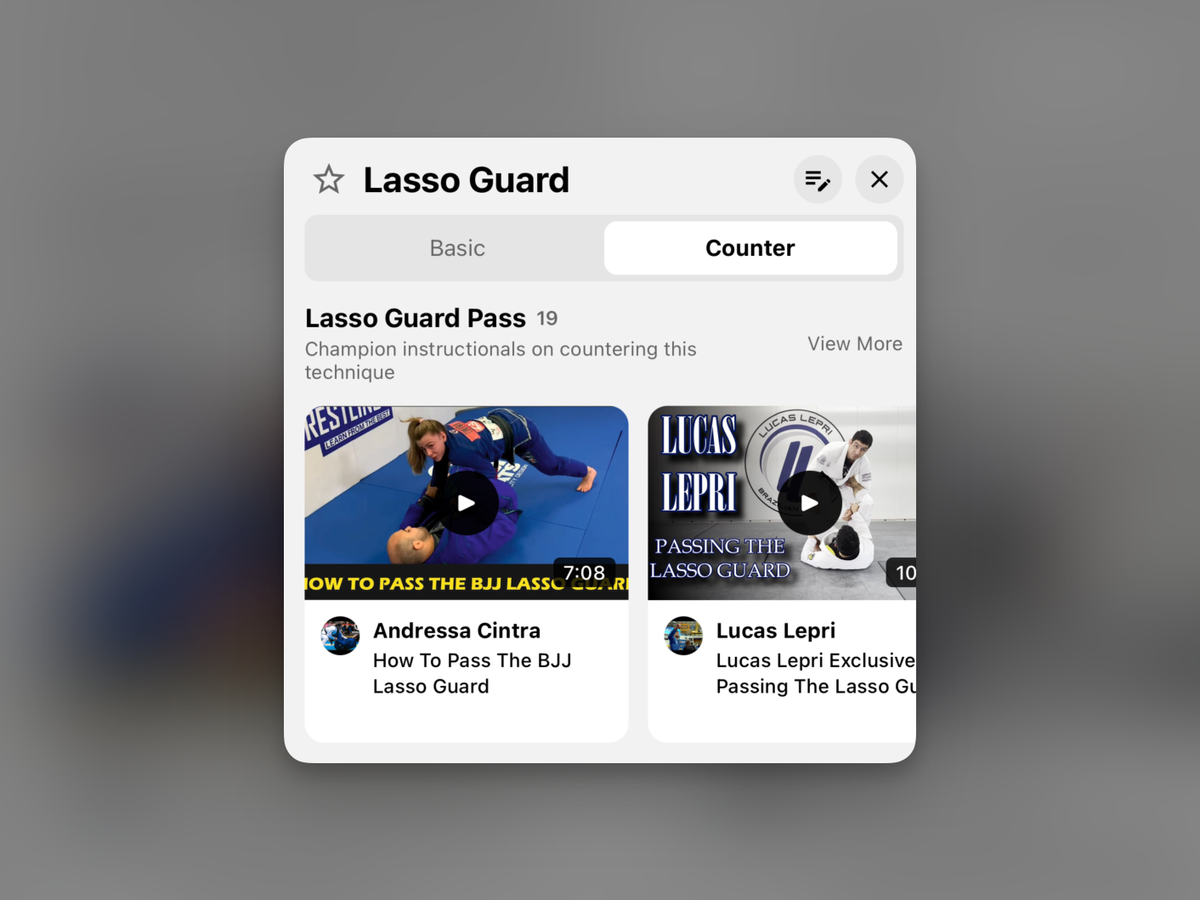
The Ezekiel choke technique page already gathers the basic description, champions who use it, and the escape videos. In the app, the Counter tab on the same screen and champion search by name go further. Search landed in the November update.

FAQ
Can white belts try this?
From mount, once the grip is clear, it is a fairly approachable technique. Diving the hands in from inside the guard is a different story: posture goes first. Starting from mount is the safer path.
Is the no-gi Ezekiel the same technique as the gi version?
It is a variation of the same structure. The forearm still compresses the neck. Only the locking grip changes, from the sleeve to the wrist or forearm. That is also how the technique page describes it.
How is this different from a collar choke?
A collar choke grips the opponent's gi. The Ezekiel grips the attacker's own sleeve, or their own wrist or forearm, and finishes with the forearm. It depends less on the other person's gi, which is why the same structure still works in no-gi.
Related reading
- Ezekiel choke technique page
- Ezekiel choke · How to escape it
- November update: champion counters and champion search
From mount, the starting point is to look for the sleeve or the attacker's own wrist, not the collar. If you have feedback about the app, feel free to reach out anytime. 😇