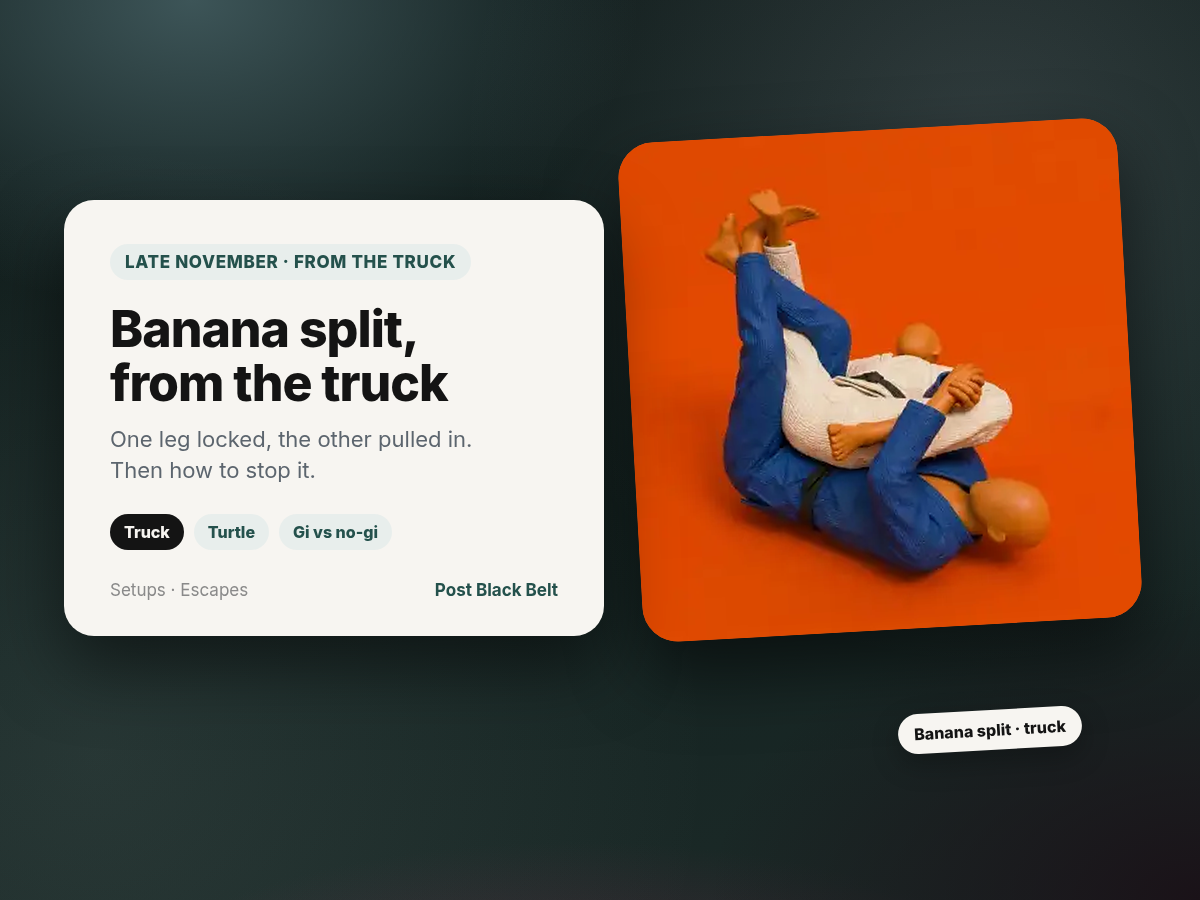
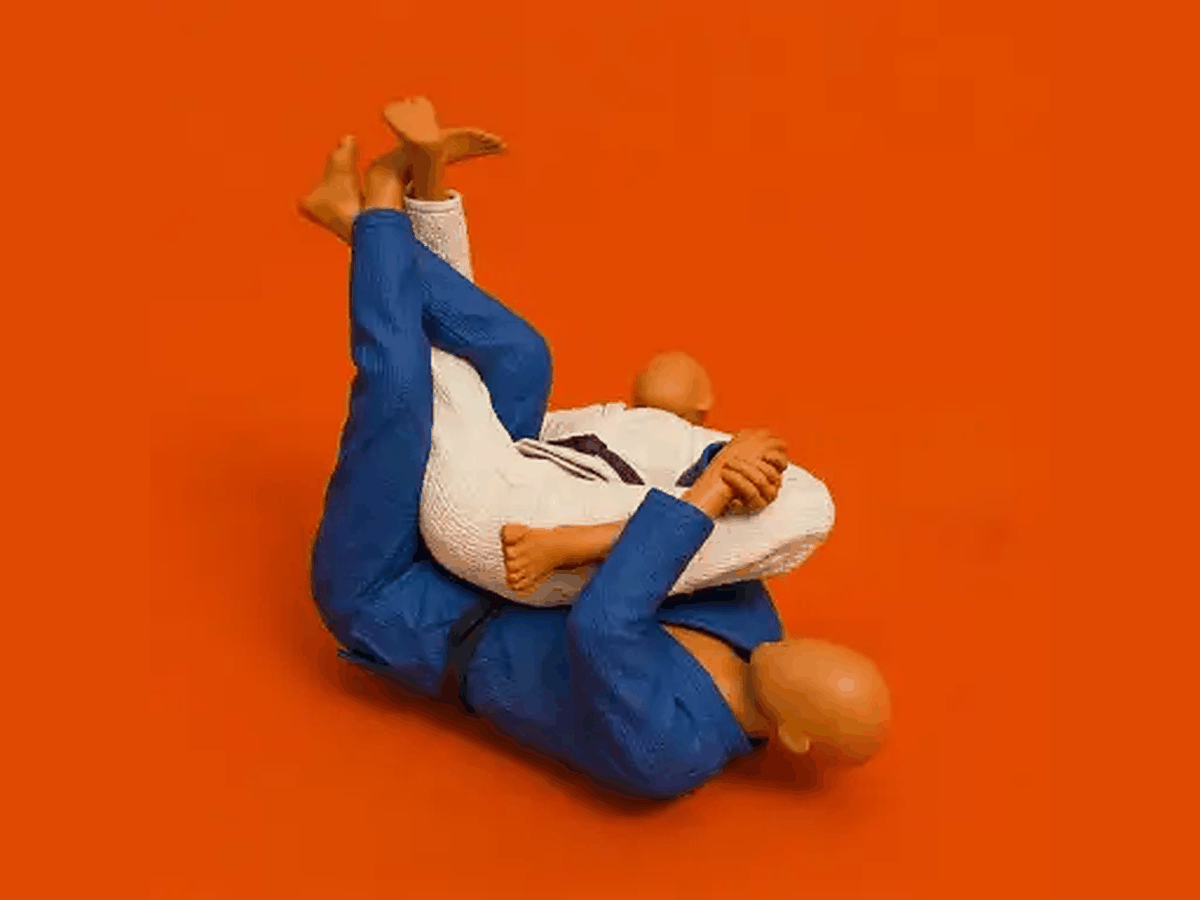
The banana split is a groin and hip stretch submission. The opponent's two legs are forced apart in opposite directions. It is not a classic single-joint lock, but the hip is under real strain. The truck is the most common entry, and it also shows up from twister side control and when attacking the legs of a turtled opponent.
The banana split technique page already has the basic description. This post does not replace that page. It covers the mechanics, the gi vs no-gi hold, setups by entry, and how to defend and escape.
How the banana split works
The structure is simple. Lock one of the opponent's legs between your legs, then hug the other leg and pull it the opposite way. The locked leg is the anchor. If it slips free, there is nothing to split against.
The pull does not come from the arms alone. Use the back and arms together to draw the free leg in while your legs drive the locked leg the other way. Pulling only with the arms stalls the stretch.
Three mistakes are common: reaching for the free leg before the trapped leg is locked, pulling only with the arms, and letting the opponent stay on their side facing you. In that last case they can close their legs. Keep them turned away.
Gi vs no-gi: only the hold changes
In the gi, the pants give an easy handle on the free leg. In no-gi there is nothing to grab, so hug the leg with both arms at the knee or ankle. The finish is the same: lock one leg and push it away, pull the other.
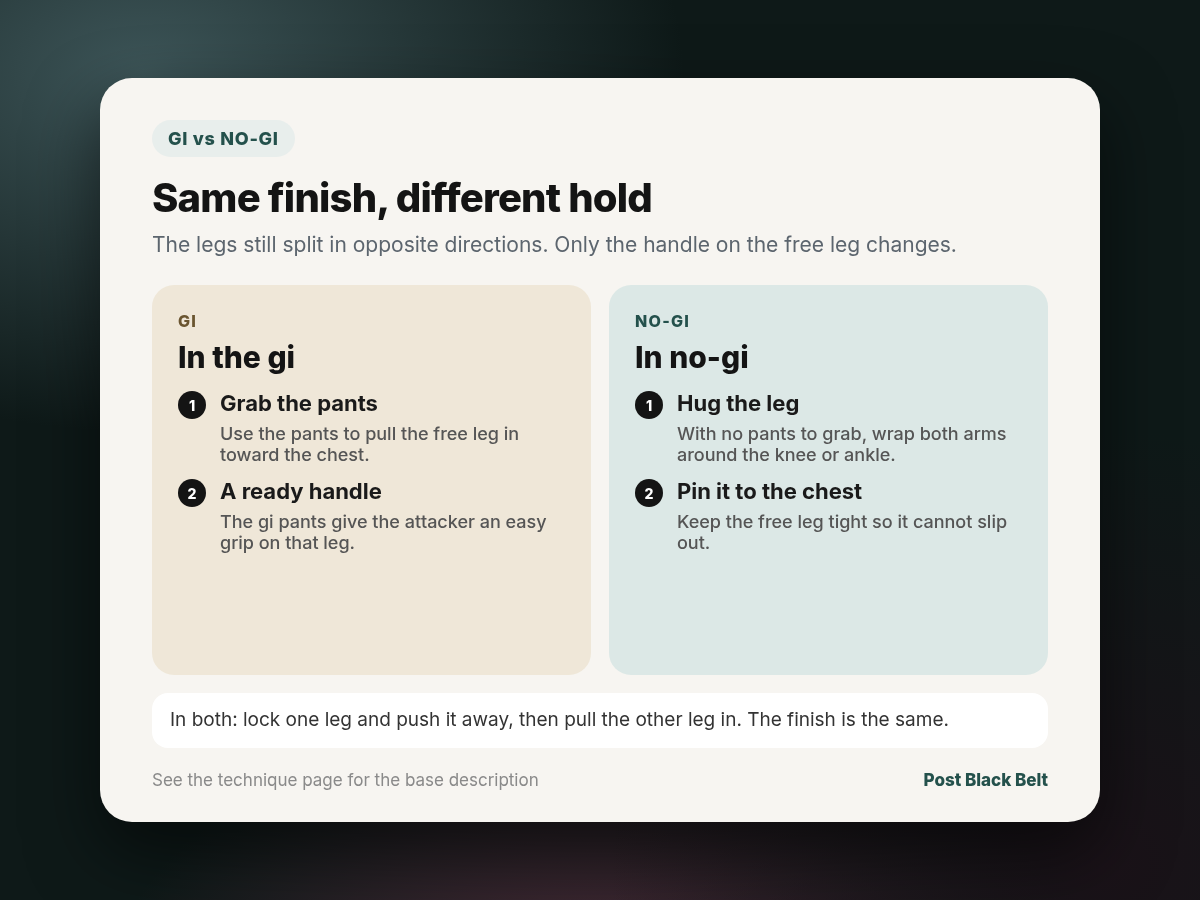
Either way, hold the leg tight to the chest. Any gap between your arms and their leg leaks pulling power.
Truck, twister side control, and turtle
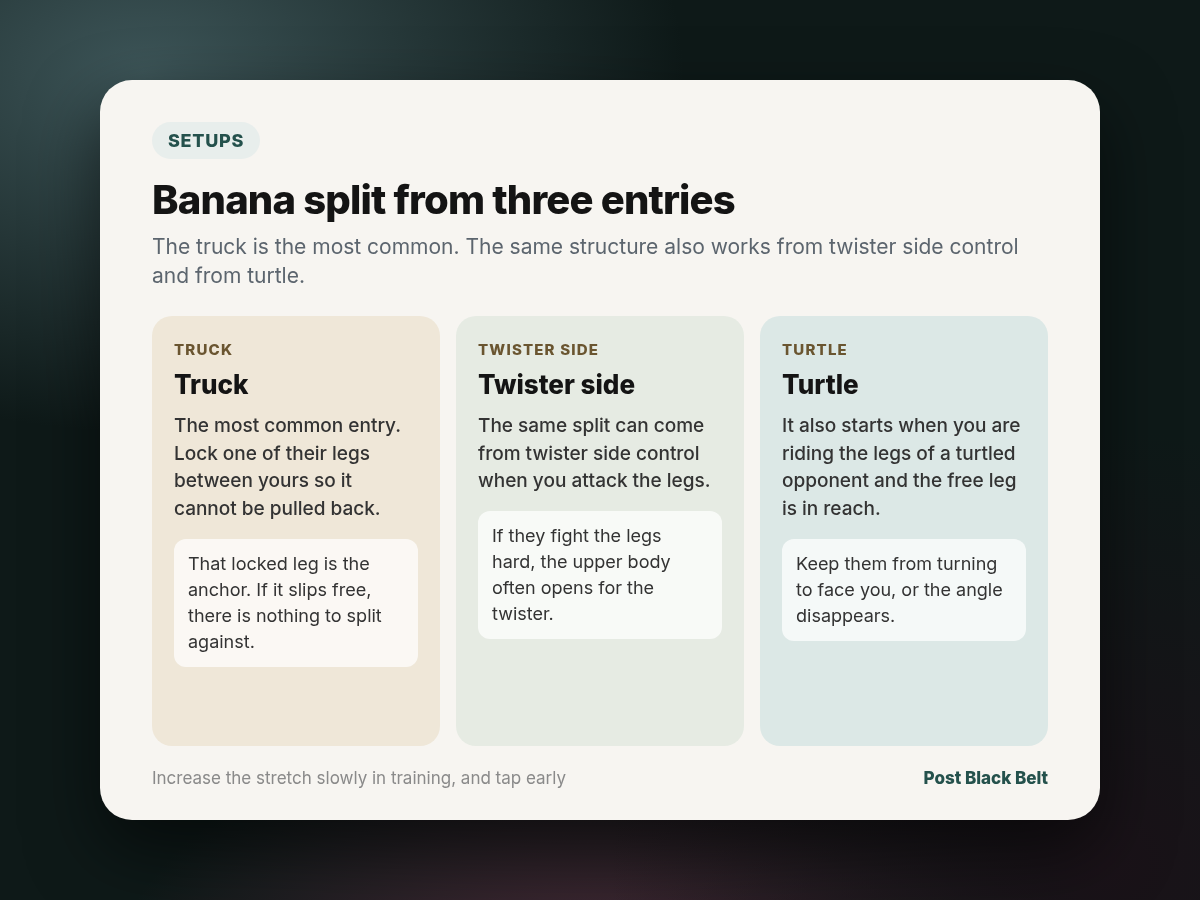
The usual start is controlling one of the opponent's legs with your legs. It works when the free leg is reachable and the opponent cannot turn to face you.
The truck is a hip-control position used to expose the back, attack twister-style submissions, or enter leg-control sequences. It is often reached from scrambles, turtle, or rolling back-take systems. From the truck, the steps are:
- Lock one of the opponent's legs between your legs so it cannot be pulled back.
- Roll or tilt the opponent onto their back or side so the free leg comes into reach.
- Hug the free leg with both arms at the knee or ankle, tight to the chest.
- Straighten your legs and push the trapped leg away while pulling the free leg toward you.
- In training, increase the stretch slowly. The partner taps early, as soon as the groin and hip feel strained.
The same split can also come from twister side control when the legs are attacked. From turtle, it starts when you are riding the opponent's legs and the free leg is in reach. Keep them from turning to face you, or the angle disappears.
The twister is a spinal lock that twists the upper body in the opposite direction of the lower body. If the opponent fights the leg hard, the upper body is often open for it. Note that the twister (a spinal lock without a choke) is illegal in IBJJF, so it is a training or non-IBJJF option, not a tournament follow-up under those rules. The calf slicer is another threat that pairs well from the truck, and the crucifix is a related position.
How to defend and escape
The easiest place to stop it is before the legs are locked. Keep the knees together and the legs bent so one leg cannot be isolated. Turn toward the attacker and face them to take away the angle.
Pull the free leg back in and hide it so it cannot be hugged. If the legs are already spreading, tap early instead of waiting on hip flexibility.
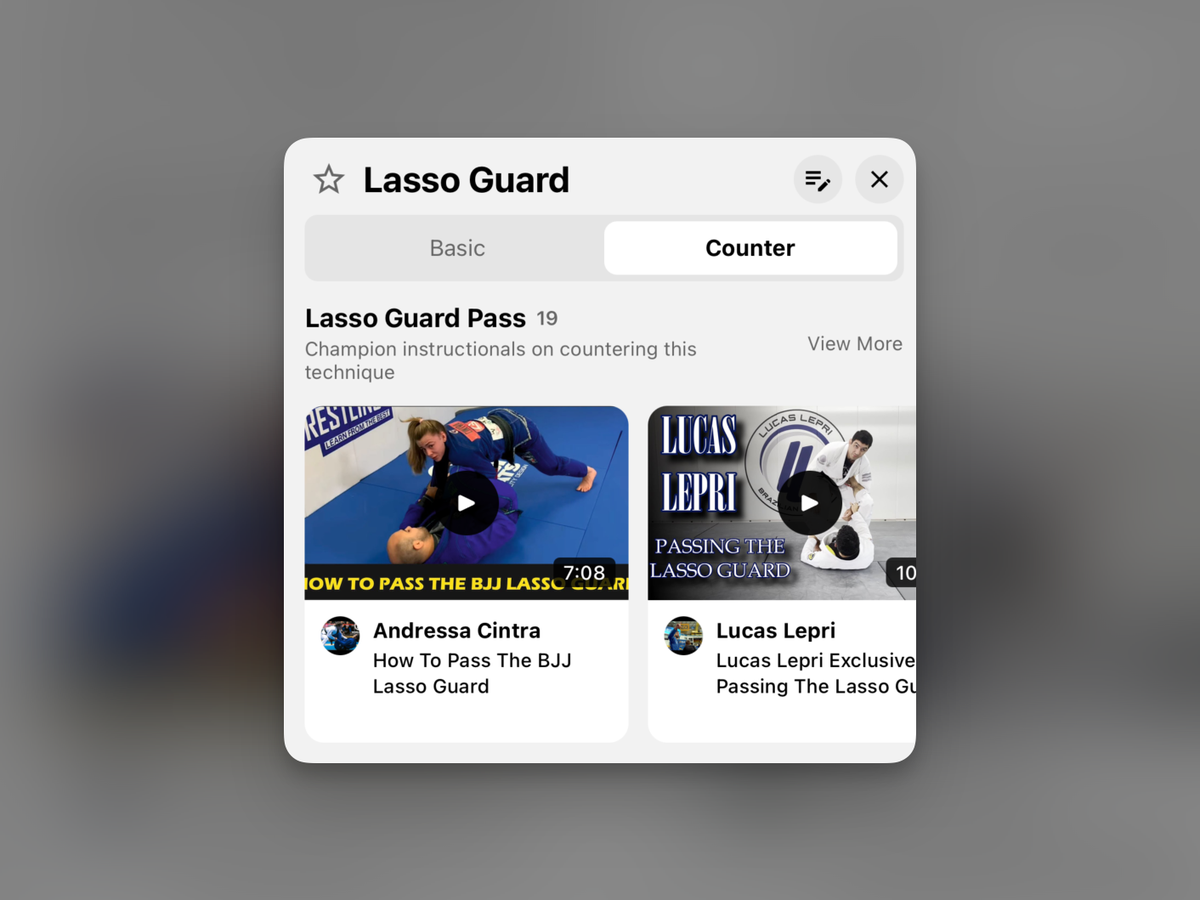
If you want to keep going in the app
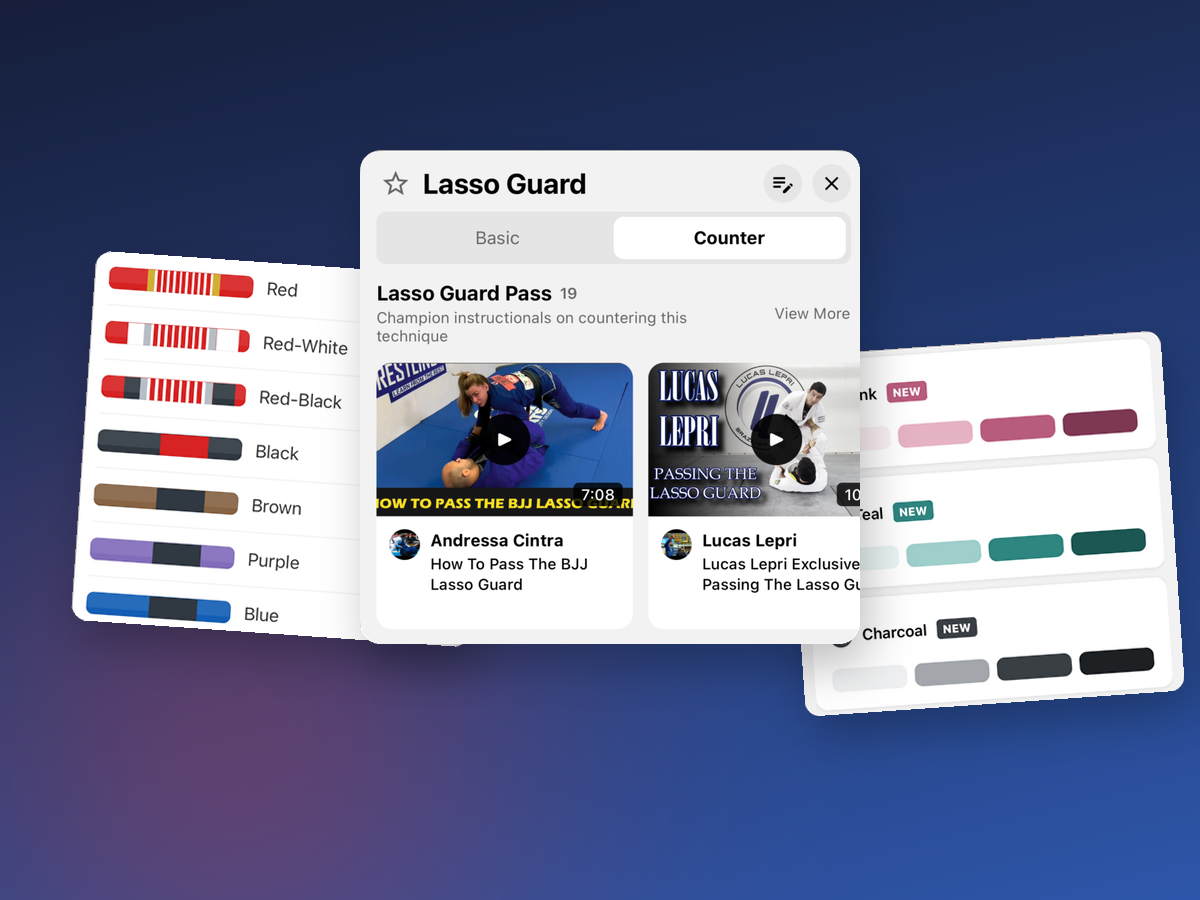
The banana split technique page on the web has the basic description, 10 videos, and 4 counter and escape videos. In the app, the counter tab on the same page continues the escapes. The tab arrived in the November update.
FAQ
Does it work on flexible people?
Flexibility buys time, but two legs locked in opposite directions and stretched with the whole body will still work. It works best combined with other threats from the truck, such as the twister or calf slicer.
Is it a joint lock?
Not a classic single-joint lock. It is a groin and hip stretch, and the hip is under real strain, which is why tapping early is the rule.
Is it legal in IBJJF?
In the June 2024 IBJJF Rule Book table of technical fouls and illegal moves, "Leg-stretching submissions (splits)" is marked illegal in the ages 4–12 column and is not marked illegal from ages 13–15 upward, including adult divisions. "Spinal lock without a choke," where the twister belongs, is illegal in every column. Organizers can be stricter, so check the current official table before competing. If it is your first event, the first competition preparation guide may help.
Related reading
- Banana split technique page
- Truck
- Twister
- November update: counter tab and champion search
- Ezekiel Choke in Gi vs No-Gi: Setups and Counters
The starting point is making sure the locked leg cannot slip out. If you have feedback about the app, feel free to reach out anytime. 😇