Once you've signed up for your first tournament, training gets strangely harder. Every round of sparring feels like a test, and you keep reopening the weight class chart. I went through the same thing. Looking back, what decided my first tournament wasn't technique, it was preparation. Making weight, not getting flagged at gi check, and not missing your own match. Get those three right and you'll have a lot more left in the tank for the mat.
Everything below is based on IBJJF rules. Some local tournaments use IBJJF rules as they are and others change a few of them, so read the rules page for the event you signed up for too.
Before You Register: Check the Weight Class and Weigh-In Format
The most common mistake when picking a weight class is going by your usual body weight. IBJJF weight classes are based on your weight in the gi. A gi usually weighs around 1.5 to 2kg, so if you think in terms of your bare weight, you could end up a class higher than you expected. Here are the upper limits for adult male gi divisions.
- Rooster 57.5kg (127lb) · Light Feather 64kg (141.6lb) · Feather 70kg (154.6lb)
- Light 76kg (168lb) · Middle 82.3kg (181.6lb) · Medium Heavy 88.3kg (195lb)
- Heavy 94.3kg (208lb) · Super Heavy 100.5kg (222lb) · Ultra Heavy no limit
What matters even more is how the weigh-in works. At IBJJF events you weigh in wearing your gi, right before your first match, and you get one chance. If you're over, you're disqualified from that division on the spot. It's not a weigh-in the day before with a night to recover, so I'd skip any aggressive weight cut at your first tournament. Take your weight the morning of the match, add the weight of your gi, and pick a class where you have at least 1kg of room. For local tournaments, whether the weigh-in is on the day and whether it's in the gi varies by event, so find those two lines in the rules first.
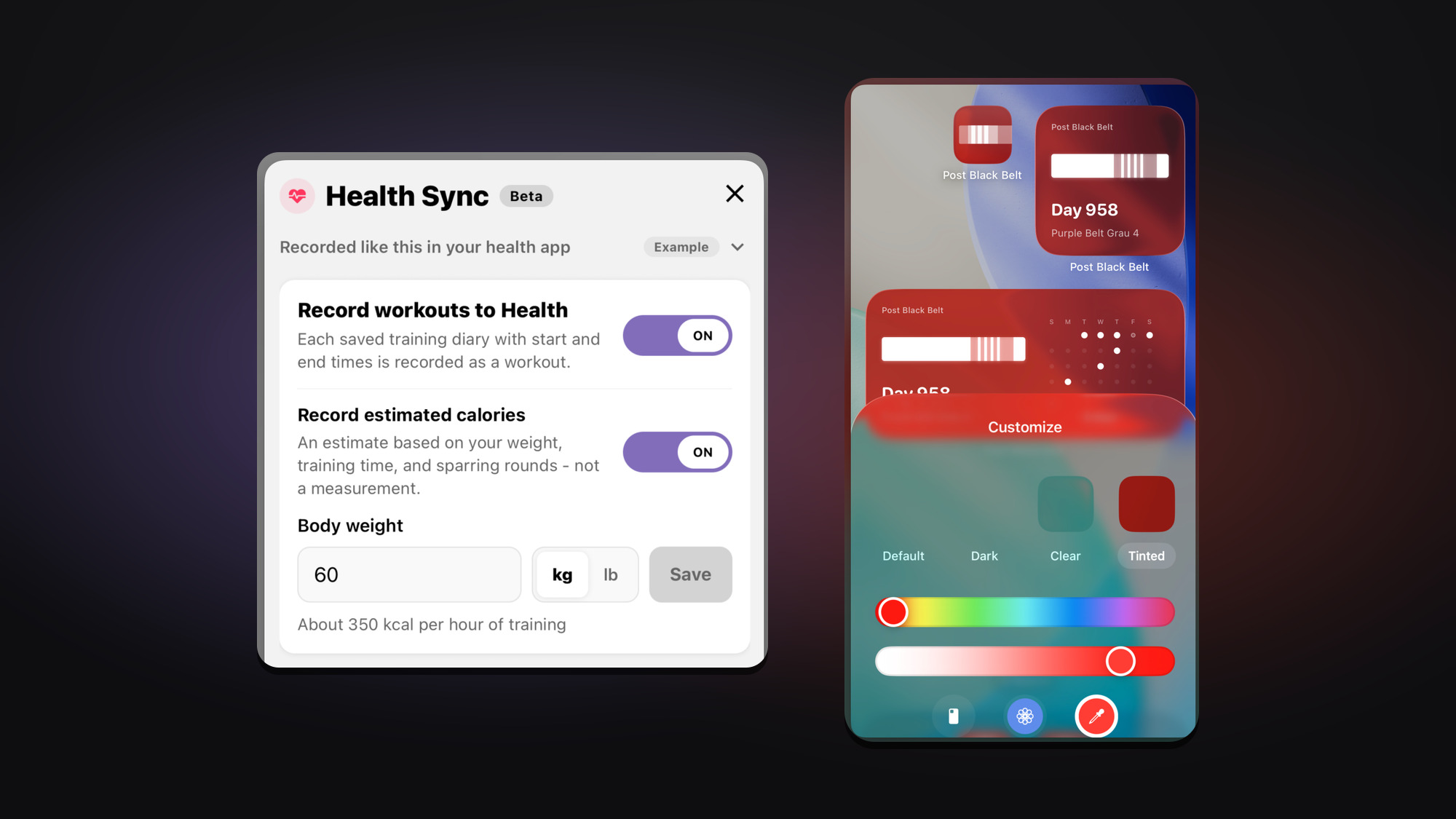
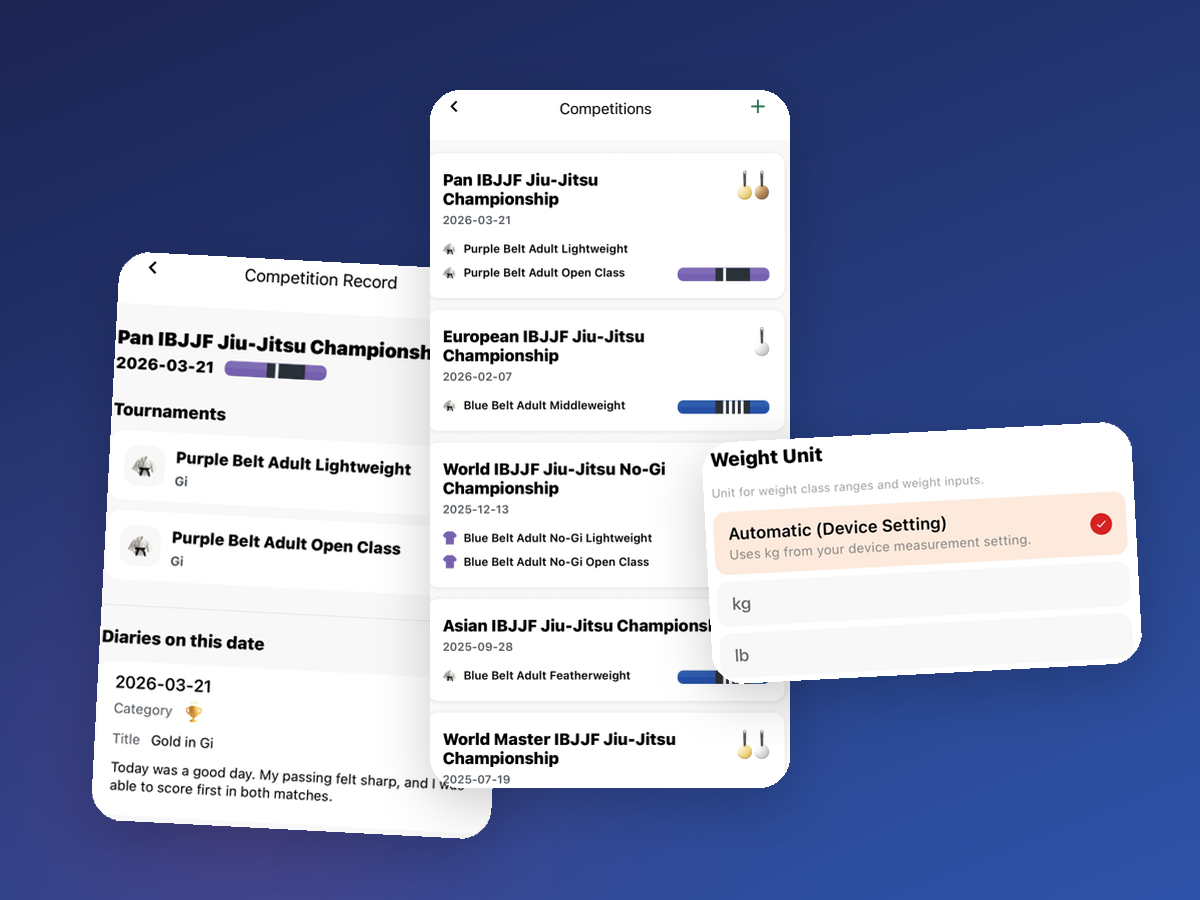
In Post Black Belt, you can pick kg or lb under "Language · Country · Weight Unit" in settings. When a tournament lists its weight classes in pounds, like international events do, switching the unit lets you compare ranges right away.
How to Avoid Getting Flagged at Gi Check
At IBJJF events, an inspector checks your gi before weigh-in. If it doesn't pass, you have to change, and if you don't have a spare, you might not be able to compete. The things that get flagged tend to be the same few.
- The color has to be white, royal blue, or black, and the jacket and pants have to match. A gi with just a different collar color isn't allowed either.
- They measure sleeve length, pants length, and sleeve width. A gi that has shrunk after a few washes gets flagged easily because the sleeves are too short. Before the tournament, stretch your arms straight out in front of you and check that the sleeves reach close to your wrists.
- The belt should be 4 to 5cm wide, and unless you're a black belt, it needs a black bar at the end. Wrap it around your waist twice, tie it tight, and leave about 20 to 30cm hanging below the knot.
- Men can't wear a T-shirt under the gi jacket. Women must wear a fitted rash guard underneath.
Trim your fingernails and toenails short the day before, and it's easier to leave rings and earrings at home.
Points and Illegal Moves: Know At Least This Much Before You Go
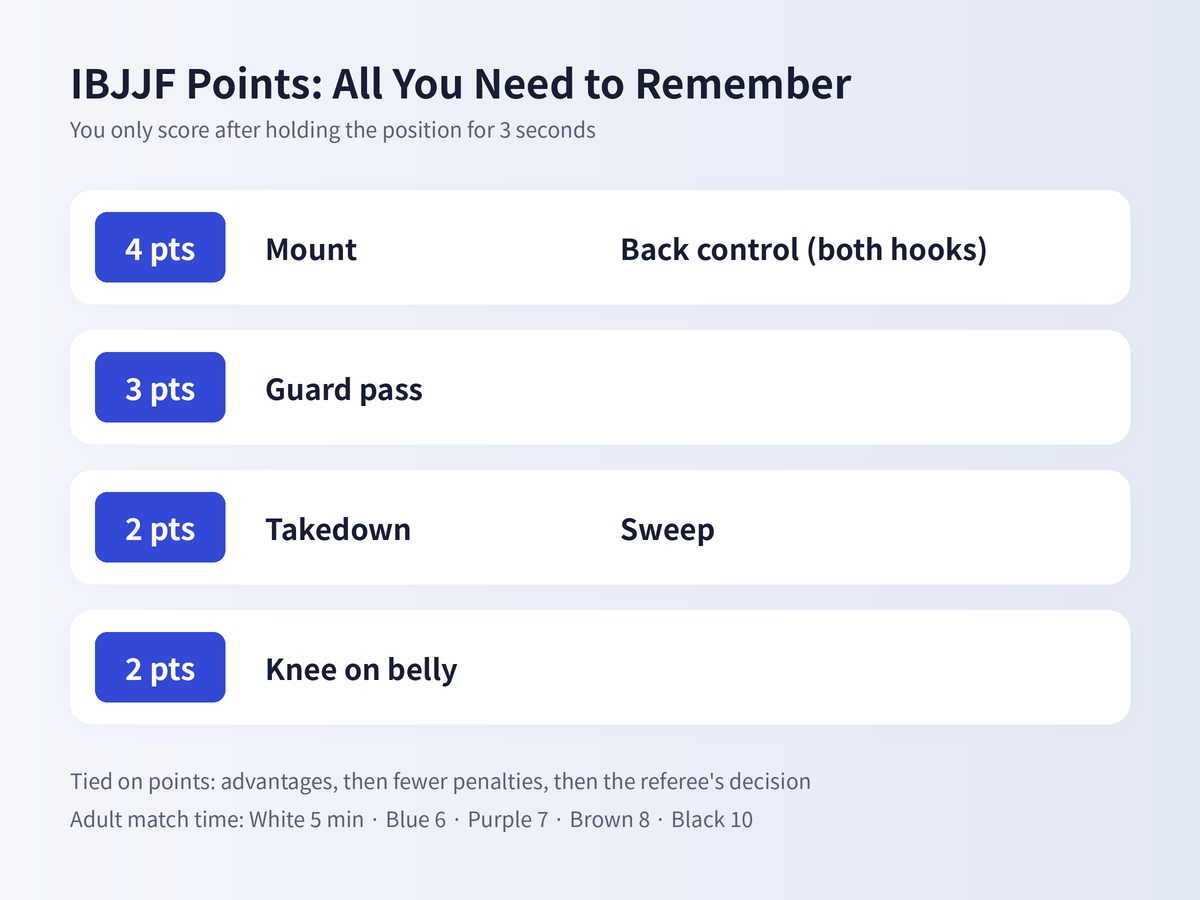
You only get points if you hold the position stably for 3 seconds. If you sweep and pop right up, then get reversed, you often end up with just an advantage instead of points. This is the most painful thing to watch happen in a first tournament. Once you've secured a position, count to three, then move on to your next step. An adult white belt match is 5 minutes, and if the points are tied, the winner is decided by advantages, then the number of penalties, and finally the referee's decision.
You also need to know which techniques are illegal at white belt. Looking at the illegal techniques table in the IBJJF rules, the only leg lock a white belt can use is the straight footlock. Heel hooks, kneebars, toeholds, calf slicers, anything that twists the knee, and knee reaping (putting your thigh behind the opponent's leg and pressuring the knee from outside to inside) are all illegal. Even the straight footlock becomes illegal if you turn your body toward the foot that isn't being attacked. In the upper body, wrist locks and bicep slicers are banned, as is squeezing the waist or ribs with your legs from closed guard, Slams (lifting your opponent and driving them into the mat) and scissor takedowns aren't allowed either. Even moves you do all the time at your gym can be illegal in competition, so if there's a technique you rely on, it's worth checking it with your coach once.
From One Week Out to Tournament Day
One week before
The time for learning new techniques has passed. This week, repeat one game plan. How you'll start standing (takedown or guard pull), the one sweep you're most confident in from the bottom, one pass from the top, and one submission to finish. One of each is plenty. Dial down the sparring intensity a little and just avoid injuries. Once the brackets come out, check your estimated match time.
The day before
Pack your bag ahead of time. Two gis (in case one gets flagged at inspection), belt, ID and your registration confirmation screen, slides, water, an easily digestible snack like a banana or an energy bar, tape, and a towel. As for sleep, rather than forcing yourself to go to bed earlier than usual, lying down at your normal time actually works better.
Tournament day
Get to the venue well ahead of your estimated time. Tournaments can speed up or slow down depending on how the earlier matches go. When you arrive, check your mat number and how they'll call you, and start warming up lightly about 30 minutes before your match. Eating a lot before your first match hurts you both at weigh-in and on the mat.
Nerves Aren't Something to Get Rid Of, They're Something to Use
Everyone gets nervous at their first tournament. Your hands shake, and you're already out of breath before you grab your first grip. That's a sign your body is getting ready, so you don't need to force it down. What worked for me was deciding on something very small to do right before the match. Something like "first grip on the collar, and once I've got it, pull guard right away." If the first 10 seconds go as planned, the rest tends to follow more naturally than you'd expect.
Go in ready to lose, too. The real point of a first tournament is less about the medal and more about seeing how your game falls apart under real pressure. Once you know that, the direction of your training for the next few months becomes clear.
Write It Down the Same Day the Tournament Ends
You forget what happened in your matches faster than you'd think. That night, or the next day at the latest, write down what worked and where you got stopped. I keep it short, the same way I do my training journal. The four lines I covered in how to keep a BJJ training journal (what I learned, what went well, where I got stuck, next goal) work for tournament notes just as they are.
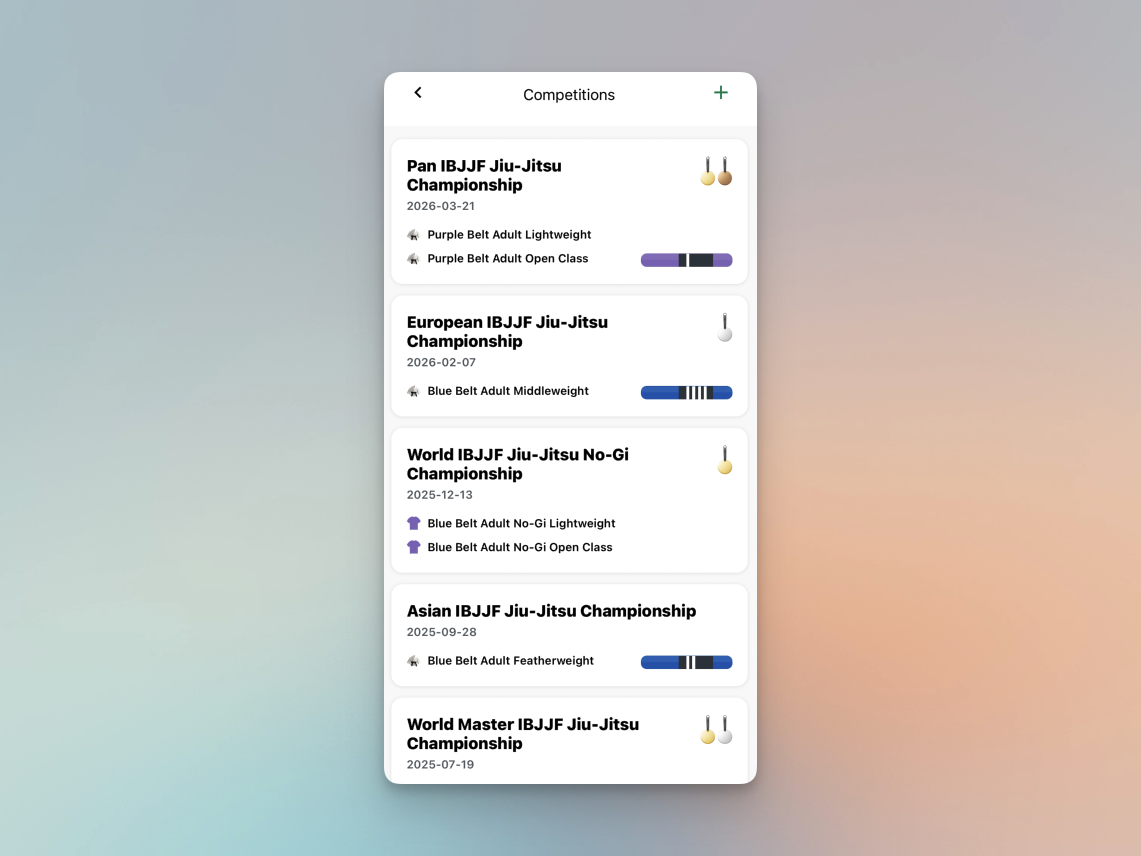
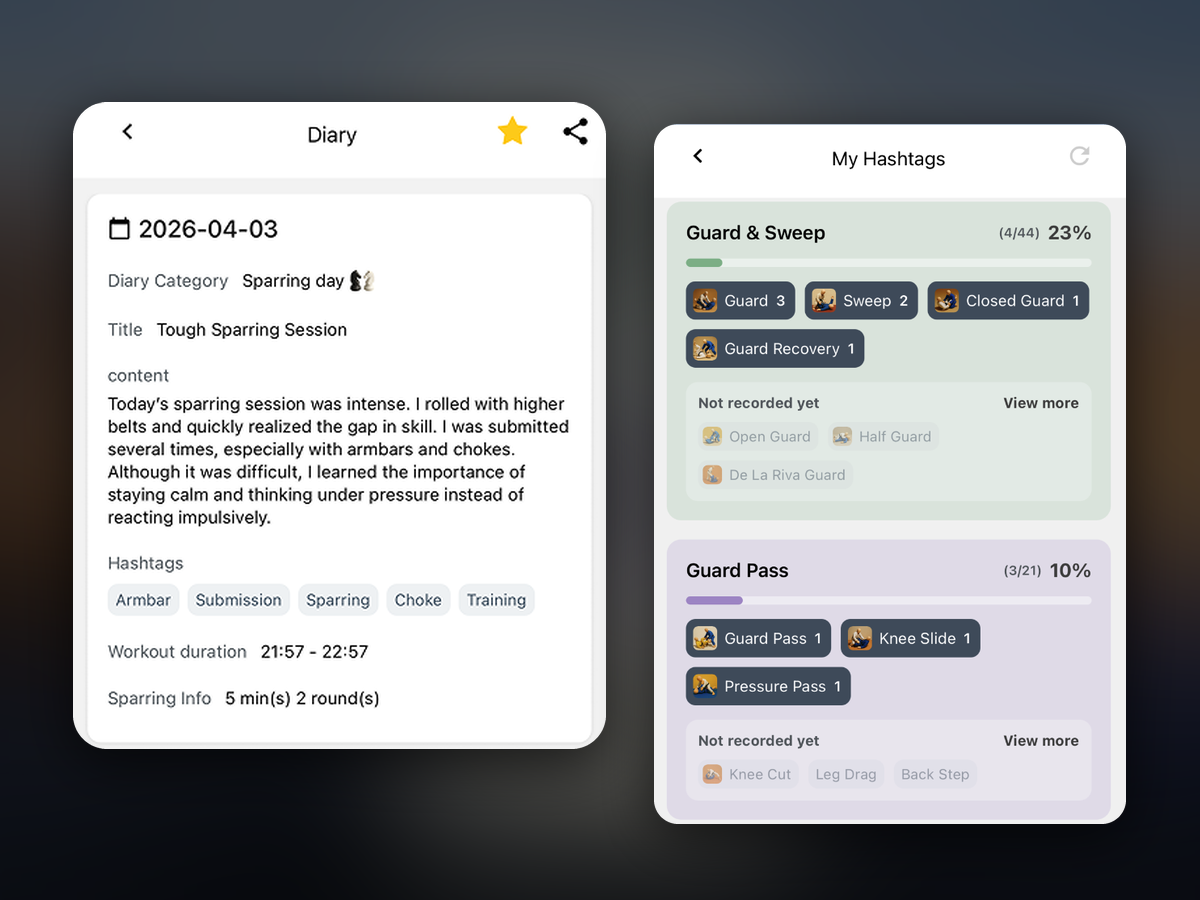
Post Black Belt has a dedicated place to log tournaments. If you save the tournament name, date, division you entered, and medal, then for gi tournaments your belt at that time also shows up, based on your belt vault records. Journal entries written under the competition category can be viewed together on My Page, so when you're preparing for your next tournament, it's easy to pull up how you prepared last time and how you felt after the matches.
FAQ
Can a white belt compete in a tournament?
Yes. Most tournaments run a separate white belt division. In fact, competing early gives you a quick look at what to prioritize in training.
What happens if I'm over weight at weigh-in?
At IBJJF events you only get one chance, and if you're over, you're disqualified from that division. Some local tournaments allow you to change weight classes, so check the rules.
Do I have to buy a new gi?
No. It just needs to meet the color and measurement rules. That said, an old gi that has shrunk can get flagged on sleeve length, so check ahead of time.
References
- IBJJF — Rule Book: points, match time (5 minutes for adult white belts), tiebreakers, gi and belt rules, and the illegal techniques table by belt
- IBJJF — World No-Gi Championship 2026 event info: weigh-in right before your first match, one attempt, disqualification if over
- IBJJF Gi weight divisions (based on weight in the gi)