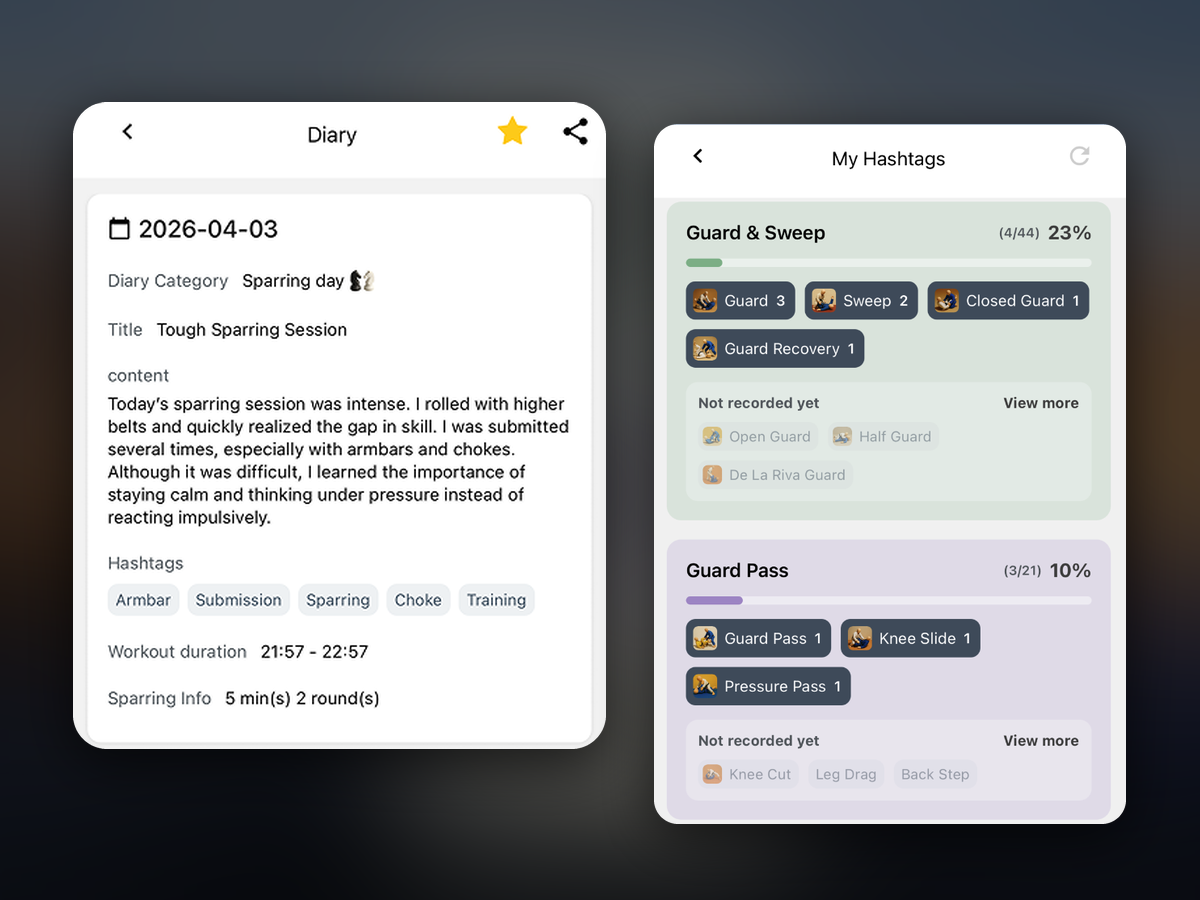
Have you ever decided to start a BJJ training journal? I have, many times. The first day I write down the whole class. On day three it is three lines. A week later I do not even open the notebook. Looking back, the journal was not the problem. I was trying to write too much.
Hi, I am Quartz, building the jiu-jitsu journal app Post Black Belt. I have read a lot of training logs, mine and other people's, while building it. In this post I want to share the smallest version of a BJJ training log that actually lasts: two minutes after class, four lines.
What Should You Write in a BJJ Training Journal?
The most common BJJ training log is a row of numbers: "5 rounds, tapped 3 times." That is not wrong, but a month later it will not tell you what to fix. How many times you tapped matters less than where you got stuck and why.
So I write names instead of numbers. The name of the technique I learned, the name of the position I spent the most time in while sparring, the name of the spot where I got stuck. Names let you group entries later, and grouping is what reveals patterns.
The 4-Line Template for After Class
The template is simple. Before you leave the mat, fill in these four lines. One sentence each is enough.
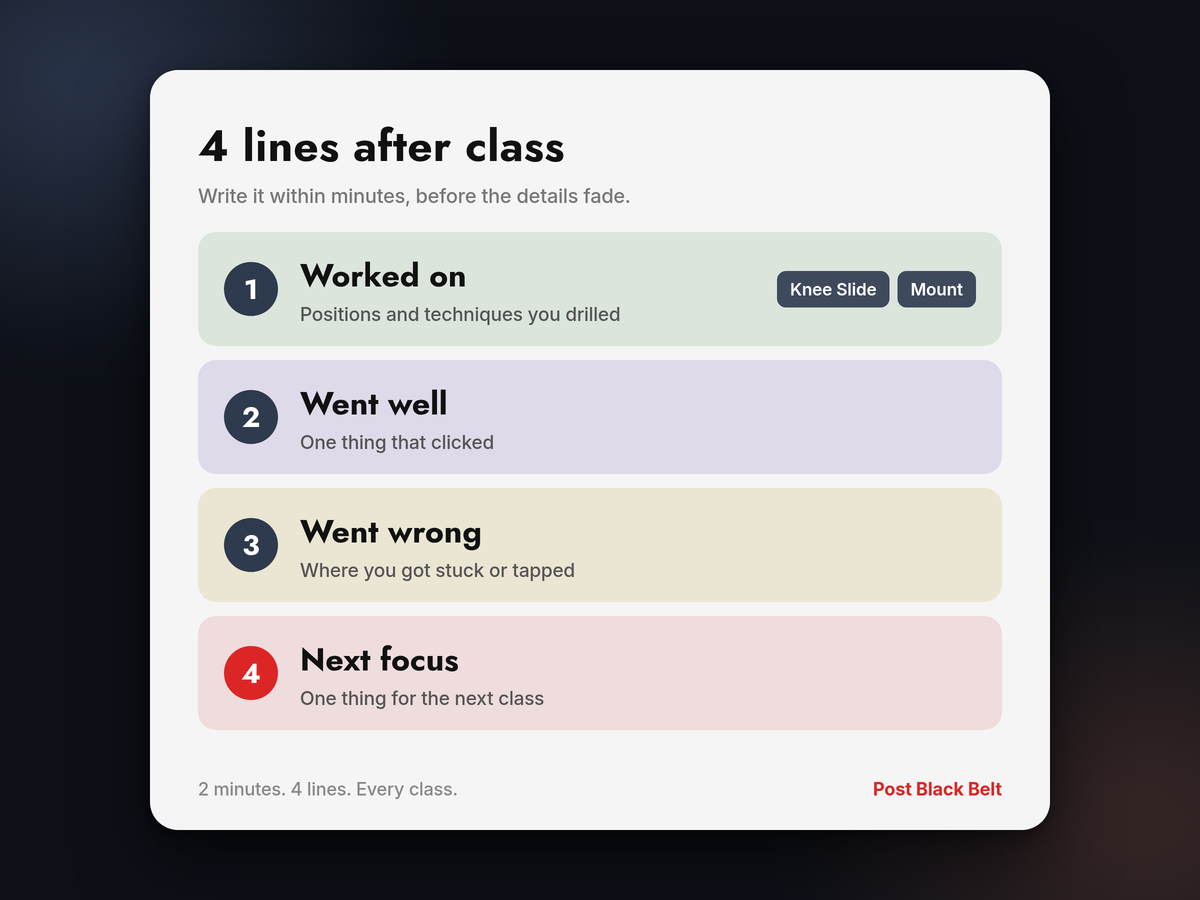
- Worked on: the positions and techniques you drilled or used in sparring.
- Went well: one thing that clicked for the first time.
- Went wrong: where you got stuck or tapped, and what happened right before.
- Next focus: exactly one thing to check in the next class.
Here is what it looks like in practice.
- Worked on: hip escape from closed guard into a knee slide pass
- Went well: breaking the sleeve grip first opened the angle for the pass.
- Went wrong: stalled going from side control to mount because my knee got stuck.
- Next focus: check my knee line first when moving side control to mount.
That takes somewhere between 30 seconds and two minutes. It does not have to be a polished write-up. Consistency matters more than quality.
When Is the Best Time to Write It?
Right after class is best. By the time you have showered and are on your way home, the details are already fading. I usually write before I take off my gi or pack my bag. Some days I am too tired to type much, so I give myself permission to write just one line. One line beats zero every time.
If even typing feels like too much, you can speak it. Post Black Belt lets you write a journal entry by voice, so a few sentences on the way home are enough to keep a record.
Log Positions, Techniques, and Hashtags, Not Just Taps
One more habit changes the value of your journal a lot: always use the same name for the same technique or position. If you write "knee slide" today and "pushing the knee through" tomorrow, you will never be able to group them.
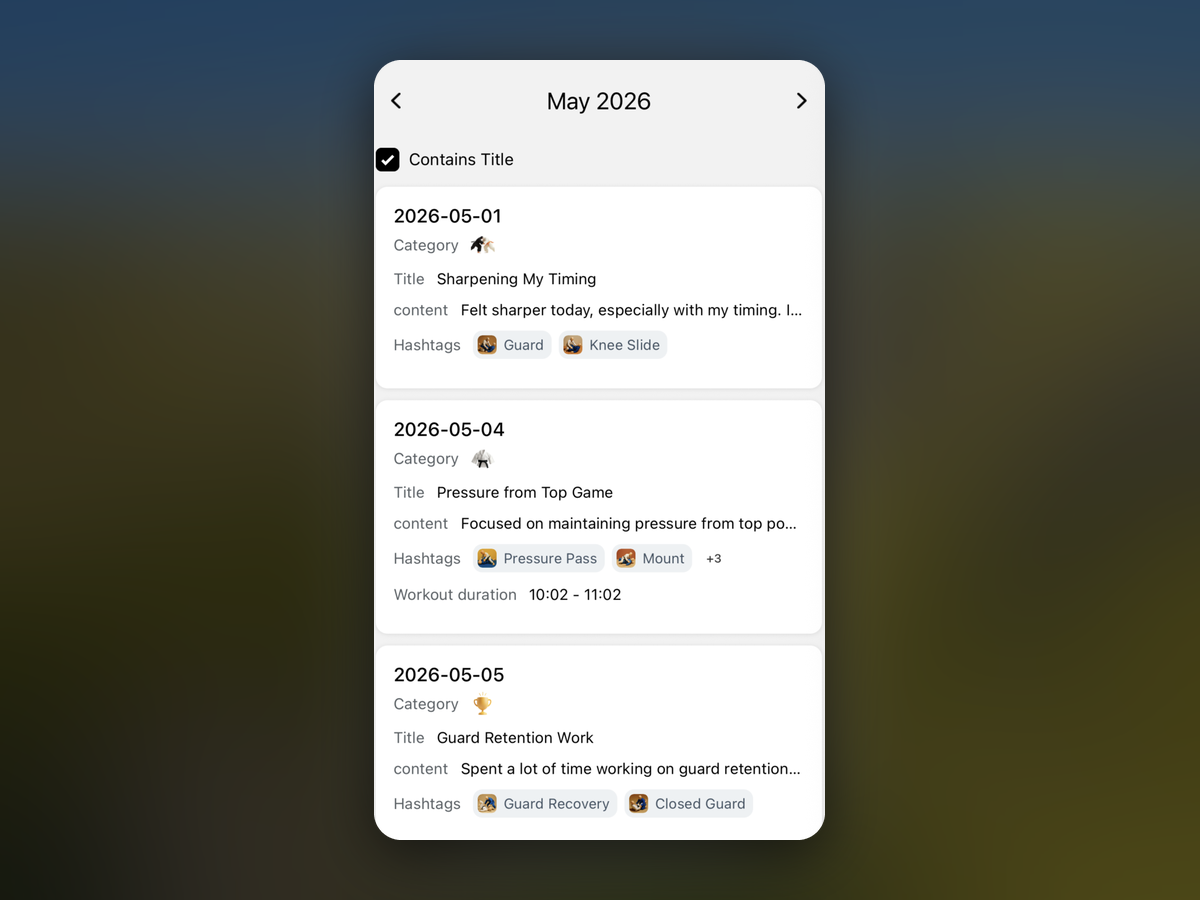
A Post Black Belt journal entry has more than a title and content: hashtags, workout duration, sparring rounds, and more. I put the four lines in the title and content, then pick the positions and techniques I worked on as hashtags. There is no need to invent names each time, and the same technique always gets the same tag.
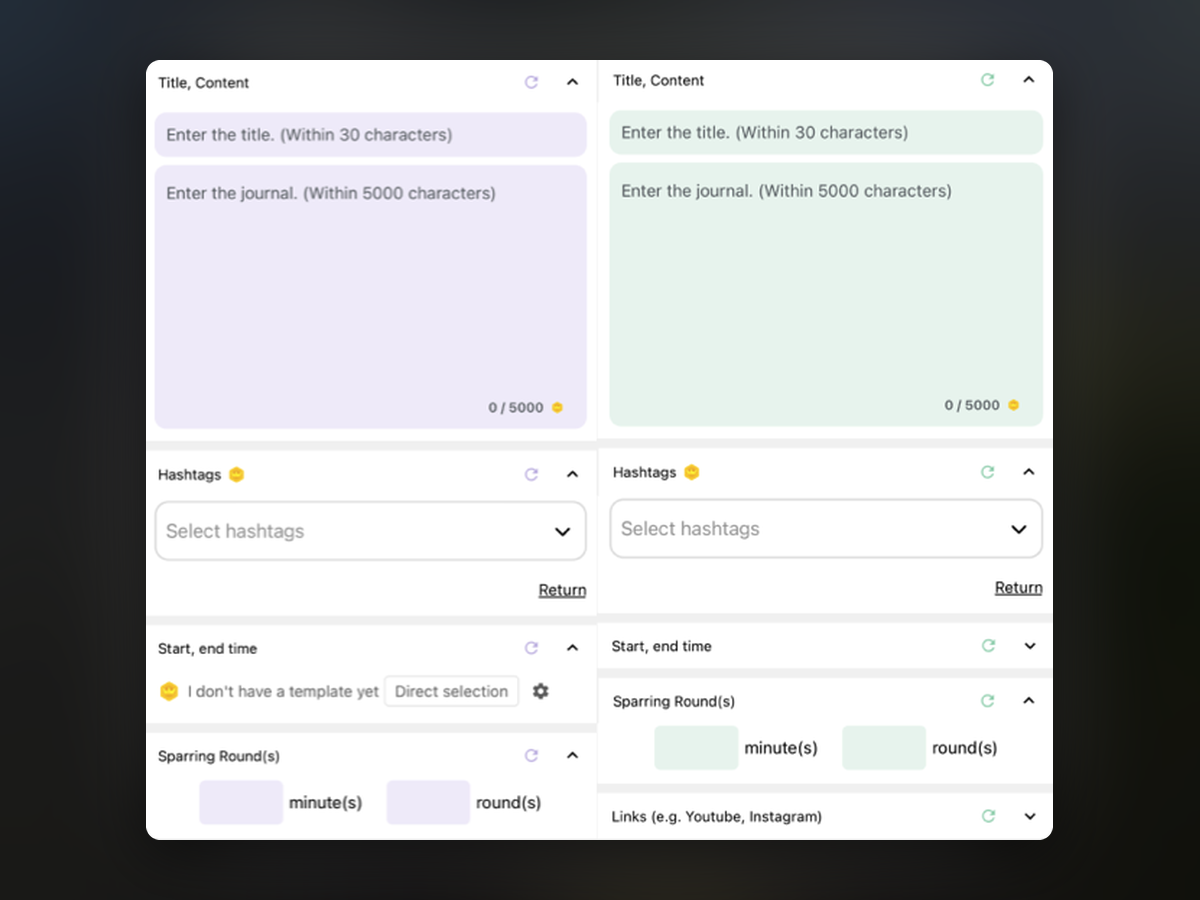
Here is a finished entry: date, category, the content, hashtags, workout duration, and sparring info, all on one screen.
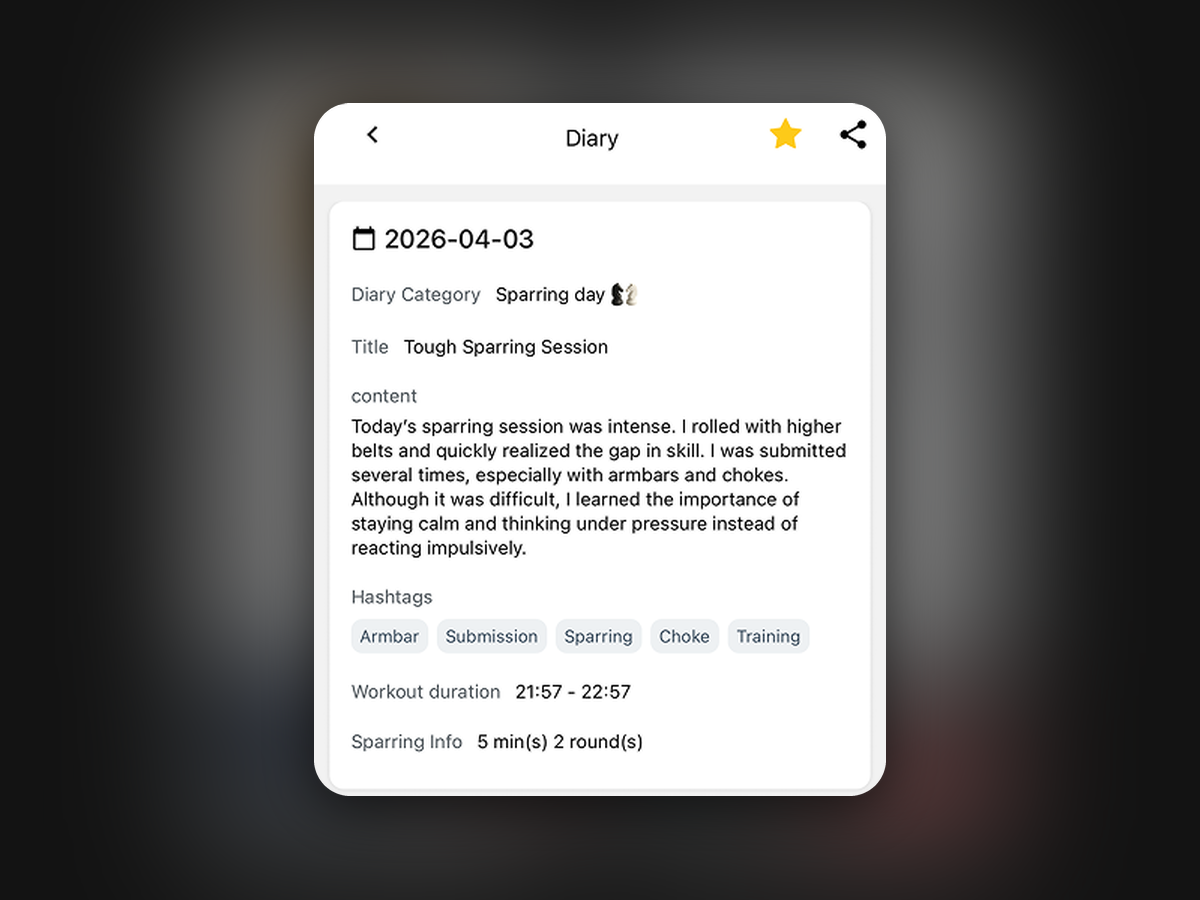
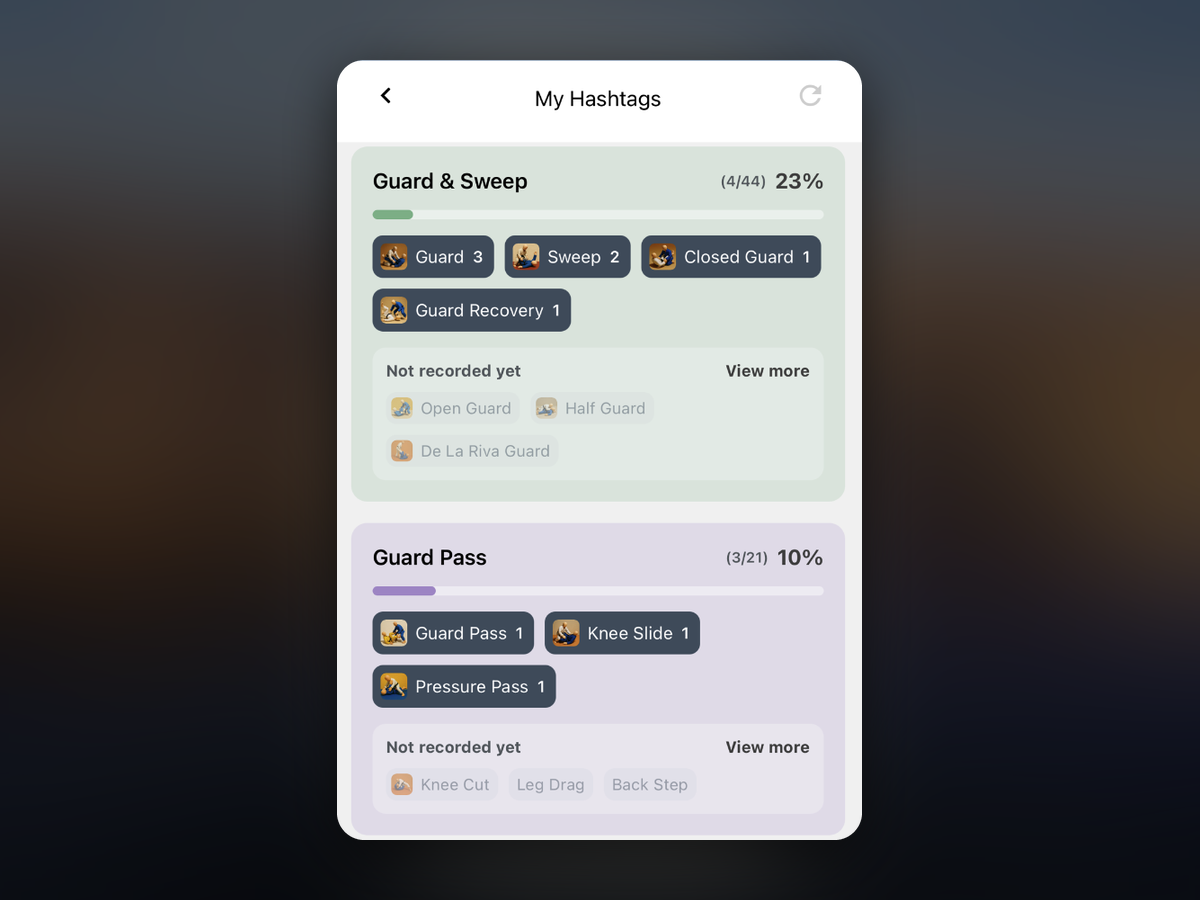
Once hashtags pile up, you can also see how much of each area you have logged. The My Hashtags screen groups techniques by area, such as guard, pass, and position, and shows which ones you have recorded and which you have not yet. When a gap is visible at a glance, picking the next class's focus gets easier.
Read It Back Once a Week
A journal gains its power when you read it, not when you write it. Once a week I spend about five minutes reading through my recent entries. The app has no dedicated weekly review screen, so I just scroll through the calendar and the journal list.
- Did the same name show up twice or more under "went wrong" this week?
- Did I actually try my "next focus" in the following class?
- Pick one of those as next week's focus.
If the same problem keeps coming back, that is the thing to fix first. Choosing just one and keeping it in mind for a week makes your training noticeably more specific.
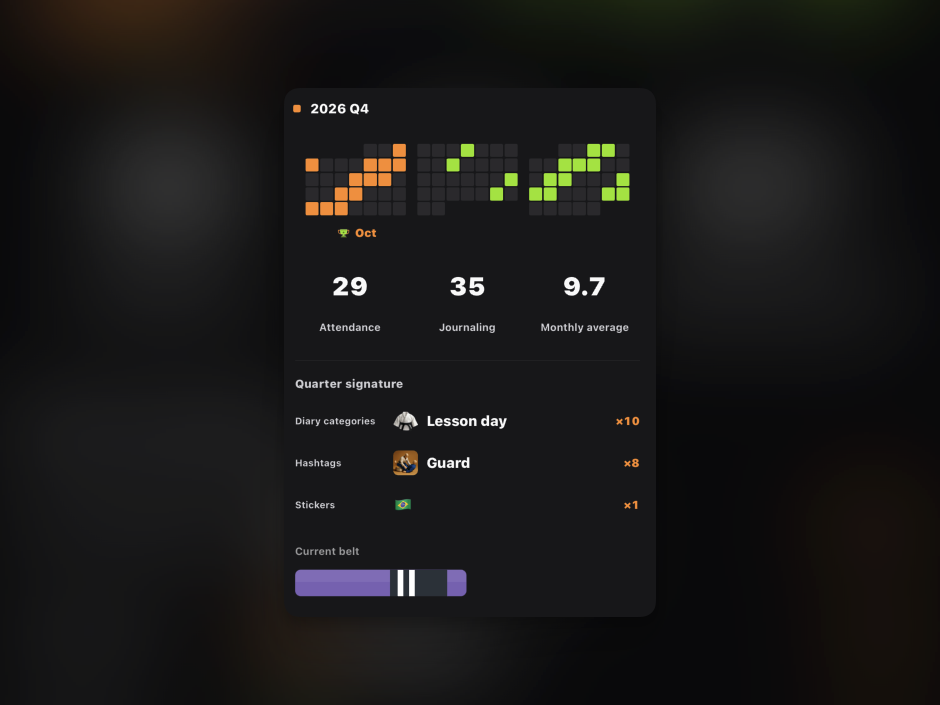
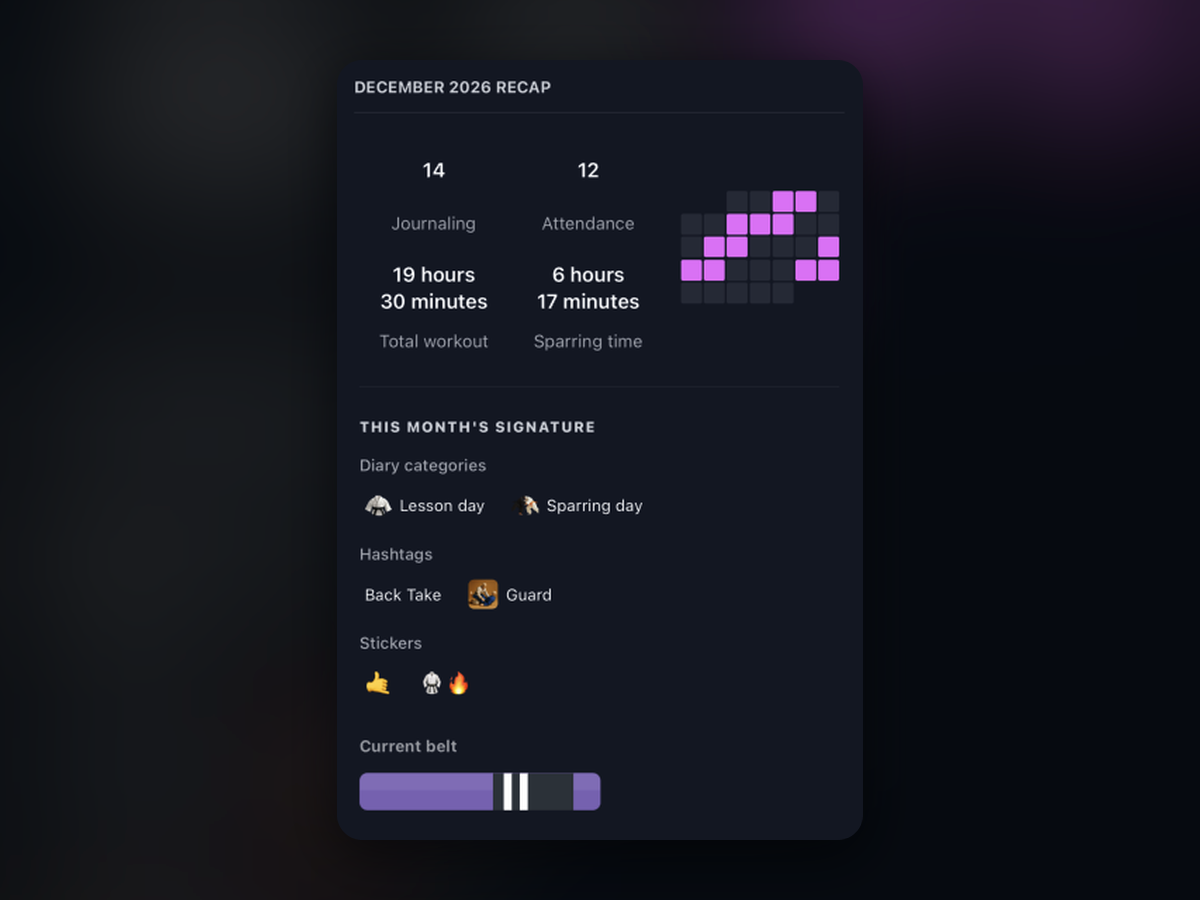
At the end of the month there is a monthly recap too. It sums up how many times you trained and which hashtags you used the most on a single card. Seeing the habit turn into numbers is a nice bit of motivation.
Wrap-up
To sum up: write right after class, only four lines, with consistent names. Read them once a week and pick one focus. A notebook or a notes app works fine. But if you want to collect techniques and positions as hashtags like I do, Post Black Belt might help.
If you have class today, try writing just four lines afterward. And if you have feedback about the app, feel free to share it anytime. 😇