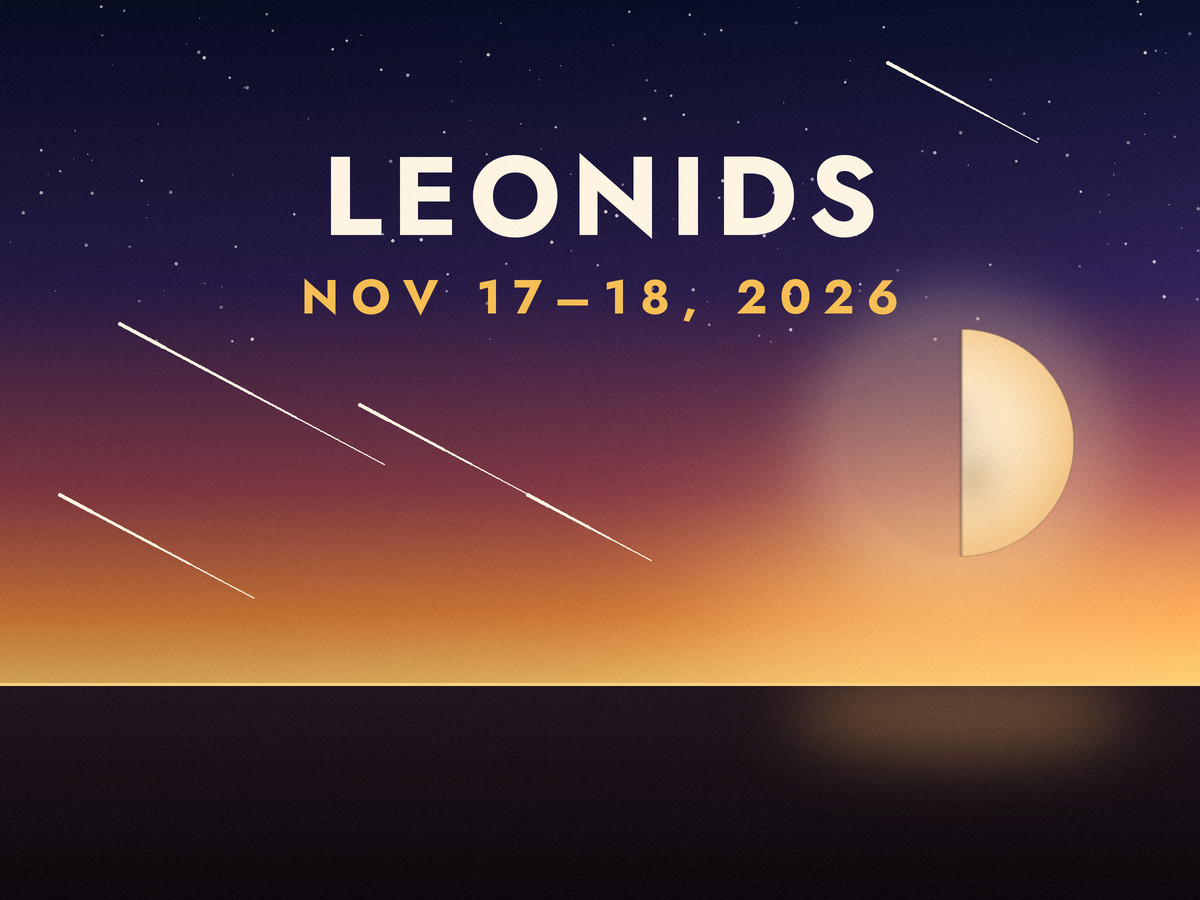
The 2026 Leonid meteor shower is best on the night of November 17 into the early hours of November 18. The International Meteor Organization (IMO) lists the peak at 23:45 UT on November 17, with a zenithal hourly rate (ZHR) of about 15. That is a normal Leonid year, not a meteor storm.
The Moon is the wildcard this year. It reaches first quarter on the evening of November 17 (20:47 in Seoul), so moonlight washes out the early evening sky. The good news is that a first quarter Moon sets around midnight. The plan is simple: watch after the Moon sets and before dawn. I calculated the moonset times for five cities.
The peak time falls in daylight in Asia
The IMO peak of 23:45 UT on November 17 is 8:45 a.m. on November 18 in Seoul and Tokyo, after sunrise. In London it is 23:45 on November 17, and in New York it is 6:45 p.m. on November 17.
Peak predictions vary, though. The IMO calendar also cites a calculation by Maslov that puts the maximum at 16:00 UT on November 17, which is 1:00 a.m. on November 18 in Seoul. Meteor shower peaks also wander by several hours. So instead of chasing one exact minute, I would use the whole moon-free stretch of the night of November 17–18.
Moonset and dark sky by city
On the night of November 17, the first quarter Moon sets at 00:01 in Seoul on November 18. After that, the sky stays free of moonlight until astronomical dawn begins. While the Sun is more than 18 degrees below the horizon the sky is fully dark. Before sunrise, once the Sun climbs back past that line, astronomical dawn starts and the sky slowly brightens. All times below are local, for the evening of November 17.
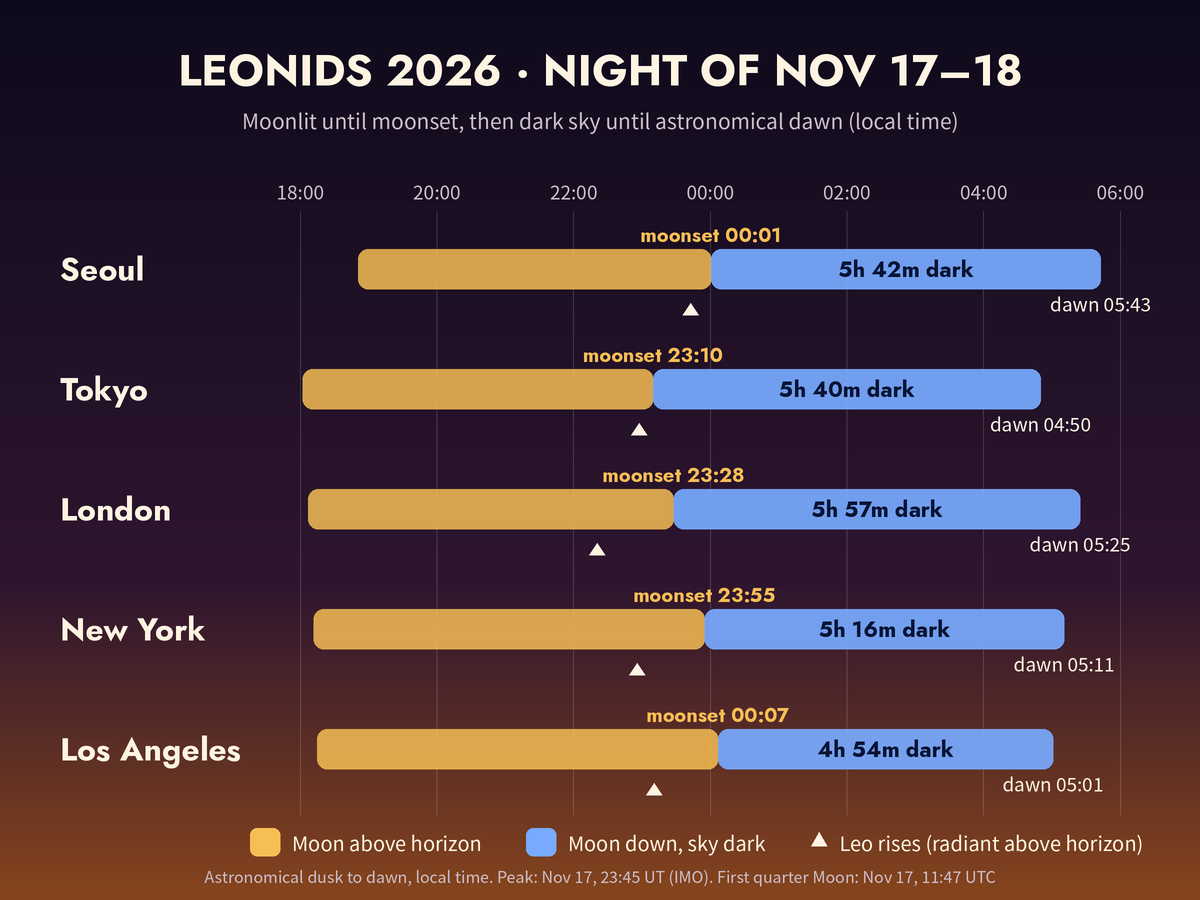
- Seoul: moonset 00:01, astronomical dawn 05:43. About 5 h 42 min of moon-free dark sky. Leo rises around 23:43.
- Tokyo: moonset 23:10, astronomical dawn 04:50. About 5 h 40 min.
- London: moonset 23:28, astronomical dawn 05:25. About 5 h 57 min.
- New York: moonset 23:55, astronomical dawn 05:11. About 5 h 16 min.
- Los Angeles: moonset 00:07, astronomical dawn 05:01. About 4 h 54 min.
My Seoul numbers matched timeanddate to the minute, both for moonset (the night of the 17th, 00:01 on the 18th) and for the start of astronomical dawn (05:43). If you go a night earlier, on November 16–17, Seoul's Moon sets at 23:00. A night later, it sets at 01:02. The earlier night is further from the peak but has a longer dark window.
Where to look
Leonid meteors appear to spread out from a point in Leo, called the radiant. Leo rises around midnight in the east and is highest just before dawn. In Seoul, the radiant climbs above 20 degrees at about 01:31 on the night of the 17th.
Meteors can show up anywhere in the sky, though. Don't stare at Leo. Face a wide patch of dark sky between east and south once the Moon is gone. Meteors that appear farther from the radiant tend to show longer trails.
One caveat: a ZHR of 15 is what you would count under a perfectly dark sky with no Moon. Near a city you will see far fewer, so it helps to get away from streetlights if you can.
Checking moonset in the app
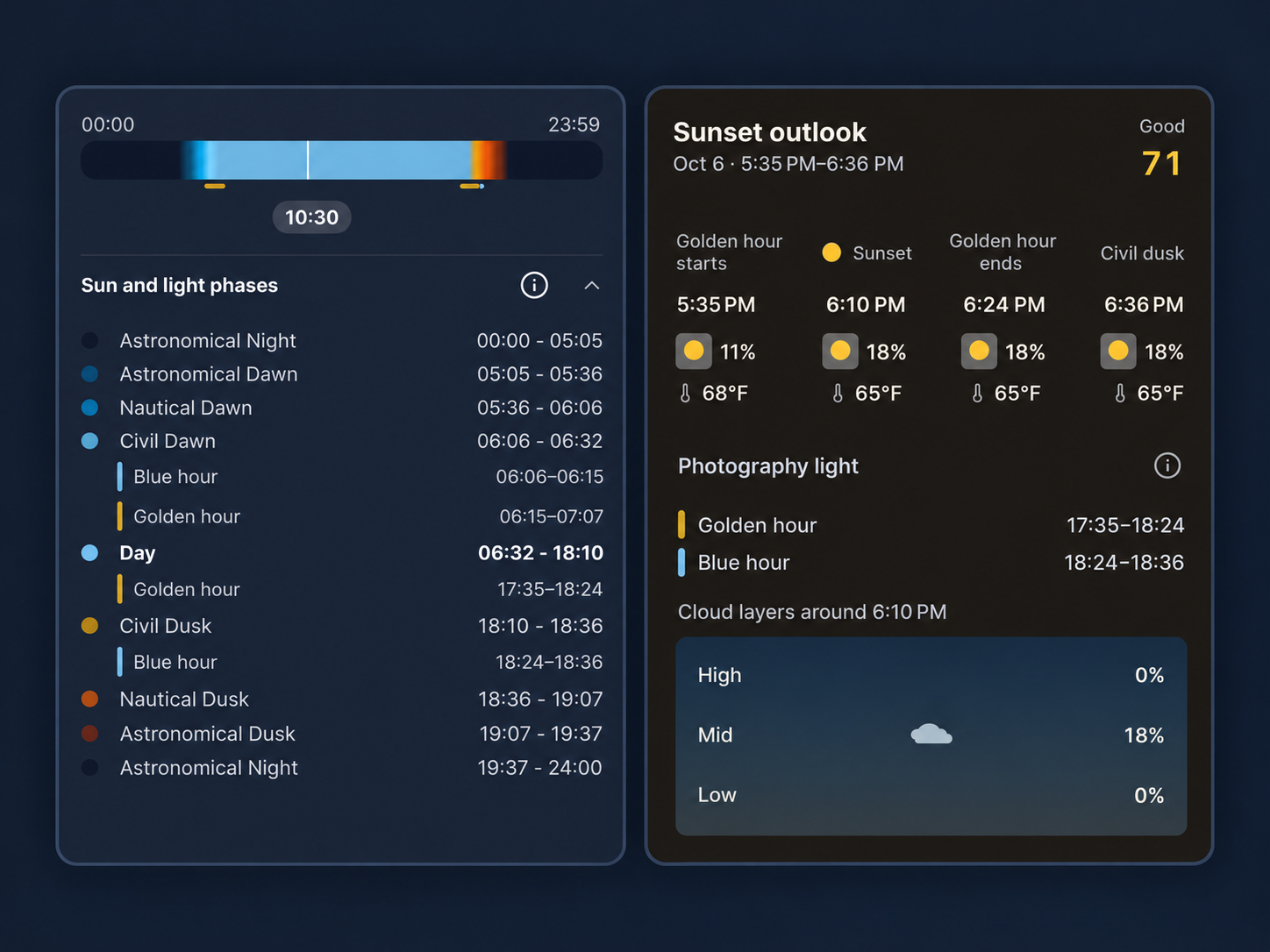
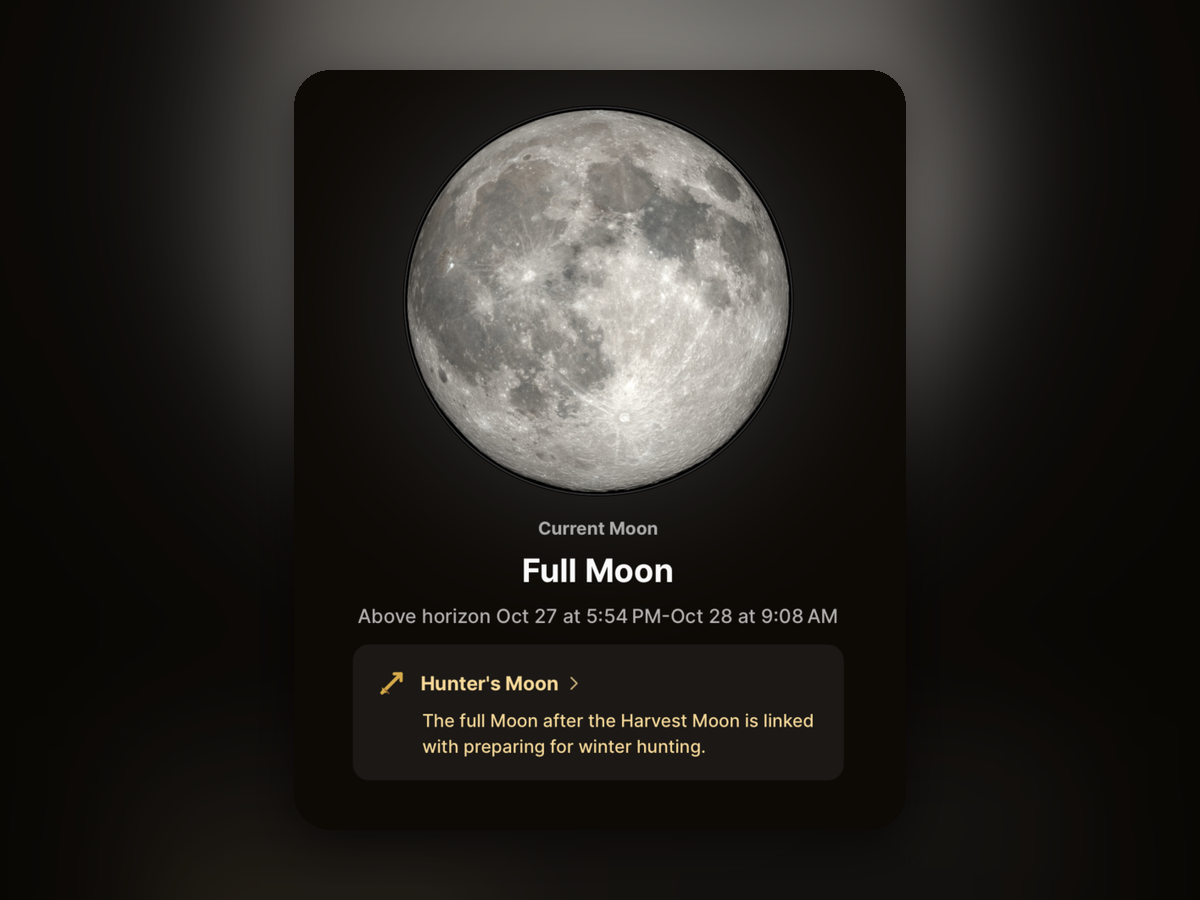
I check the Moon Conditions screen in Golden Horizon, which shows the window when the Moon is above the horizon. It works for your own location, not just the cities in the table.
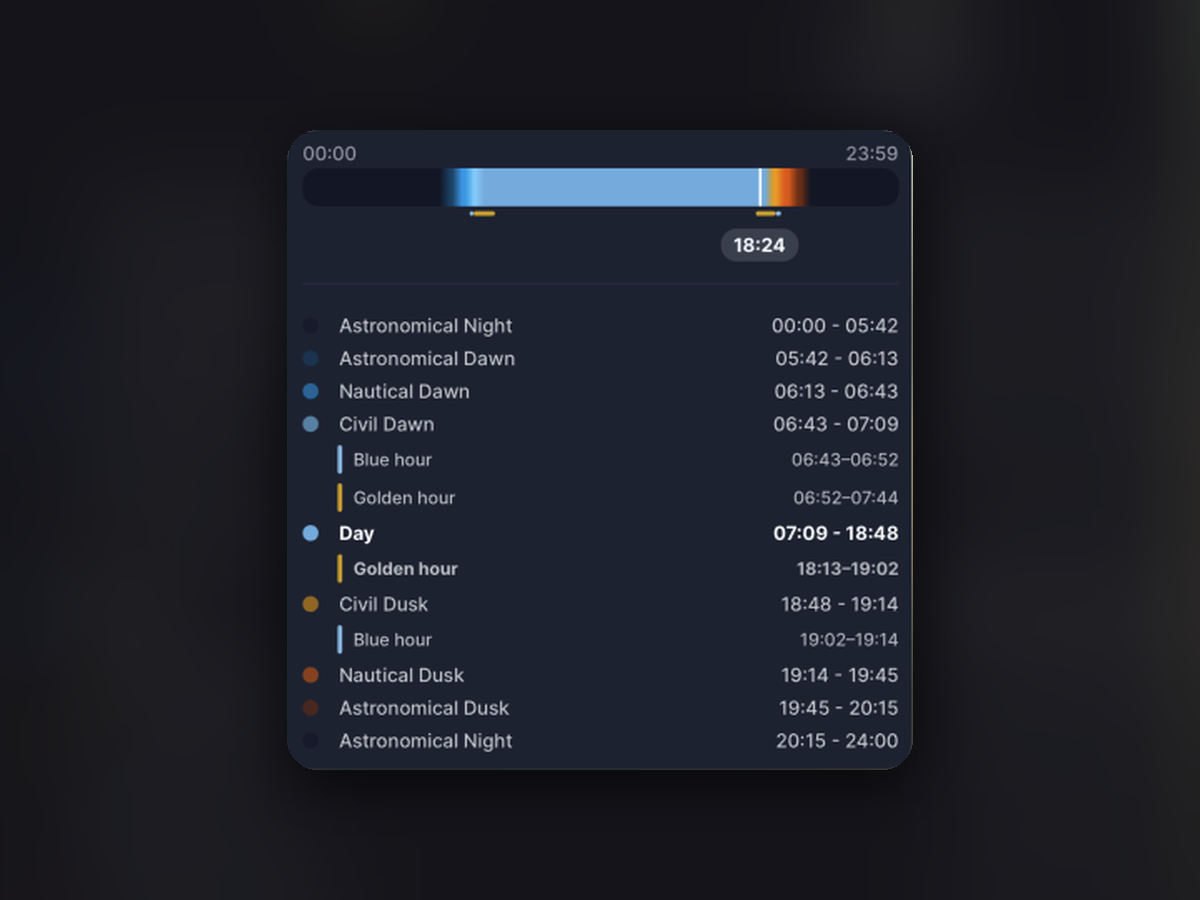
To see how long the dark sky lasts before dawn, the light timeline in the sunrise and sunset screen shows when Astronomical Dawn begins. After that, the sky gradually brightens.
Quick tips for meteor photos
- Use a tripod and a wide-angle lens. You never know where a meteor will streak, so frame wide.
- Keep Leo at one side of the frame. The radiant can be in the shot. For longer trails, aim a little away from it.
- Shoot 15 to 20 second exposures in a continuous series. Use an intervalometer, keep shooting, and pick out the frames with meteors later.
- Face away from the Moon before it sets. While the first quarter Moon hangs in the western sky, pointing east keeps most of the moonlight out.
For planning light and timing, see A Photographer's Guide to Perfect Golden Hour Shots. For checking moon events in the app, see Check Planet, Blue Moon, and Solar Eclipse Events.
Early November also has the Taurids, with no Moon
New Moon falls on November 9, so early November is a low-moonlight stretch. The IMO lists the Southern Taurids peaking around November 5 (ZHR 5–10) and the Northern Taurids around November 12 (ZHR 5). The rates are low, but Taurid meteors are slow and bright, which makes them good targets for still photos. In Seoul the Moon sets at 19:06 on November 12, so that night is moonless from late evening.
By the time this goes up, the Northern Taurids are the closest. Going out once before the Leonids on November 17 is a good practice run.
Summary
The 2026 Leonids are best on the night of November 17–18. In Seoul, the Moon sets at 00:01 and astronomical dawn starts at 05:43, which leaves about 5 h 42 min of moon-free dark sky. Leo rises around midnight and is highest before dawn. The Geminids (December 13–14) are next, and the IMO notes that the Moon will only be a waxing crescent then, so moonlight should be a minor issue. Clear skies.
References
- International Meteor Organization — 2026 Meteor Shower Calendar: peak times, ZHR, Taurids and Leonids
- IMO — 2026/2027 Meteor Shower Calendar: Moon phase on peak nights
- timeanddate — Seoul Moonrise and Moonset, November 2026: Seoul moonset cross-check
- timeanddate — Sunrise and Sunset in Seoul, November 2026: Seoul astronomical twilight cross-check
- EarthSky — Leonid meteor shower: All you need to know in 2026: first quarter timing and viewing window