Events that make you look at the sunset sky one more time
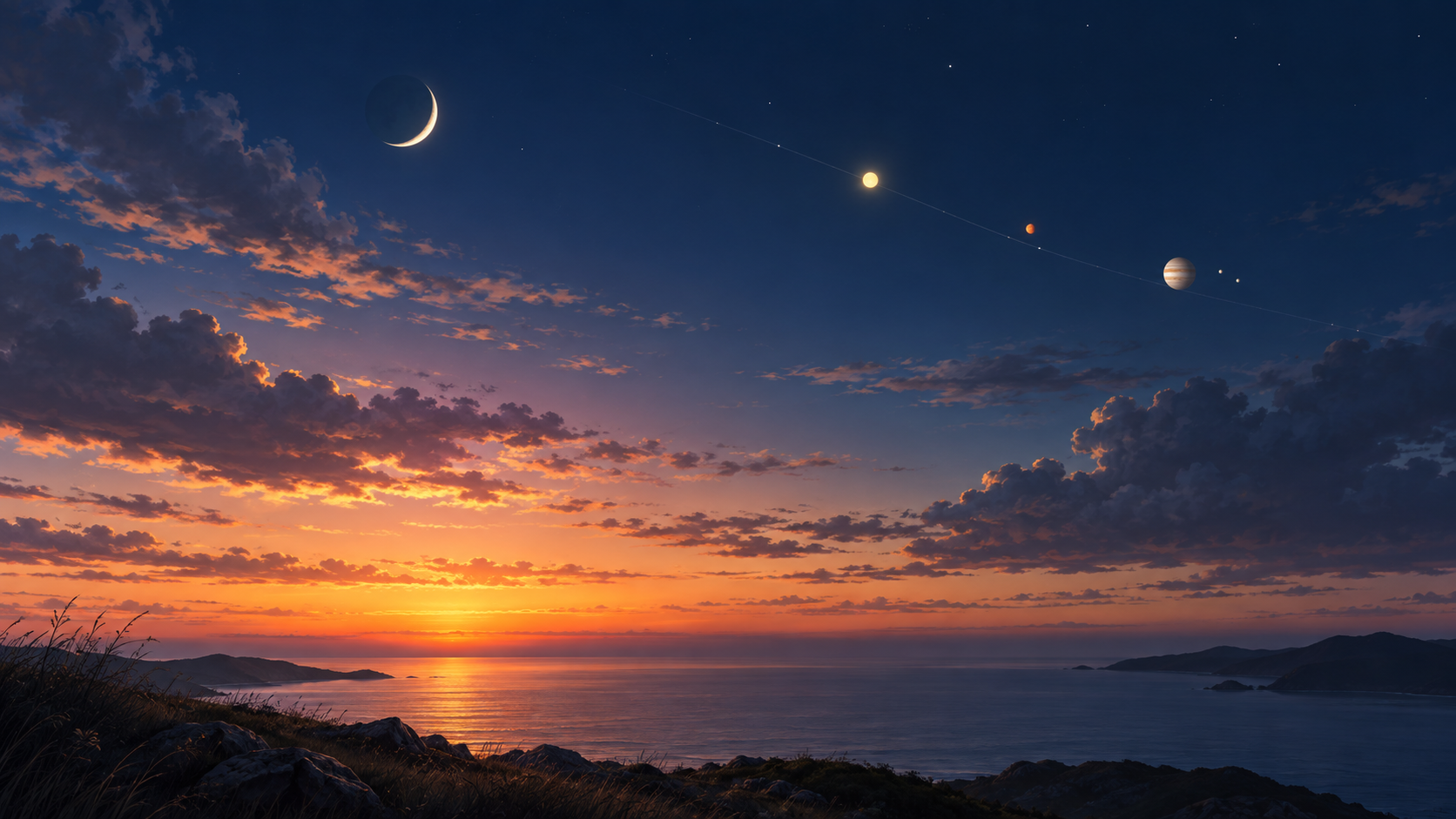
When you look toward the western sky at sunset, you may sometimes notice a point of light that looks like a star but shines unusually bright. In many cases, it is an inner planet such as Mercury or Venus. Venus especially can appear very bright between golden hour and blue hour just after sunset, making it a natural target for anyone who enjoys looking at the sky.
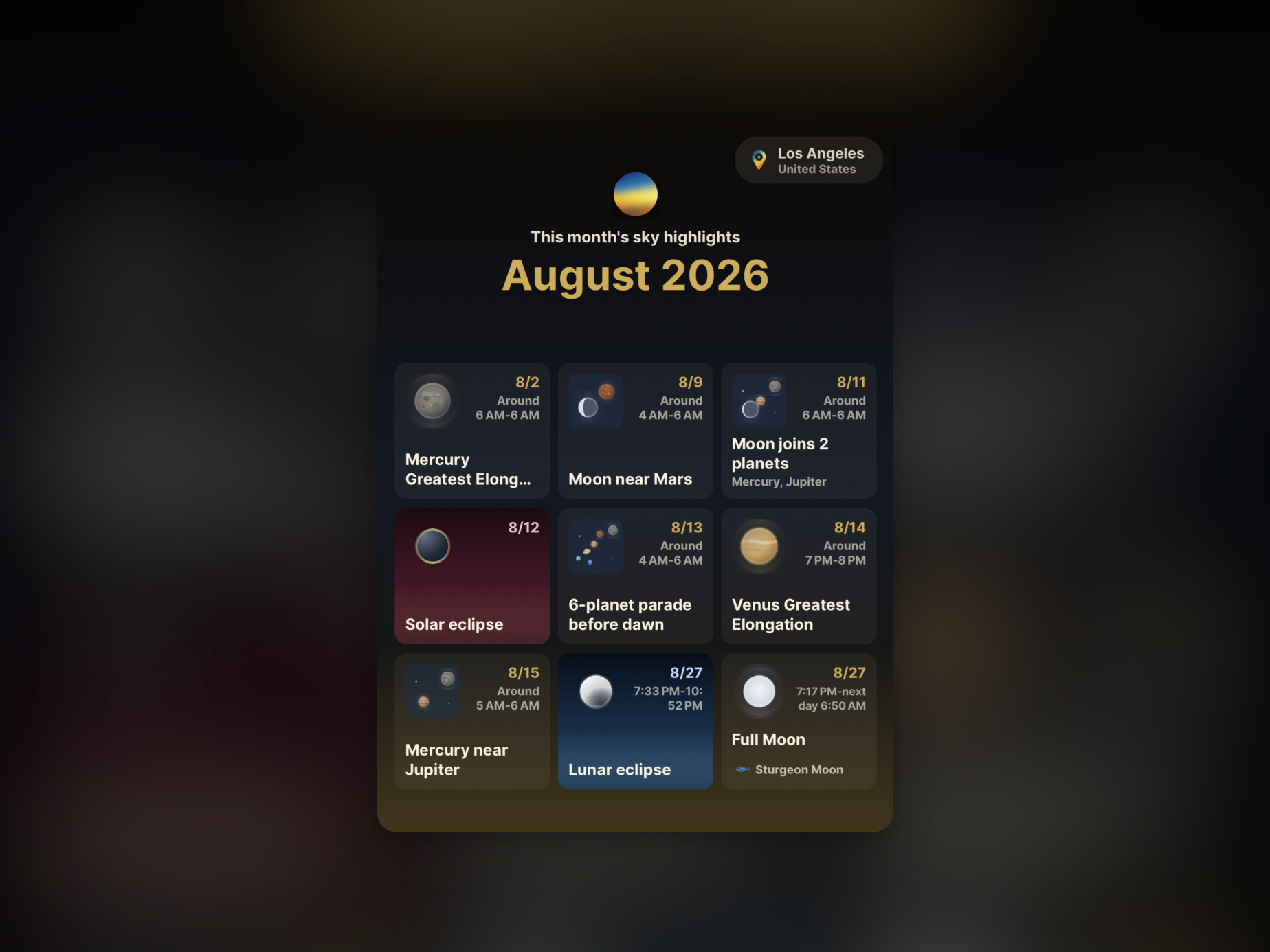
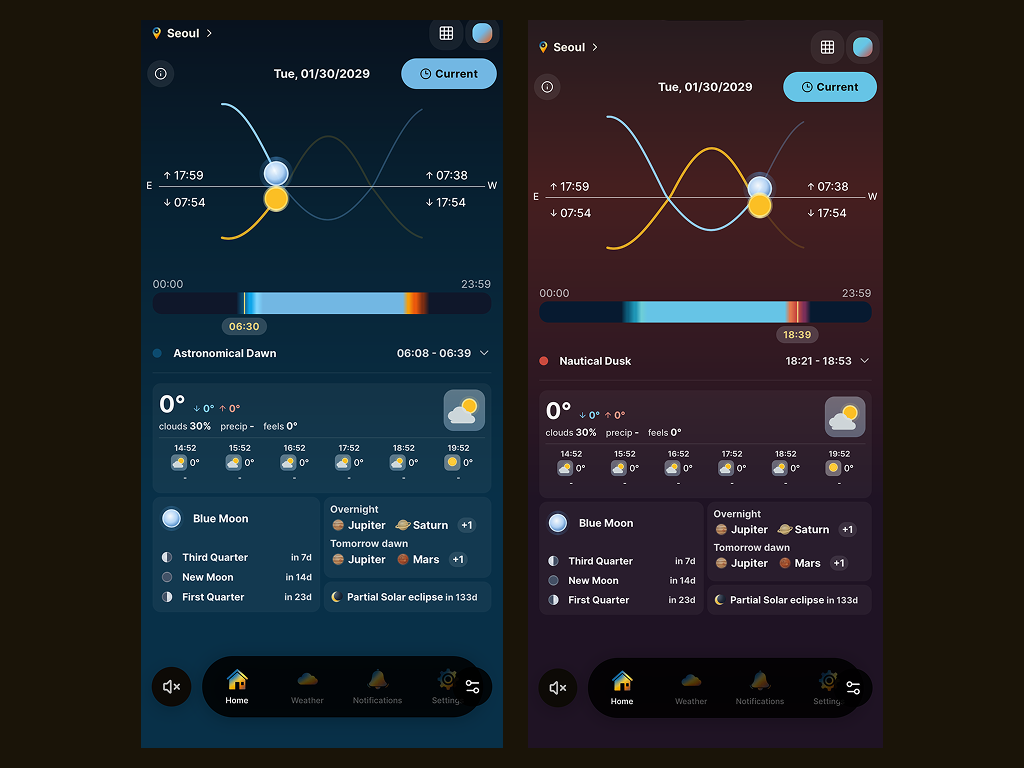
I like astronomy, and I also enjoy finding planets in the night sky myself. That is why I added special astronomical event information to Golden Horizon, beyond simple sunrise and sunset times. It is designed to help you check whether today has something special in the sky before going for a walk or planning a shoot.
Special Moon events
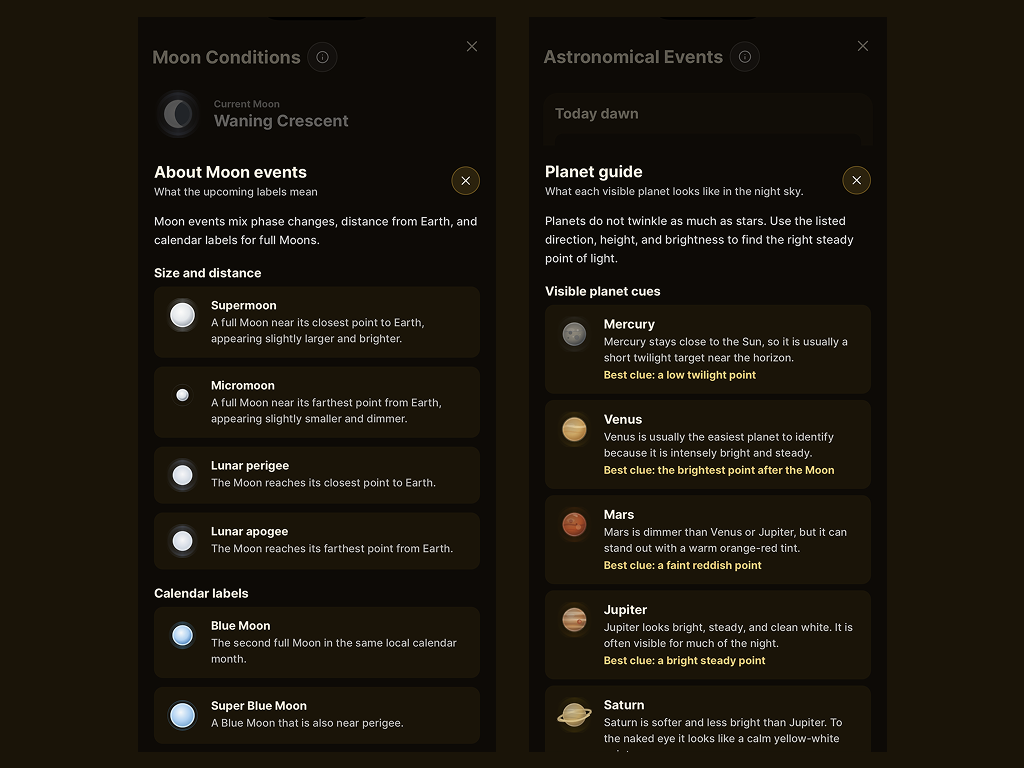
The Moon may seem to rise in the same way every day, but its distance from Earth and its phase can create quite different events. When a full Moon happens while the Moon is near Earth, it becomes a Supermoon and can appear slightly larger and brighter. When a full Moon happens while the Moon is farther away, it becomes a Micromoon and can appear relatively smaller.
This update also adds the Blue Moon. A Blue Moon does not mean the Moon actually looks blue. It usually refers to a rare calendar label, such as the second full Moon in a single month. The name alone makes it feel a little romantic, and it becomes a nice checkpoint for anyone who likes following the Moon.
Planet events
There are more planets visible to the naked eye than many people expect. Mercury, Venus, Mars, Jupiter, and Saturn can all be found near stars or the Moon when conditions are right. Mercury and Venus often stay close to the Sun from our point of view, so they are usually visible for a short window before sunrise or just after sunset.
Golden Horizon organizes these planet events so they fit naturally into the flow of golden hour. You can go out for the sunset and look for Venus in the western sky, or check whether Jupiter is near the Moon. If you take photos, seeing the changing sky color and planet positions together can also help you imagine compositions ahead of time.
Rare events like lunar and solar eclipses
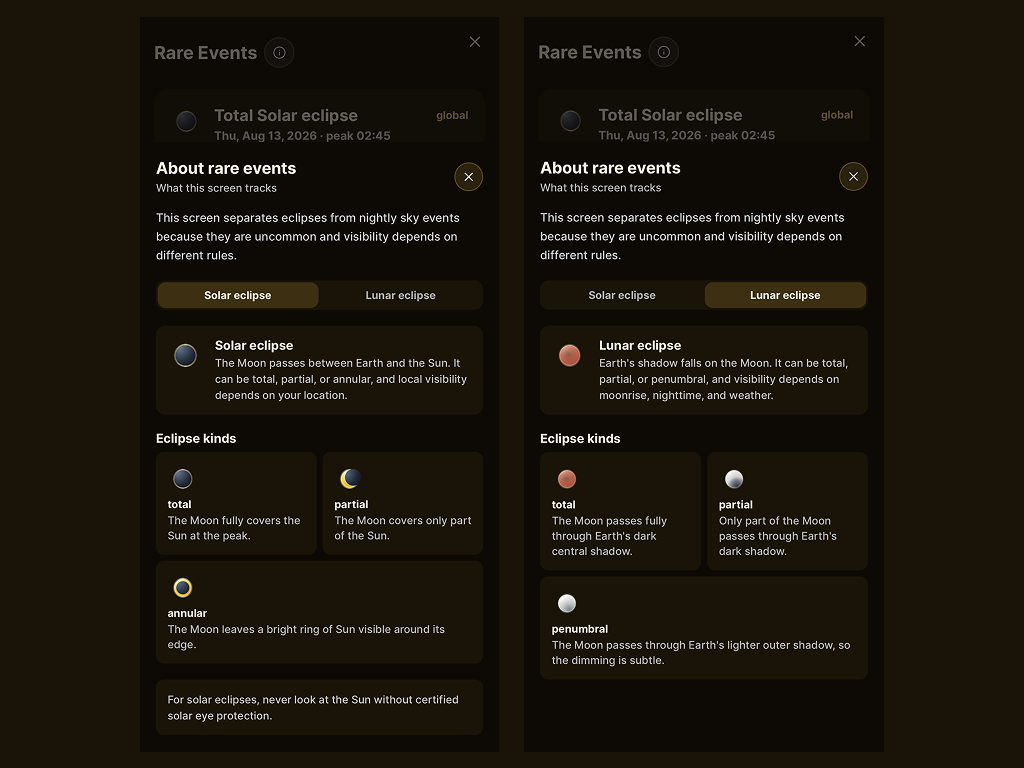
There are also events that happen less often than Moon and planet highlights. The most familiar examples are lunar eclipses and solar eclipses. A lunar eclipse happens when Earth's shadow falls on the Moon, and a solar eclipse happens when the Moon passes in front of the Sun. Because they are not events you can see every day, knowing the date in advance can completely change the observing experience.
In particular, a total solar eclipse is scheduled for August 12, 2026, in UTC. However, depending on your observing location and time zone, the local date may appear as August 12 or August 13, and the regions where totality is visible are limited. If you are planning travel or a photo shoot, it is best to check the eclipse path, local time, and weather in advance. A solar eclipse also requires proper eye protection. Because it involves looking toward the Sun, prepare certified eclipse glasses or a safe projection method before observing.
Wrapping up
The goal of this event information is to help you look at the sky more often and with more intention. Golden hour is already beautiful, but if Venus is visible at that time, or if the Moon has a special name that day, the sky becomes a little more memorable. I hope Golden Horizon can be more than a tool for checking sunrise and sunset, and feel like a small astronomy calendar that tells you what to look for in today's sky.
I will keep refining Golden Horizon so golden hour, the Moon, planets, and rare astronomical events are easier to understand and prepare for. Before you head out to watch the sunset, take a moment to check what kind of sky today might bring.