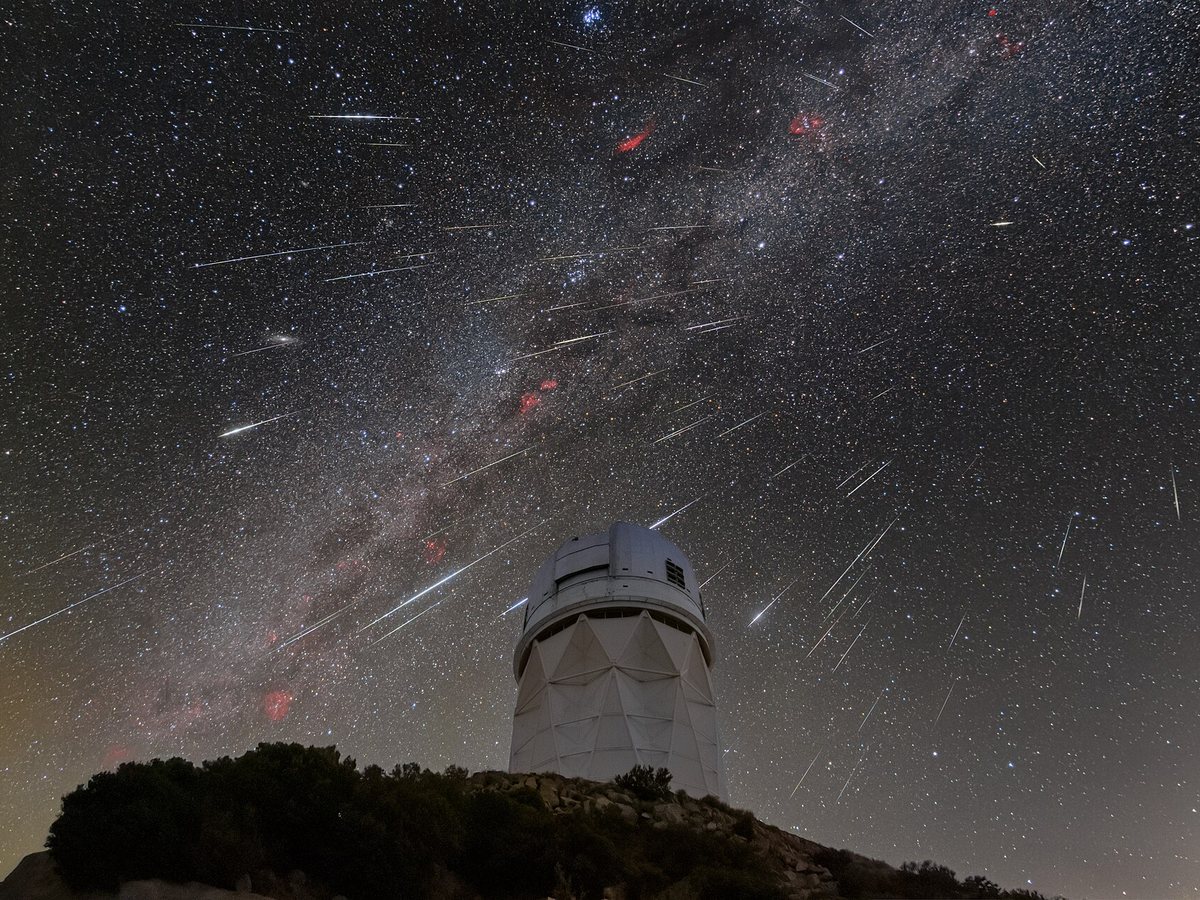
The last big meteor shower of the year is the Geminids, and in 2026 the conditions are pretty good for New York. The International Meteor Organization (IMO) predicts the peak at 9:00 AM EST on Monday, Dec 14, which is daytime, after dawn. The Geminid peak is broad, though, so the whole night of Sunday, Dec 13 into Monday morning falls inside the peak window. The moon is a thin crescent that sets before 9 PM.
Last month's Leonid meteor shower had a ZHR of about 15. The Geminids come in at a ZHR of 150, ten times that. If you only watch one, make it this one.
The peak is Dec 14 at 9:00 AM EST, but the night before is the one to watch
According to the IMO 2026 meteor shower calendar, the Geminids are active from Dec 4 to 20, with the peak on Dec 14 at 14:00 UT. In New York, that's 9:00 AM EST on Monday, Dec 14.
The Geminids are known for a broad peak. Based on the last 20 years of observations, the IMO expects this year's peak to arrive between Dec 13 21:00 UT and Dec 14 18:00 UT. Converted to New York time, that's Dec 13 4:00 PM to Dec 14 1:00 PM EST. The whole night of Sunday, Dec 13 into Monday morning sits inside that range, so you don't need to pin down the peak to the minute.
When does the sky go moonless in New York?
The new moon is Dec 9, so on the evening of Dec 13 the moon is a crescent about 21% lit. It hangs briefly in the western sky and sets at 8:41 PM in New York. After that, the sky stays free of moonlight until astronomical dawn begins at 5:33 AM, which gives you about 8 hours 52 minutes of dark sky.
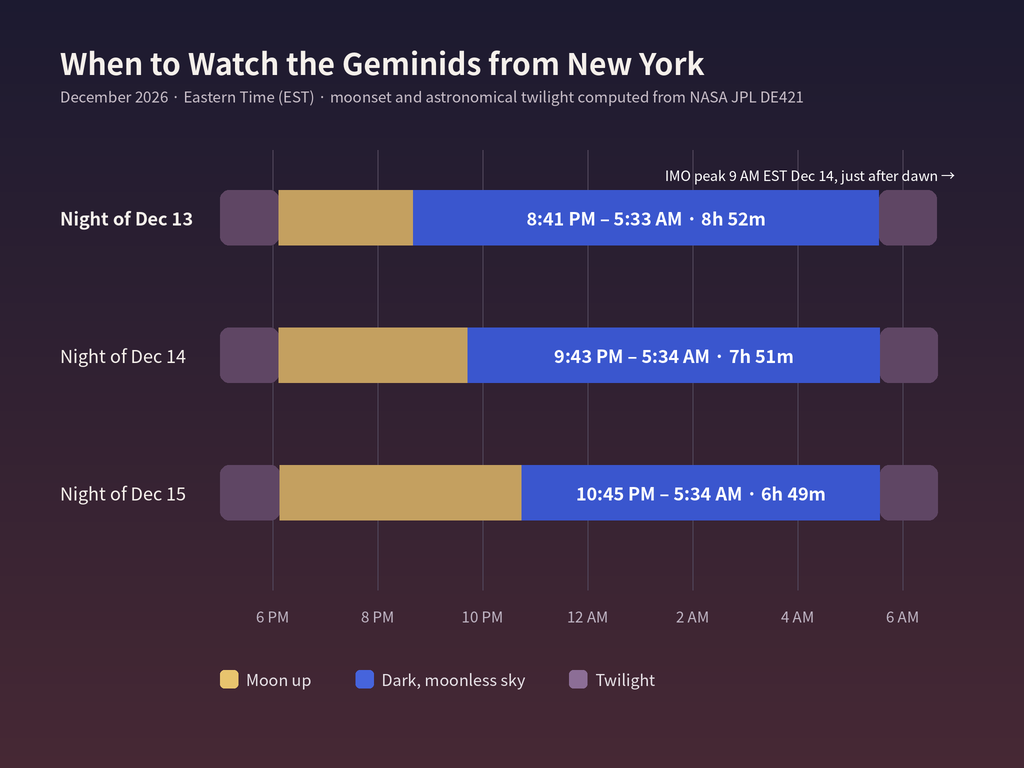
The night of Sunday, Dec 13 is the best bet. The moon is down by 8:41 PM, you get the longest dark window (8:41 PM–5:33 AM, 8h52m), and the last dark hours before dawn are the closest to the peak. Monday night, Dec 14 is the backup. The moon sets at 9:43 PM and it stays dark until 5:34 AM (7h51m), but that's after the peak, so you'll see fewer meteors. On Dec 15 the moon sets at 10:45 PM and the dark window shrinks to 6h49m. If you're on the West Coast, Los Angeles (PST) has moonset on Dec 13 at 8:58 PM and stays dark until 5:21 AM. The IMO peak is 6:00 AM PST on Dec 14, so the night of Dec 13 is the best there too.
Dec 14 is a Monday, so a Sunday night session means an early alarm. If work the next morning is a worry, 9 PM to about 1 AM, after the moon is down, still works. Just know that the best rates come in the pre-dawn hours, from about 2 AM to 5:30 AM.
Where to look
The radiant, the point the meteors appear to spread from, sits near Castor, the bright star in Gemini. From New York it rises in the northeast around 5:40 PM. By 8 PM it's 22° above the horizon, about 40° by moonset (around 9 PM), and 66° at midnight. It's highest, around 81°, near 2 AM, almost straight overhead, and it's still at 52° at 5 AM. The higher the radiant, the more meteors you'll see, so the sky gets better as the night goes on.
That said, you don't have to stare at the radiant. Meteors show up all over the sky. Lie back so the widest part of the sky fills your view, and turn your back on any lights. Geminids aren't especially fast, at about 35 km/s, and there are plenty of bright ones and fireballs, so they're easy to spot even if it's your first time.
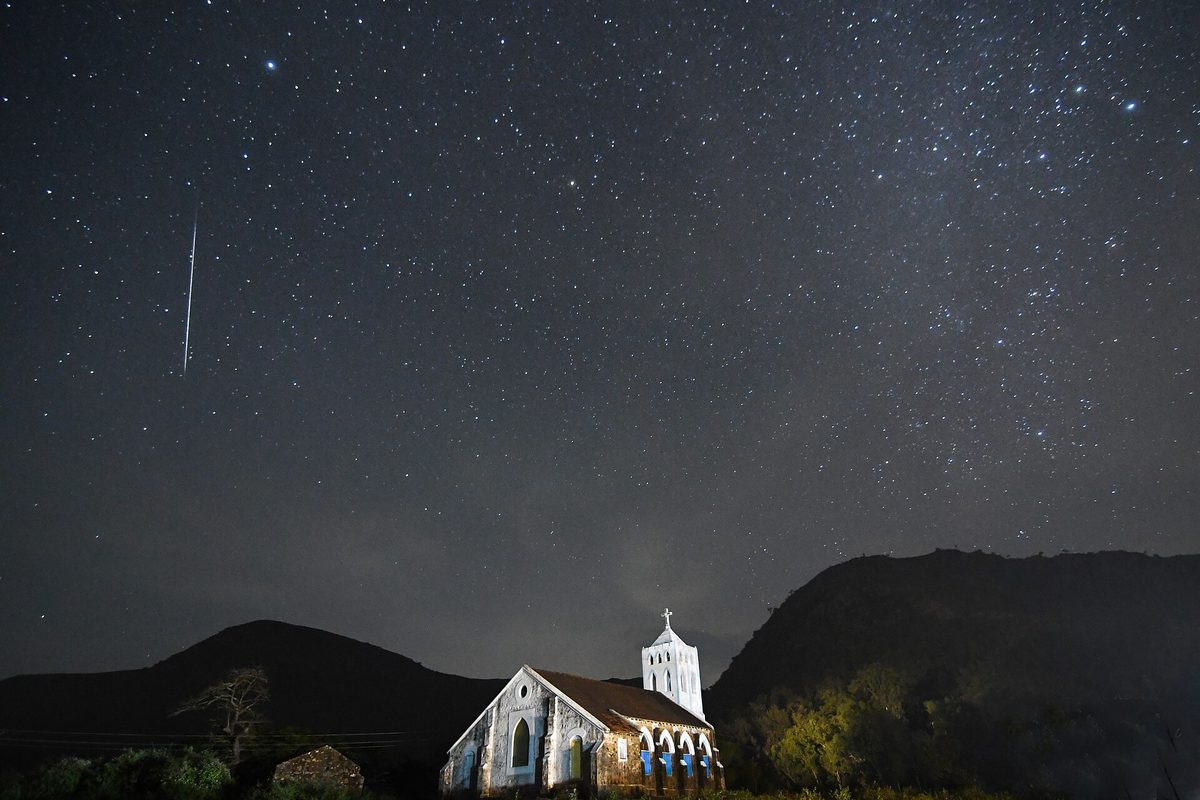
Keep your expectations in check, though. A ZHR of 150 is the number for a perfect sky with no moon and no lights, with the radiant overhead. Near a big city you'll see far fewer, and the numbers only start to feel real once you get away from the light dome. NYC metro light pollution is heavy, so look for a state park or a rural area with dark skies, and use a light pollution map to pick your spot. The first 15 minutes are just your eyes adjusting to the dark, so stay off your phone screen as much as you can.
December nights: the cold is the real variable
The biggest difference from a summer meteor shower is the cold. December nights in the Northeast often drop below freezing, and lying still makes it feel much colder. Here's what I bring.
- A camping pad or foil mat to block the cold coming up from the ground. Lying down gives you a wider view of the sky than a chair does.
- A sleeping bag or blanket to throw over a long puffer coat. Stick hand warmers on your feet and lower back.
- Power banks for your phone and camera. Batteries drain much faster in the cold.
- A red flashlight. White light undoes your eyes' dark adaptation.
Check the dark hours for your own spot in the app
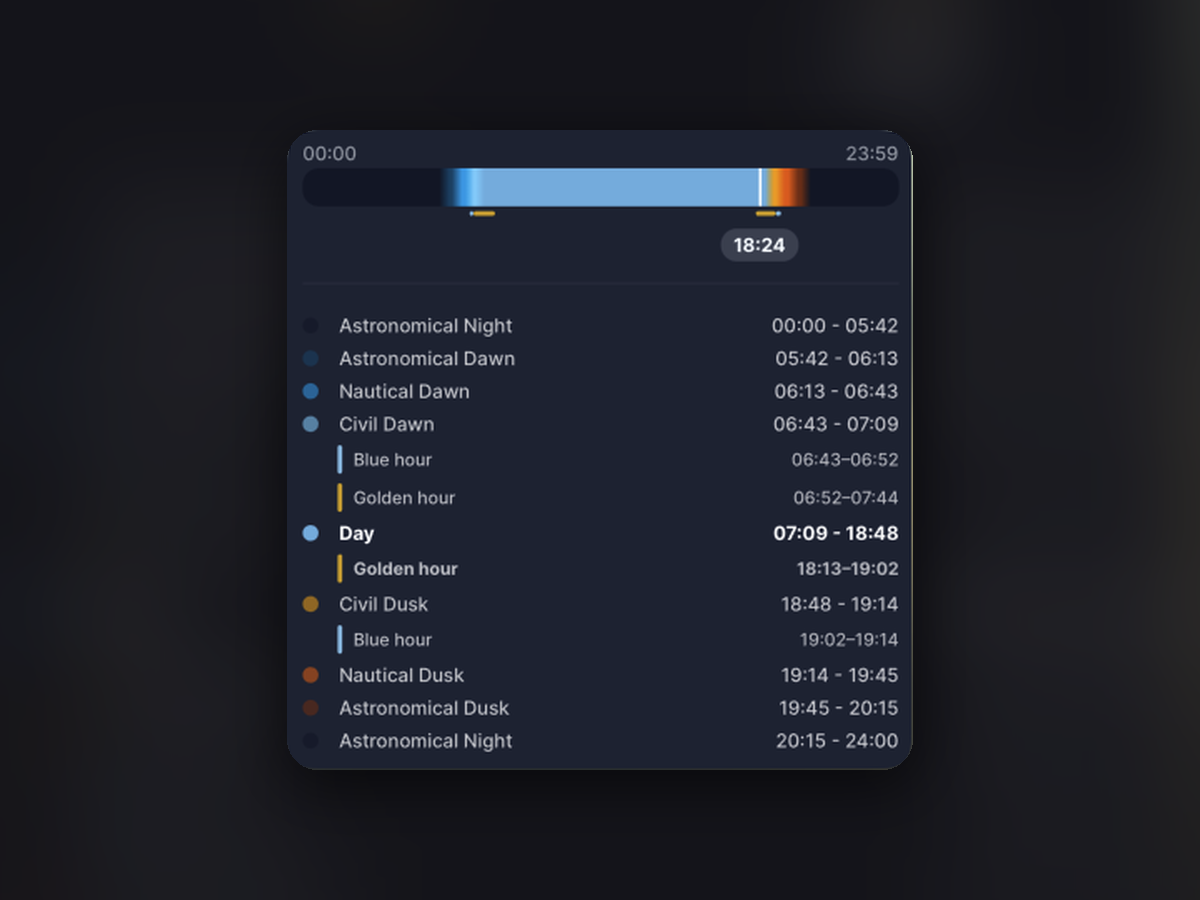
The chart above is for New York. If you head somewhere else, it's worth checking again for that location. In Golden Horizon's moon status screen, you can read moonset as the time when the moon's hours above the horizon end.
To see how long the sky stays dark before dawn, check when Astronomical Dawn starts on the light timeline. After that time the sky slowly brightens, and the faintest meteors are the first to disappear. Change the date to Dec 13, pick your viewing spot, and the usable hours for that night show up right away.
If you want to photograph the meteor shower
The basics are a tripod, a wide-angle lens, and continuous 15 to 20 second exposures. You don't know where a meteor will show up, so set an interval timer and pick out the frames that caught one afterward. Putting the radiant at the edge of the frame makes it easier to get shots where the meteors streak long toward the inside of the frame. On cold nights, dew and frost can form on the lens, so a lens heater or a hand warmer wrapped around the lens barrel helps.
I covered how to plan your evening light ahead of time in Golden Hour Photography: How to Plan the Light in Advance, and sky events where the moon and planets appear together in Checking Planet, Blue Moon, and Solar Eclipse Events.
FAQ
When is the best time to watch the 2026 Geminid meteor shower?
In New York, it's the night of Sunday, Dec 13 into Monday morning. Your viewing window runs from moonset at 8:41 PM until about 5:33 AM, when astronomical dawn begins. The predicted peak is 9:00 AM EST on Dec 14, which is daytime, so the pre-dawn hours closest to the peak are the best. The night of Dec 14 is the backup.
How many meteors can I see per hour?
The ZHR is 150, but that's the number for ideal conditions. What you actually see depends a lot on how dark the sky is and how high the radiant is, and near a city it's far fewer.
Is it okay to watch on the night of Dec 14 instead?
Yes, as a backup. The moon sets at 9:43 PM and the sky stays dark until 5:34 AM, but it's after the peak, so you'll see fewer meteors. If Dec 13 is cloudy, it's a good alternative.
References
- International Meteor Organization — 2026 Meteor Shower Calendar: activity period, peak time, peak window, ZHR, speed
- IMO — 2026/2027 Meteor Shower Calendar: moon phase on the peak night
- timeanddate — New York Moonrise and Moonset, December 2026: New York moonset times, moon brightness
- Astronomical dawn times, radiant altitude, and moonset for New York: computed ourselves with the NASA JPL DE421 ephemeris (Skyfield)
Photo credits
- Geminids Over Kitt Peak National Observatory, KPNO/NOIRLab/NSF/AURA/R. Sparks, CC BY 4.0, cropped and resized for the cover
- Geminid meteor over old church, Drashokk, CC BY-SA 4.0, resized