A More Accurate Way to Find Better Sky Moments
Clear skies alone do not tell the whole story. Even on the same day, the scene can change depending on where clouds sit in the sky and how open the horizon is around sunrise and sunset. This update brings more of those details into the forecast, along with new scores for sunrise and sunset and astronomy alerts.
Golden Horizon now lets you follow the whole rhythm of the sky: a great night for stars and planets, the light around sunrise and sunset, and the planets that appear during twilight.
New Scores for Sunrise and Sunset
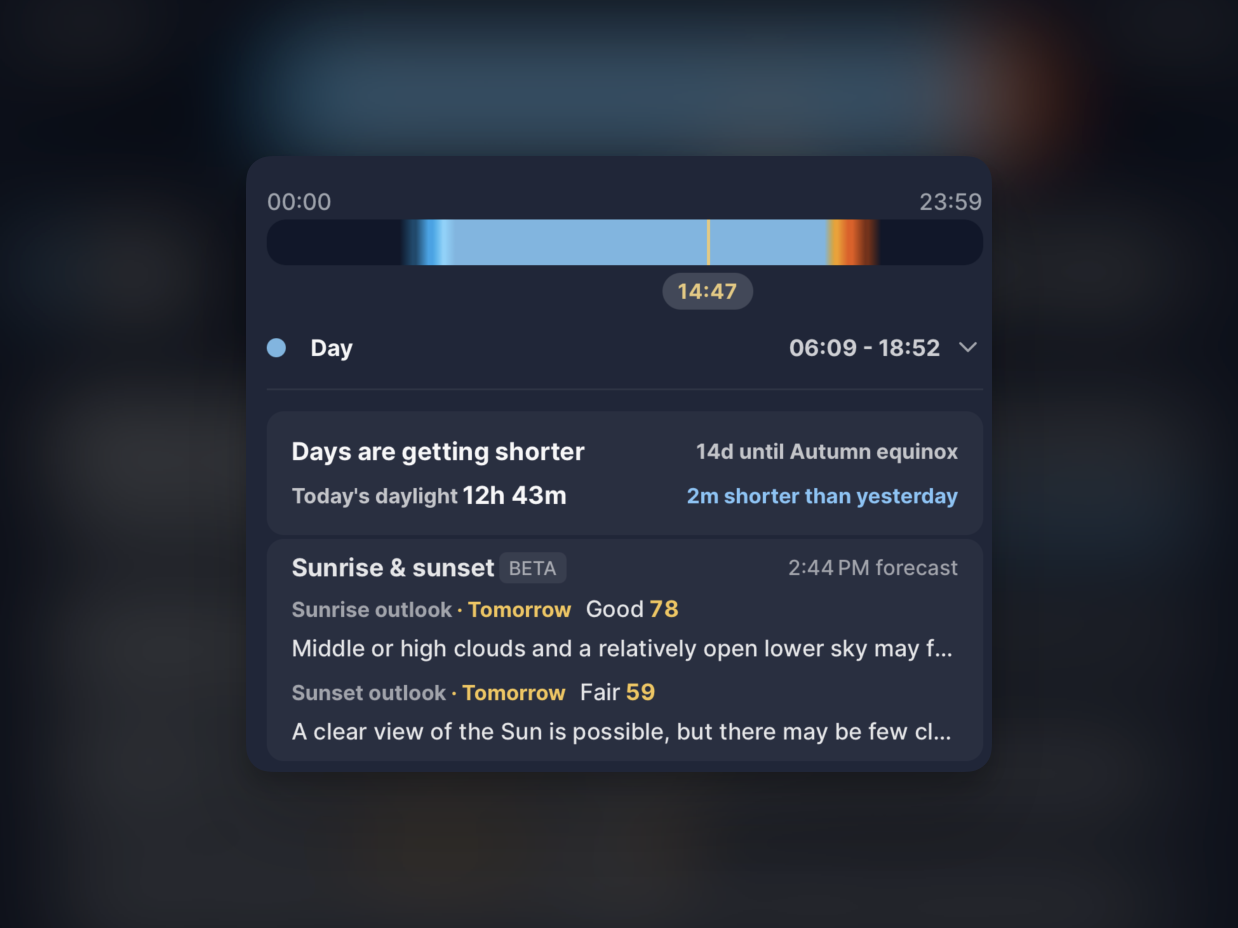
Golden Horizon now includes a sunrise score and a sunset score. By reading the sky around each window, they make it easier to judge whether the morning or evening is worth looking forward to.
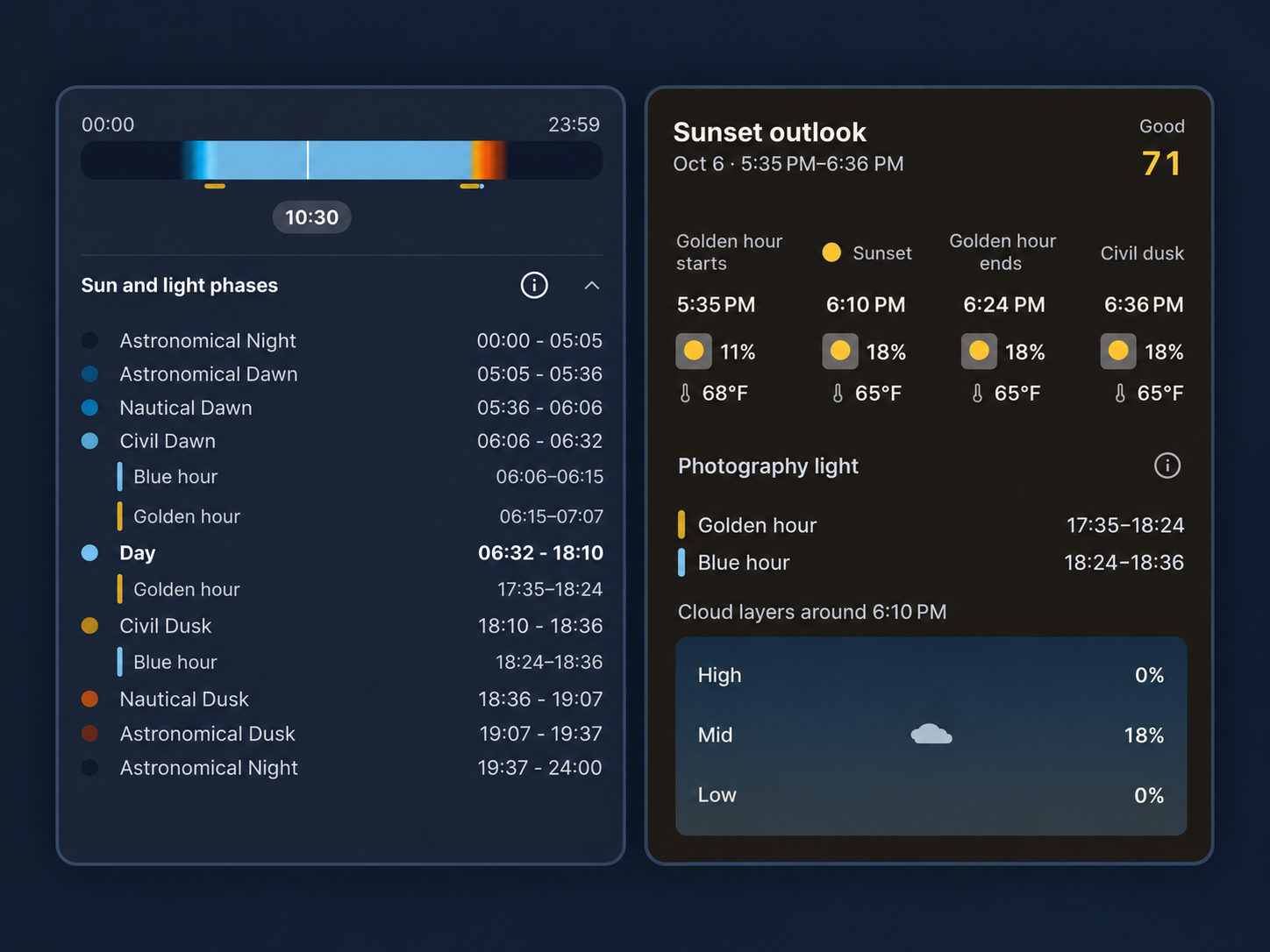
The scores consider cloud position and sky conditions around sunrise and sunset. Look at how high and low clouds may catch the light, and how open the horizon may be, as you plan a golden hour or blue hour. A high score cannot guarantee a special scene, but it can give you a clearer reason to step outside on an uncertain day.
The summary view shows tomorrow's sunrise and sunset outlooks and their scores at a glance.
Sunrise, Sunset, and Planets Through the Cloud Layers
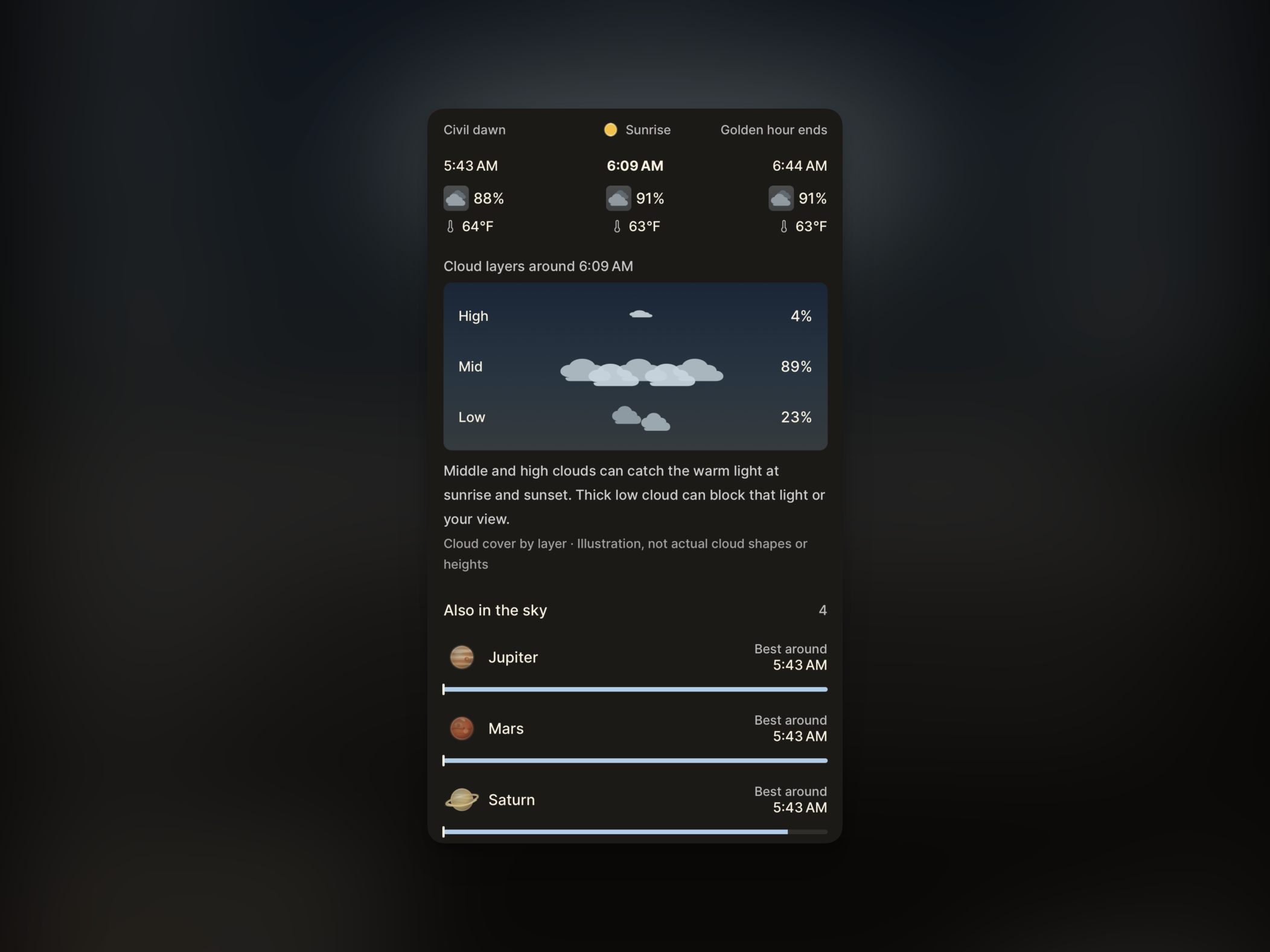
The same amount of cloud can lead to very different viewing conditions. Low clouds can hide the horizon just as the Sun rises or sets, while thin high clouds can hold onto sunset color for longer. For planets just after sunset or before sunrise, it matters just as much whether the part of the sky you are looking toward is open.
This update reflects the distribution of clouds by time and location in the astronomy forecast. When they are thin and spread out, high clouds can catch sunrise and sunset light and prolong color in the sky. Middle clouds can strongly change the way light moves through the scene, while low clouds are most likely to block the horizon and the moments when the Sun or a planet rises and sets.
You can now also check which planets are visible around sunrise and sunset. Look at each planet's direction and viewing window from your location, then choose the clearest moment. The detail view brings together high, middle, and low cloud cover for that time with the viewing windows for planets in the same sky—useful for finding Venus on an evening walk or waiting for planets in a clear early-morning sky.
Astronomy Alerts for the Skies You Do Not Want to Miss
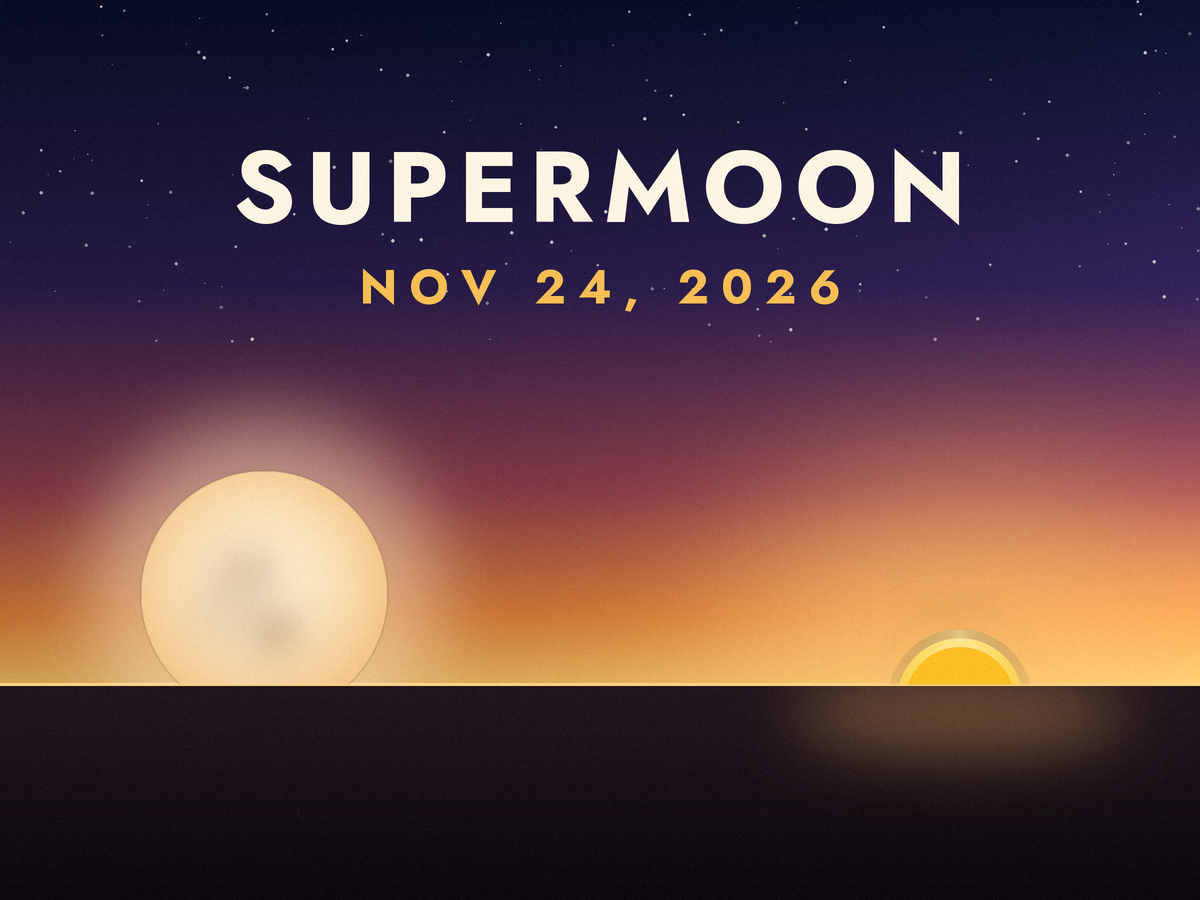
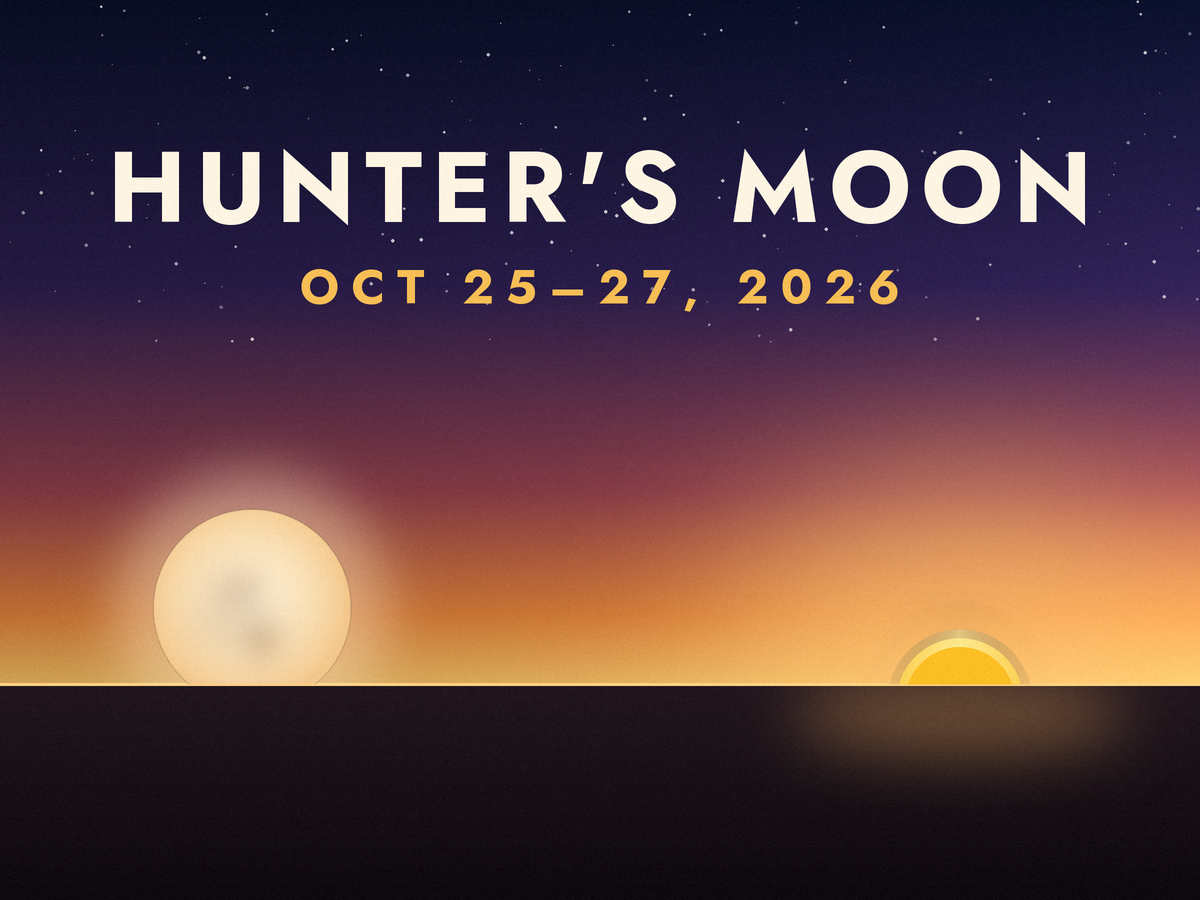
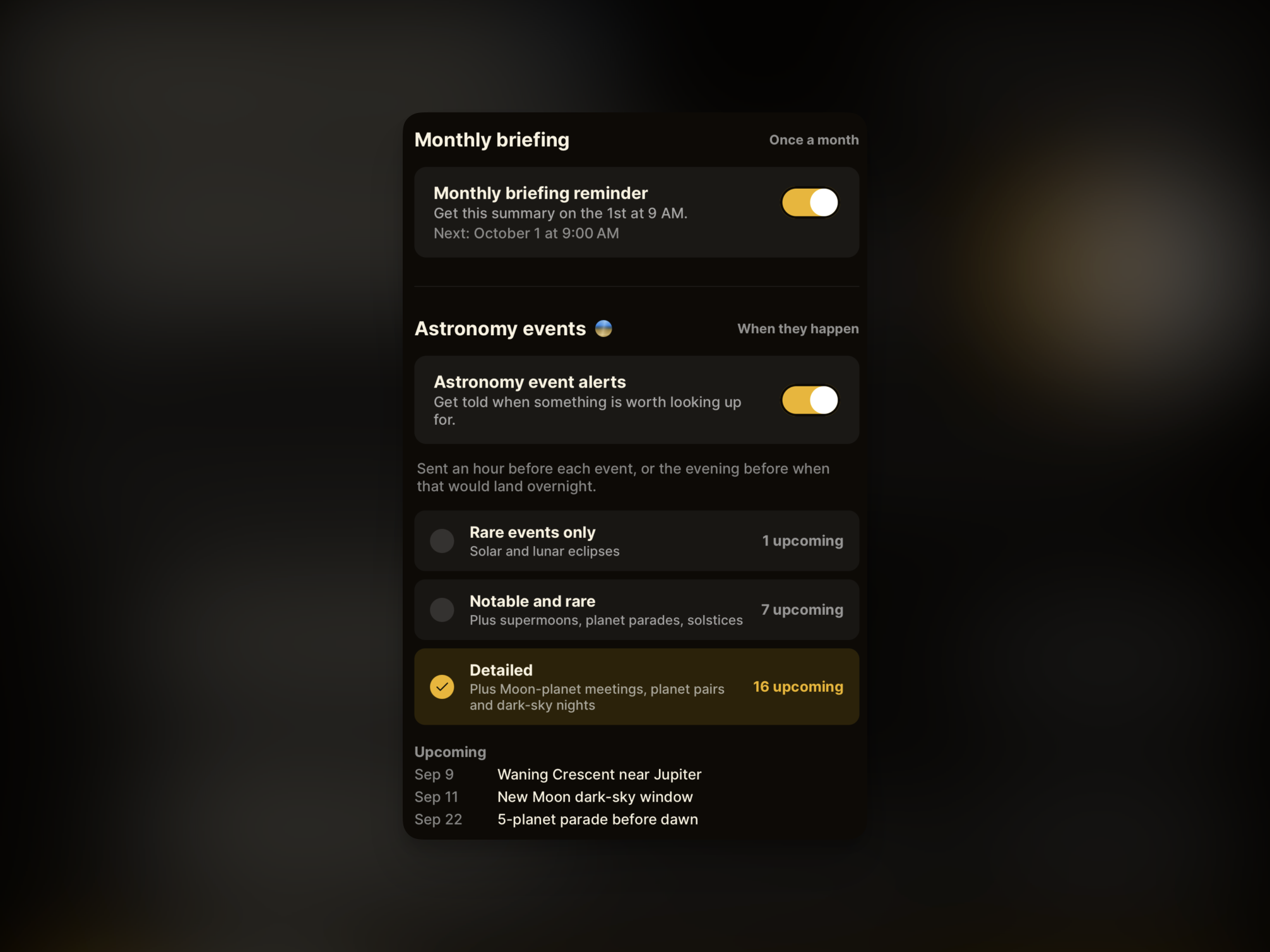
A special sky often arrives on a busy day. New astronomy alerts help you check upcoming events and come back at the right time. Instead of remembering every date yourself, look through the next events in Golden Horizon and prepare for the moments worth watching.
Turn alerts on and choose the range of events you want to follow to receive the sky changes that matter most to you.
Weather and sky conditions continue to change, so it is always worth checking the current forecast and viewing conditions again after an alert arrives. The goal is to spend less time waiting for a good sky and more time looking up.
Wrapping Up
This update is about making it easier to check the sky more often and with more confidence. Use the more accurate astronomy forecast to consider time and direction, the sunrise and sunset scores to judge the day's light, and twilight planet visibility and astronomy alerts to complete the picture.
September's sky will look different in every place and at every hour. Choose your location in Golden Horizon and check the next sunrise, sunset, and the planet you have been waiting to see.