A rare month in the sky
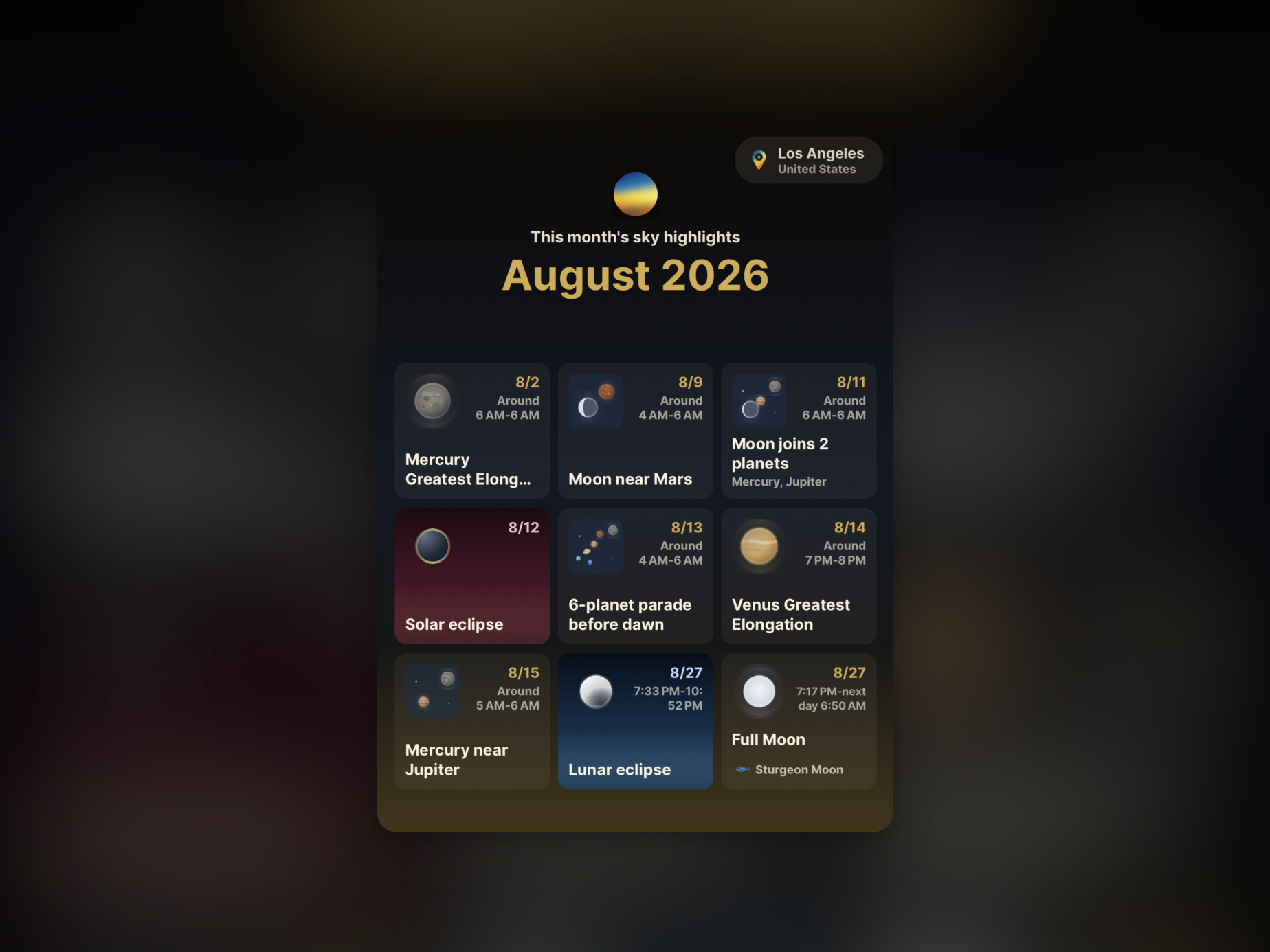
August 2026 is a month that gives you more reasons than usual to check the sky. A total solar eclipse and a partial lunar eclipse happen within the same month, while a six-planet parade spreads across the predawn sky. Golden Horizon brings these events together in Monthly Highlights, so you can check when they happen from your own location.
The same astronomy event can appear at a different local date, time, and altitude depending on where you are. If you are planning a trip or a photo shoot, select your location in Monthly Highlights and check the local timing and observing direction before heading out.
Both a solar and lunar eclipse in one month
A total solar eclipse happens on August 12. The path of totality crosses Greenland, Iceland, Spain, and nearby regions, while a wider area can see a partial solar eclipse. It will not look the same from every location, so check Golden Horizon to see whether the event is available where you are. Always use certified eclipse glasses or a safe projection method when observing the Sun.
A partial lunar eclipse follows on August 27–28. Observers across the Americas, Europe, Africa, and western Asia can see most of the Moon move into Earth's shadow. The displayed date may change with your time zone, so use the start and end times shown for your location when planning your observation.
A six-planet parade before sunrise
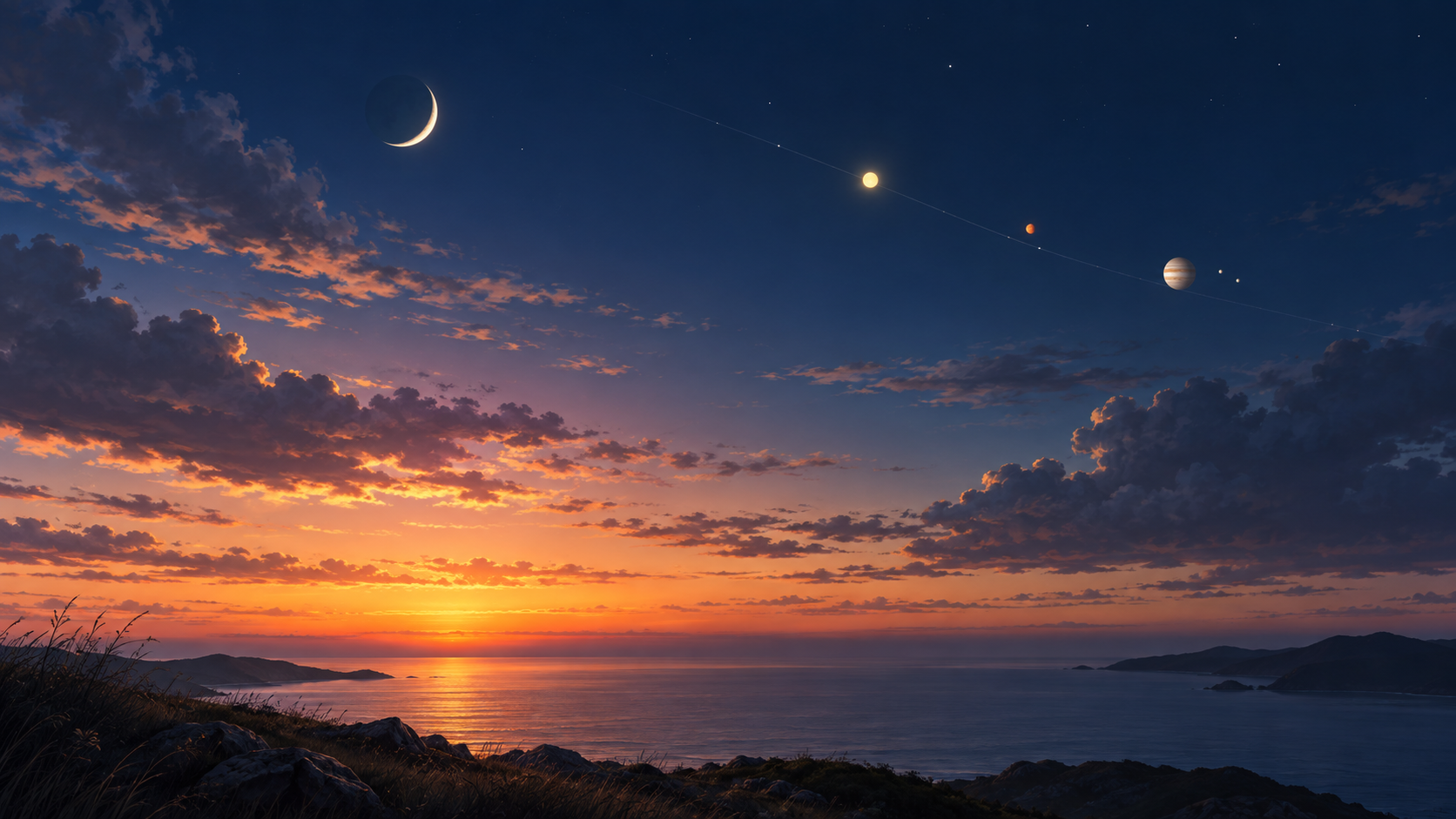
Around the middle of August, Mercury, Jupiter, Mars, Uranus, Neptune, and Saturn share the broad predawn sky. This is often called a six-planet alignment or planet parade, but the planets are not actually arranged in a straight line in space. From Earth, they simply appear together along the general path of the ecliptic.
The brighter planets can be found with the naked eye, while Uranus and Neptune require binoculars or a telescope. A planet close to the horizon, especially Mercury, may only be visible for a short time. Check the observing time and direction for your location in Monthly Highlights, and look for a place with a clear view toward the eastern sky.
New feature 1: Sky information on the Lock Screen
You no longer need to open the app every time you want to check the sky. On iOS, the new Lock Screen widget keeps the current sky phase, weather, and next transition close at hand. The next change in the sky can be visible as soon as you wake your phone.
On Android, transparent widgets let the wallpaper remain visible while placing the information you need on top. Add a Golden Horizon widget to your home screen and turn an everyday screen into your own small sky dashboard.
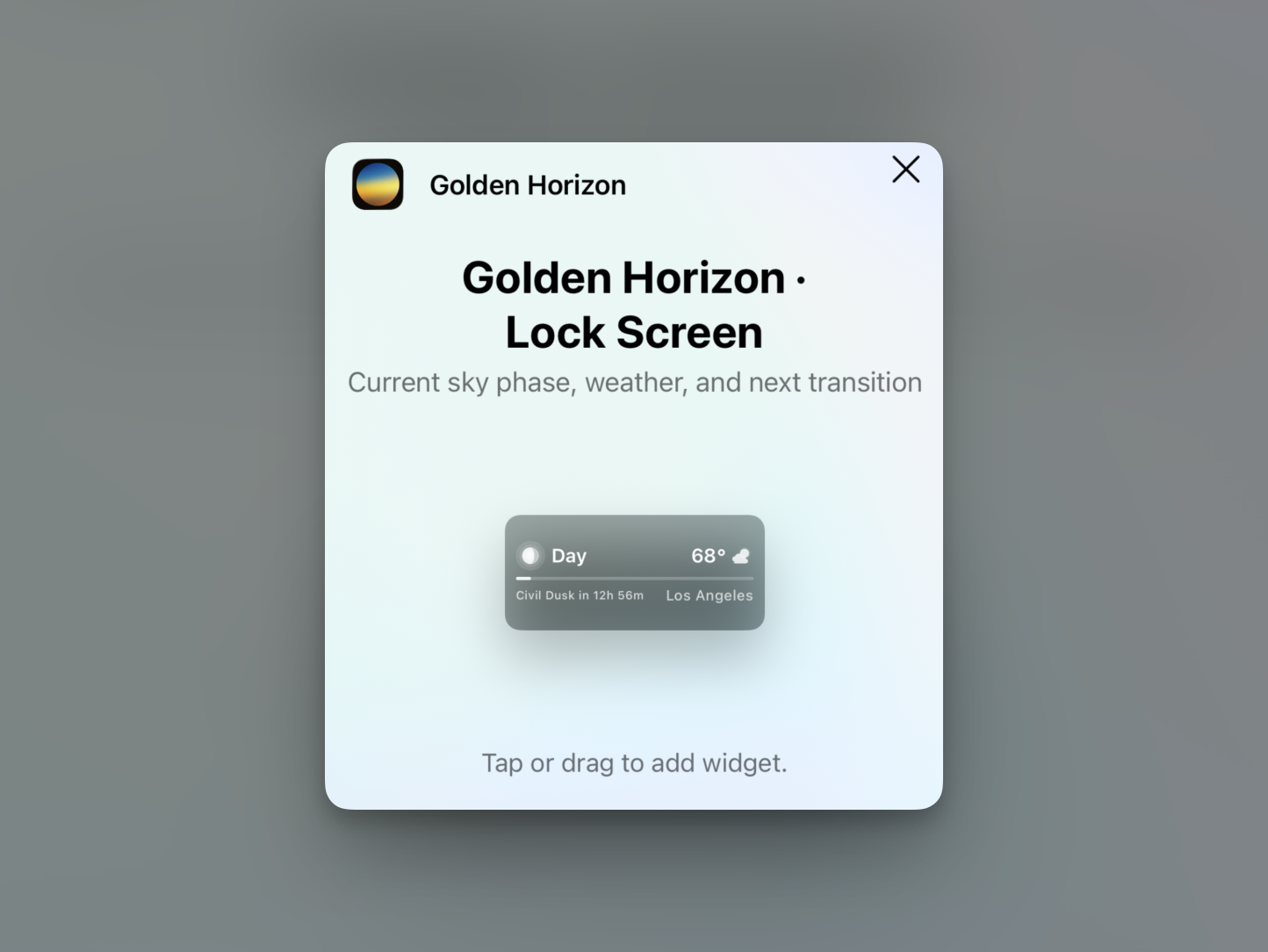
New feature 2: Find the Moon direction on the map
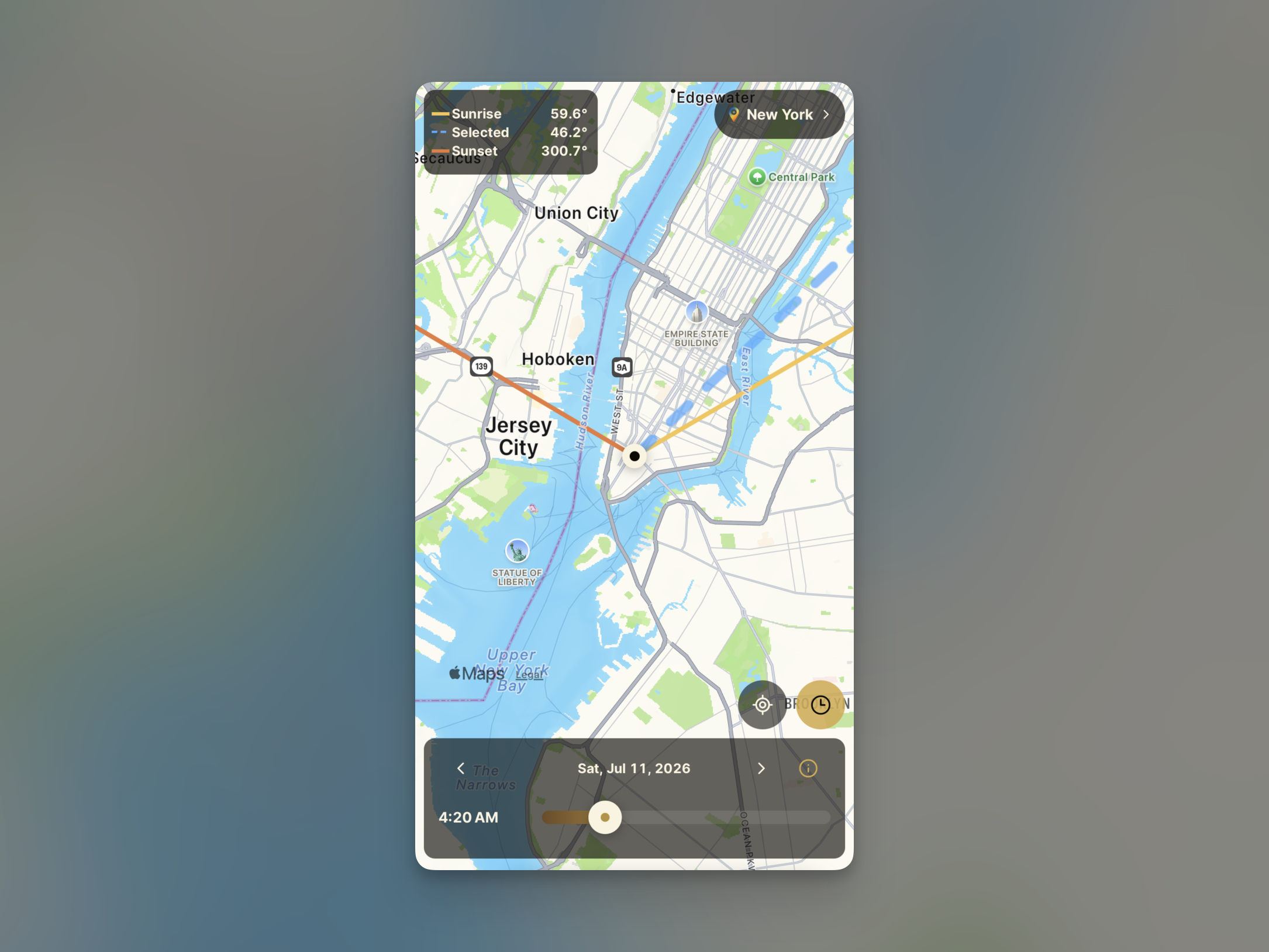
The map that previously helped you understand the direction of sunlight now supports the Moon direction as well. Use the Sun and Moon switch in the upper-right corner to view the selected object's azimuth path on the map.
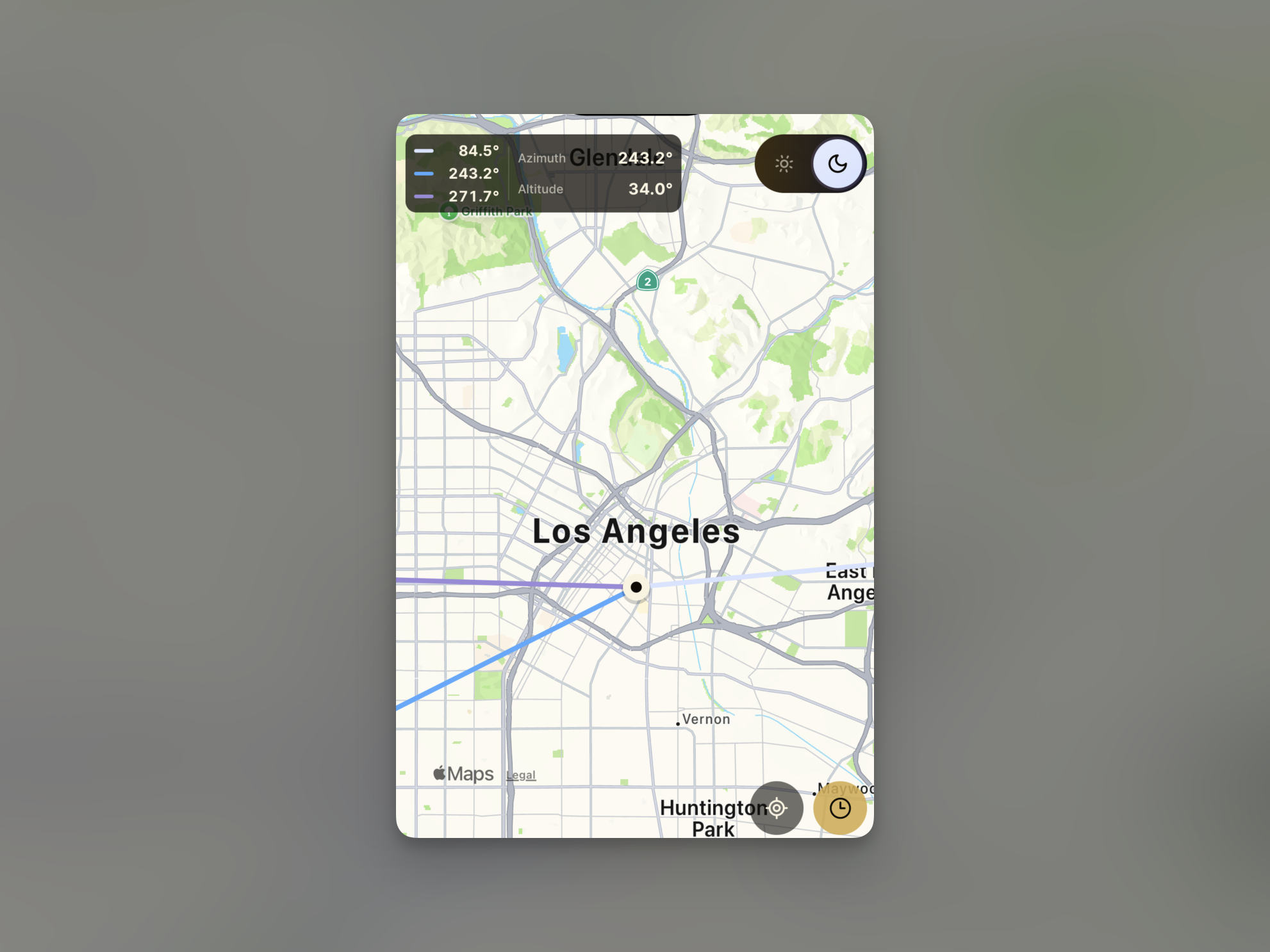
Lines extending from the reference point show the selected Moon direction together with its rise and set directions. The panel at the top also shows azimuth and altitude. This can help you estimate where the Moon will appear relative to a building, mountain, or coastline before you arrive.
Change the date and time to see how the Moon's path shifts at the same location. If you already use the Sun version to plan the direction of light, the new Moon version can extend the same planning flow into the night. It is especially useful when choosing a moon-viewing spot or preparing a composition for a lunar eclipse or full Moon photo.
Wrapping up
This update is designed to connect discovering a special sky event with actually going outside to observe it. Find August's rare events in Monthly Highlights, keep the next sky change nearby with widgets, and use the Moon direction map to understand where to look.
The August 2026 sky arrives at a different time and in a different form for every location. Select your location in Golden Horizon and check when the solar eclipse, lunar eclipse, and six-planet parade will be visible for you.