I have lived in Seoul all my life, but I love to travel. I enjoy picking out unfamiliar fruit in the hot markets of Southeast Asia, eating sweet corn on a long North American summer evening, and ordering whatever was caught that day in a coastal Australian city. What stays with me longest is not only the view from a famous landmark, but the taste that belonged to that place and season.
That is why I am always happy to see visitors to Korea looking for fried chicken, kimchi, Korean barbecue, Buldak noodles, and samgyetang. In the Korea Tourism Organization's global social-data analysis, these dishes also appear frequently on Korea food bucket lists. They are all unmistakably Korean. But the pleasure of Korean food does not end with the most famous dishes. As the seasons change, so do the colors of the market and the food on the table.
When the season changes, so does the table
In Korea, spring brings wild greens and strawberries; autumn brings mushrooms and freshly harvested fruit; winter brings mandarins and oysters. The market and the table shift with each season. That change is especially vivid in summer. Once the rainy season begins, markets and grocery stores fill with yellow Korean melons, cool watermelon, freshly steamed corn and potatoes, crisp cucumber and zucchini, and peaches.
It is lovely for travelers to try familiar summer dishes such as samgyetang and naengmyeon. But ordering noodles with young-radish kimchi at a neighborhood restaurant, or taking a bag of Korean melons back to your accommodation, can make a Korean summer feel much more immediate. You do not need a special restaurant: choosing what is best right now can make a meal part of the trip.
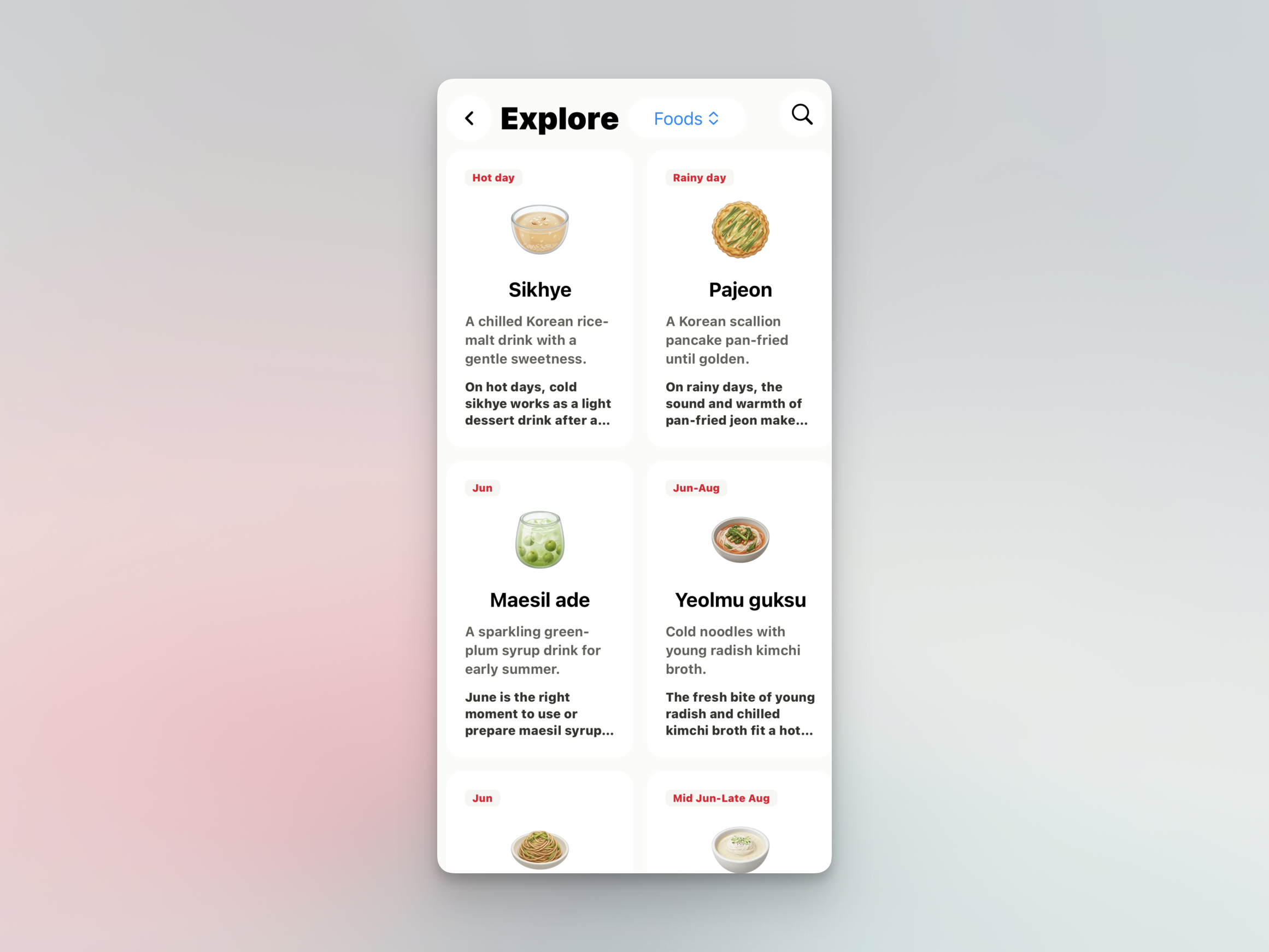
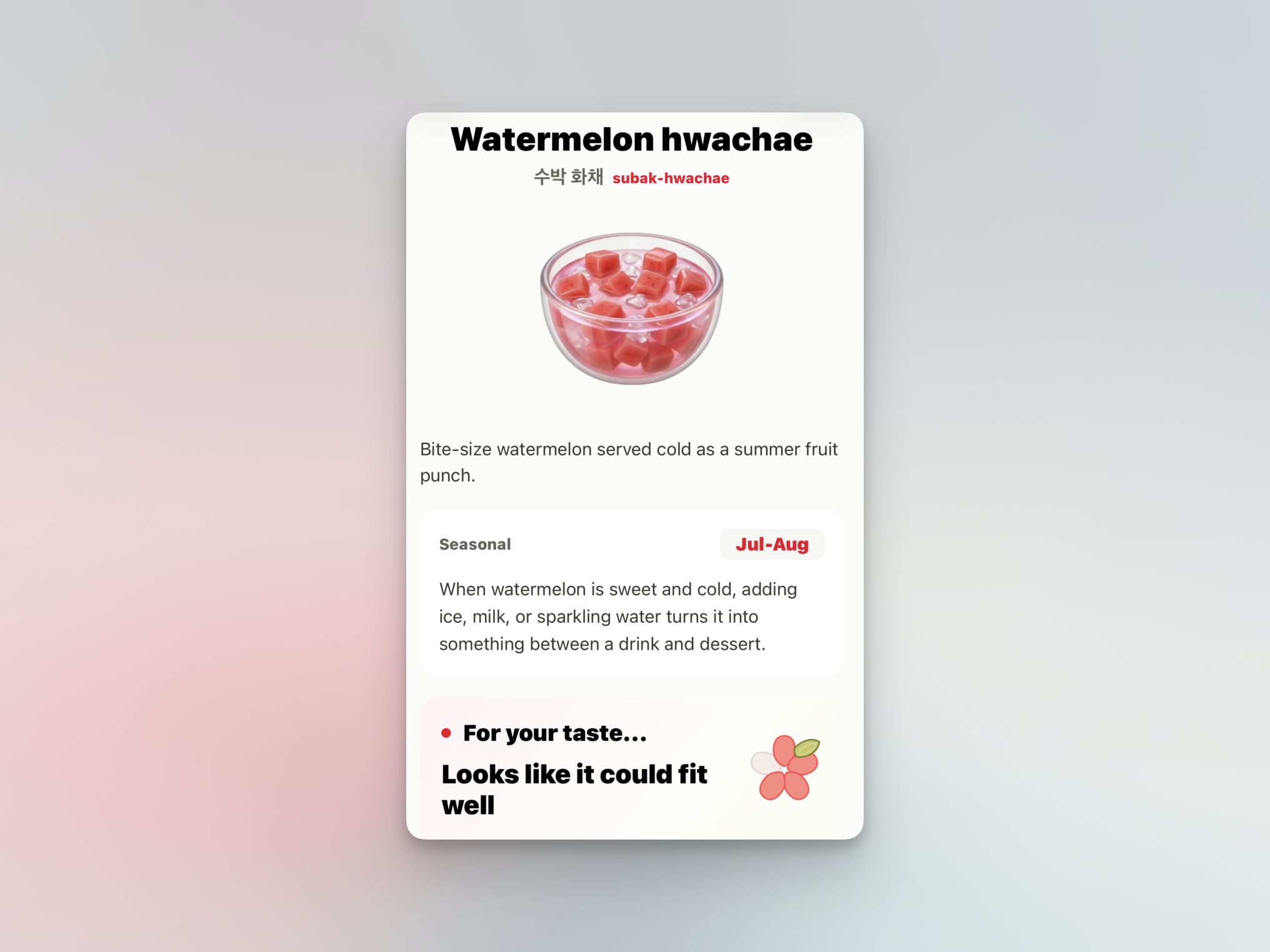
On hot days, people reach for kongguksu or yeolmu-guksu; on rainy days, pajeon is a natural choice. Watermelon hwachae is another summer favorite. Today it is a chilled watermelon dessert, but it continues the older Korean hwachae tradition of floating fruit or flower petals in sweetened water. Served in a bowl, even a familiar watermelon becomes a small, distinctly Korean summer memory.
A year told through calendar foods
Seshi eumsik, or calendar foods, are dishes eaten around the recurring seasonal markers and holidays of the year, such as Seollal, Chuseok, and Dongji. They are not simply special-occasion dishes. They preserve a way of sharing the ingredients of a season and welcoming the one that follows. In Korea, there are moments when food—not only a date—tells you where you are in the year.
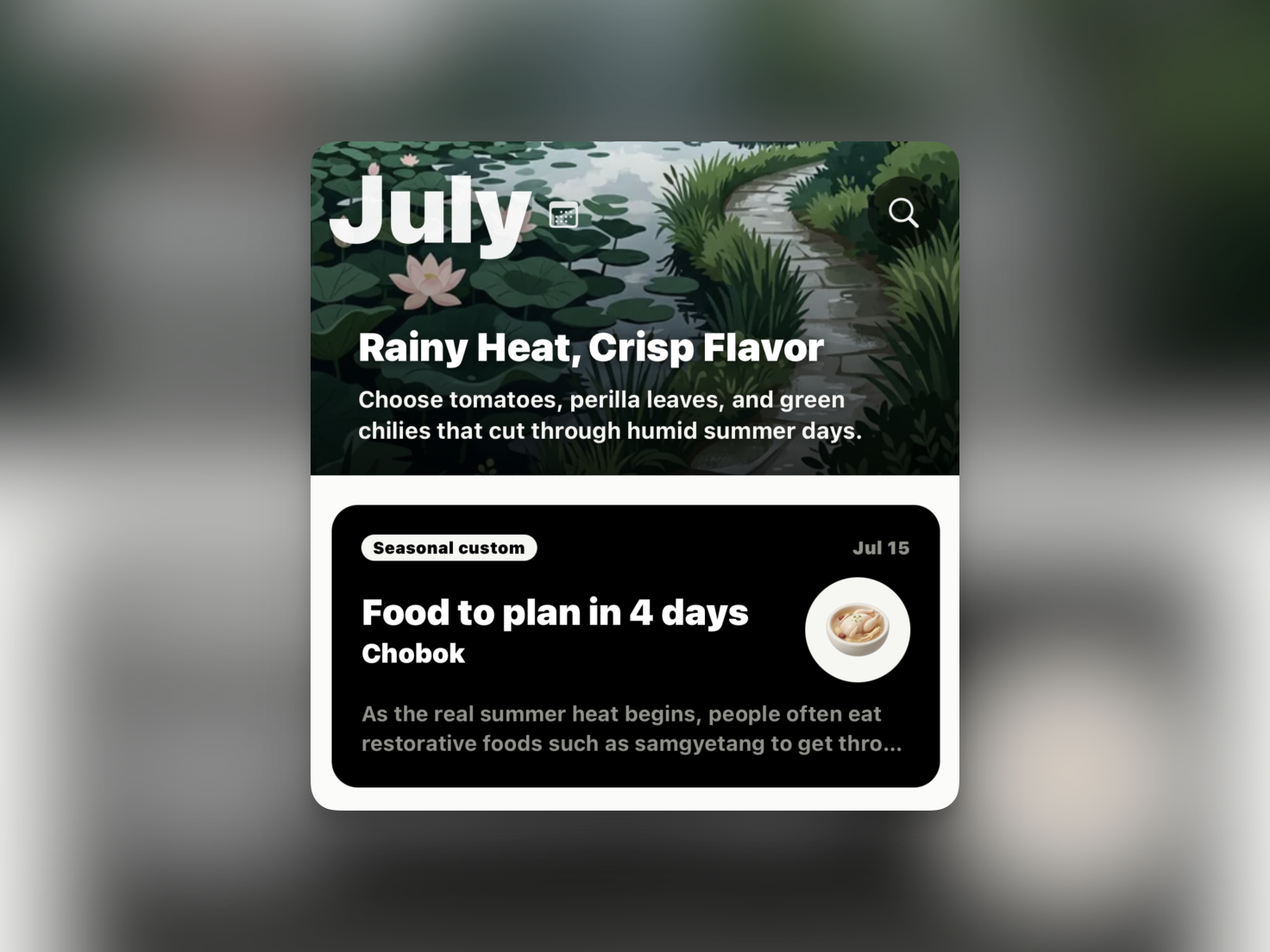
During the three hottest days of summer—Chobok, Jungbok, and Malbok—many people eat a hot bowl of samgyetang. At Chuseok, families share songpyeon made with newly harvested grains. At Dongji, a bowl of red-bean porridge marks the arrival of winter. These calendar foods keep an older rhythm alive at today’s table.
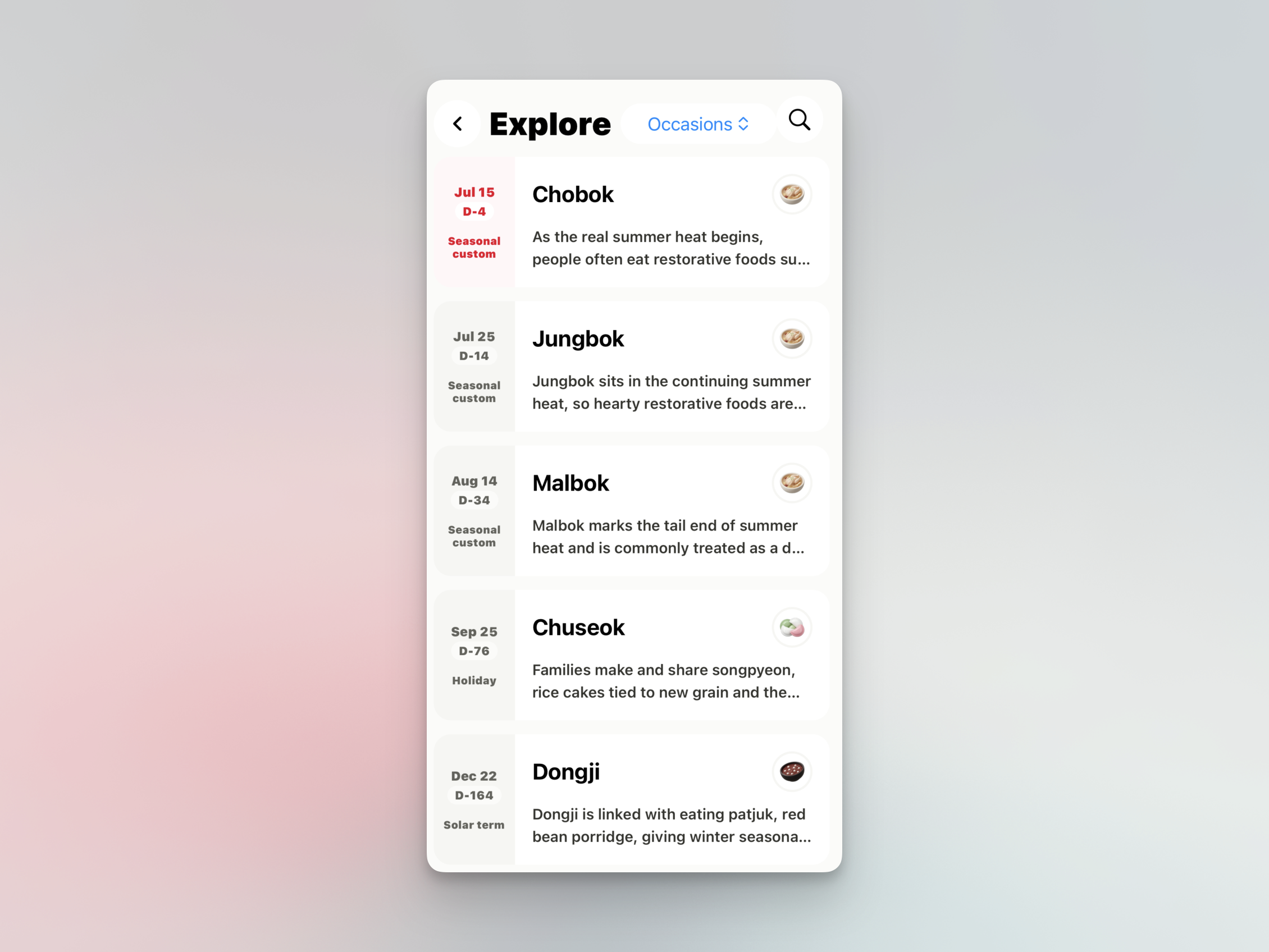
Encountering one of these days on a trip turns a menu choice into a cultural experience. The Korea Tourism Organization introduces Seollal, Daeboreum, Hansik, Dano, Chuseok, and Dongji as major traditional holidays, and describes Chuseok tables with songpyeon, jeon, namul, and newly harvested fruit. Eating a calendar food is a way to understand what people in Korea are anticipating, sharing, and moving through together. Omija connects dates with dishes so travelers can taste the reason for a season as well.
When the weather chooses the menu
In Korea, there are days when the weather seems to choose the menu. Rain makes people think of pajeon and makgeolli. A humid afternoon calls for kongguksu or naengmyeon. When the air turns cold, hot soup comes to mind, and the first snow makes many people want a warm fish-shaped pastry. It is not a rule, but talking about the weather while choosing food is deeply woven into everyday Korean food culture.
The association between rain and pajeon also carries a memory of agricultural life. When rain stopped fieldwork, people could make a satisfying snack with whatever was on hand—seasonal green onions, chives, or zucchini folded into a simple batter. That is one reason the sound of rain and the sizzle of jeon still feel like they belong together. The story is also explored by the Korea Tourism Organization in its guide to weather and K-food.
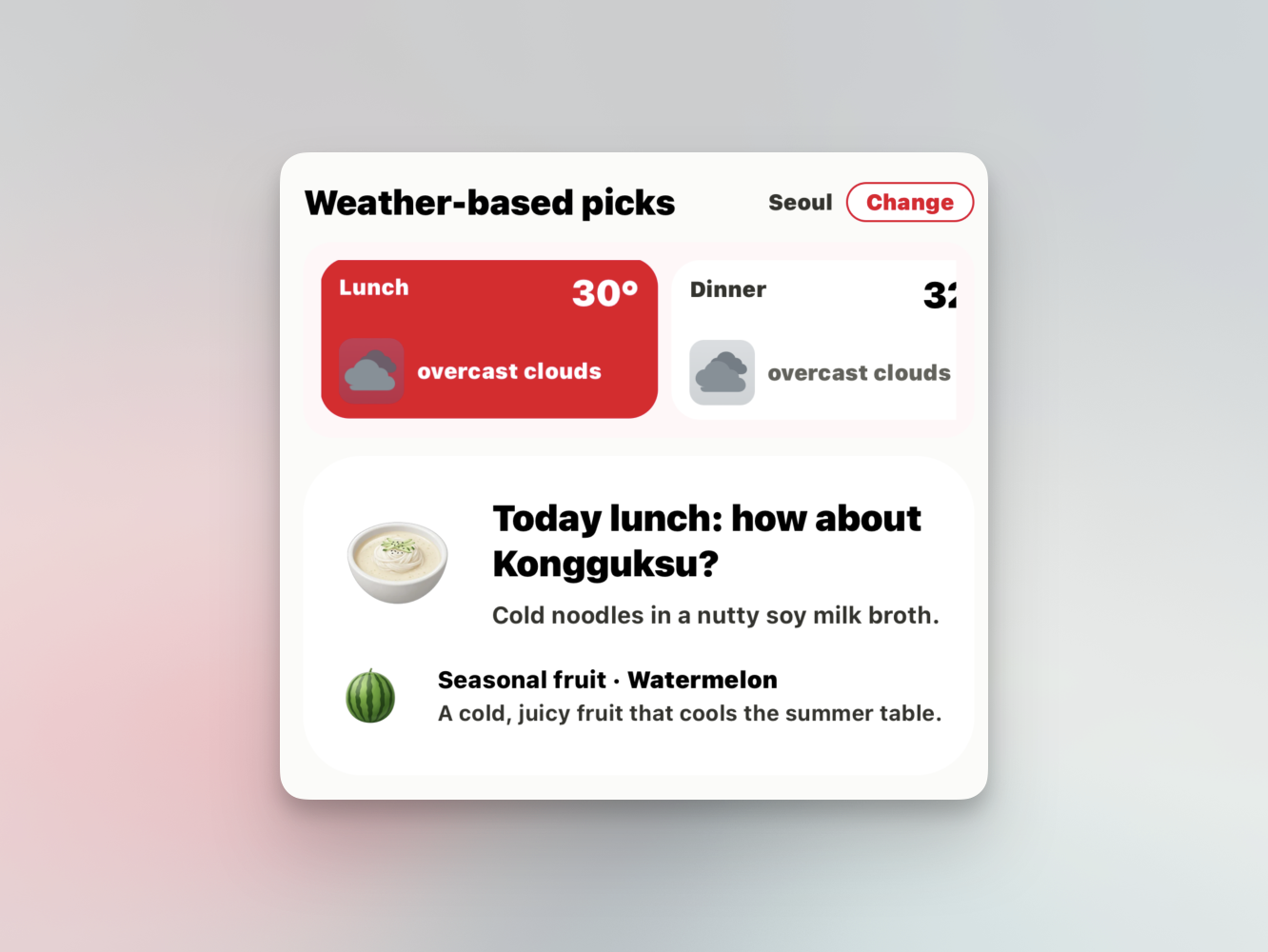
Omija suggests choices that fit the weather and the mood: kongguksu and watermelon on hot days, pajeon when it rains. Choosing food this way lets visitors experience not only another famous dish, but also what people in Korea feel like eating that day. Season and weather are some of the most immediate clues for deciding what to eat.
Not only tradition, but the season right now
Omija is not only about old dishes. Korean tables keep expanding through regional produce, newly cultivated varieties, and contemporary ways of enjoying them. The Ministry of Agriculture, Food and Rural Affairs supports varieties such as Shine Muscat grapes, Sinhwa pears, and Redhyang mandarins. These fruits add new choices to the season. A traditional table and a new ingredient can sit side by side—that is part of what makes Korea’s seasonal food culture so interesting today.
For travelers, and for people who live here
Omija is for travelers, but I also wanted it to be useful for people who eat in Korea every day. When you do not know what to buy or cook this week, seasonal ingredients can offer a starting point. Even familiar ingredients can inspire a new meal when they return at their best.
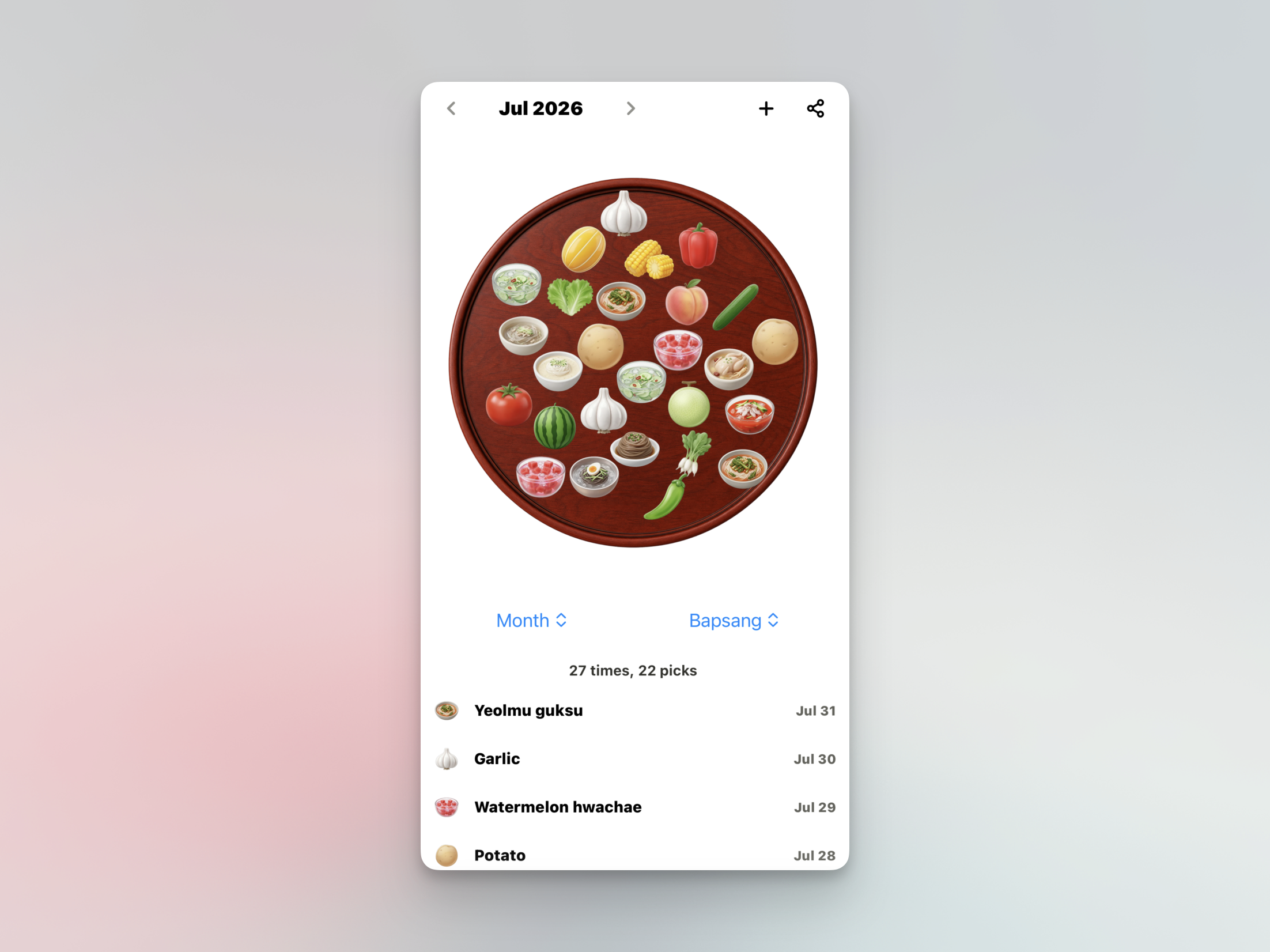
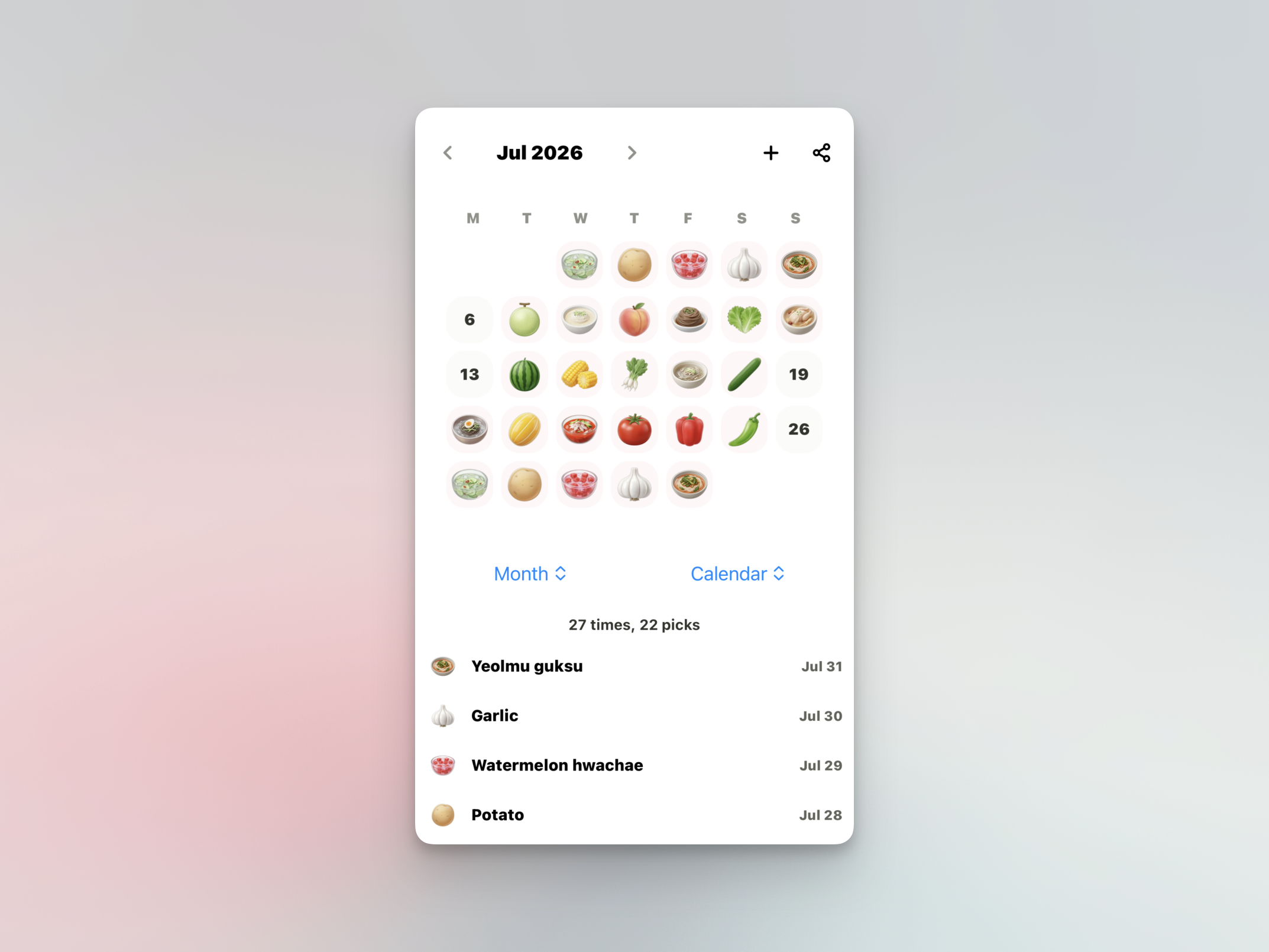
I also added a way to record what you eat. Looking back a few months later, the year becomes more than dates on a calendar: early summer when you ate Korean melons, high summer when peaches were sweet, winter when you kept buying mandarins. The taste of each season comes into view at once.
Add a season to your next meal
After trying the famous dishes on a trip to Korea, open Omija. Find one ingredient that fits today’s season, then look for it at a market or neighborhood restaurant. Korean food is not only on the menu—it is also in the season happening right now.
Discover and record Korea’s four seasons, one bite at a time, with Omija.