Where to Start When Reading Aurora Conditions
When you're aurora hunting, numbers and charts quickly pile up: Kp index, Bz, solar wind speed, Ovation probability. Some feel like a clear signal to head out; others feel like background noise, and you end up wondering how to combine them into a single decision. What matters is not just reading the numbers, but understanding how solar activity shapes Earth's magnetic field and, in turn, what reaches your eyes as aurora.
In this post, I walk through the conditions that affect whether you see aurora, in this order: solar wind → Earth's magnetic field → local weather. Aurora Eos follows this same flow and turns the underlying physics into simple illustrations. I'll outline what to look at in each step and how to use those visuals to interpret the data.
1. Solar Wind: Where Aurora Begins
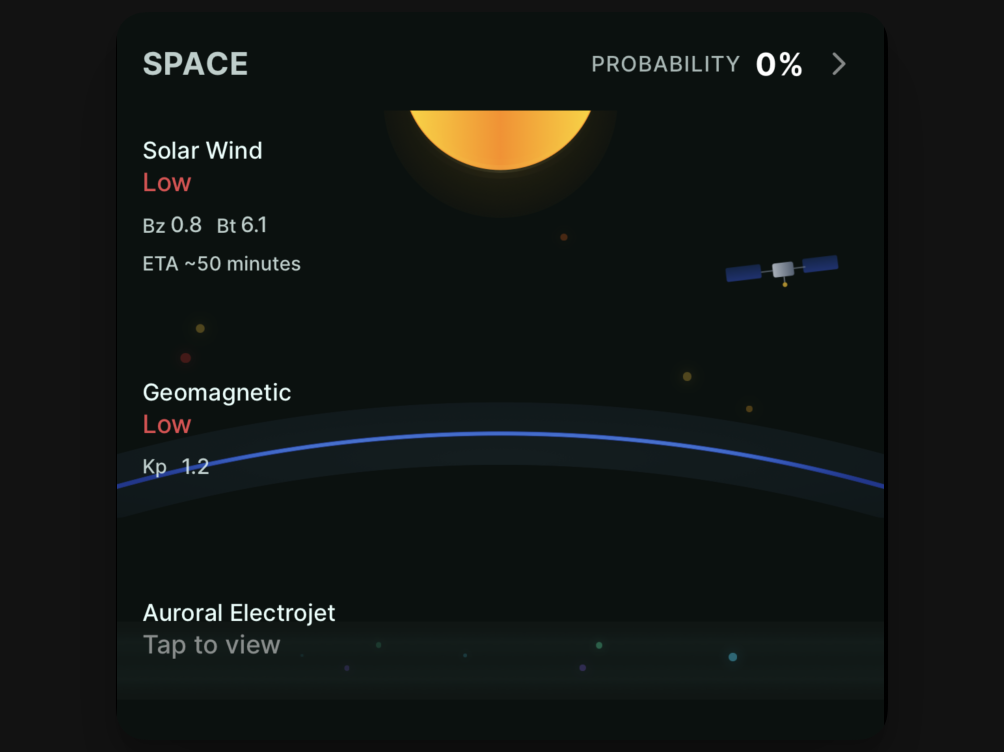
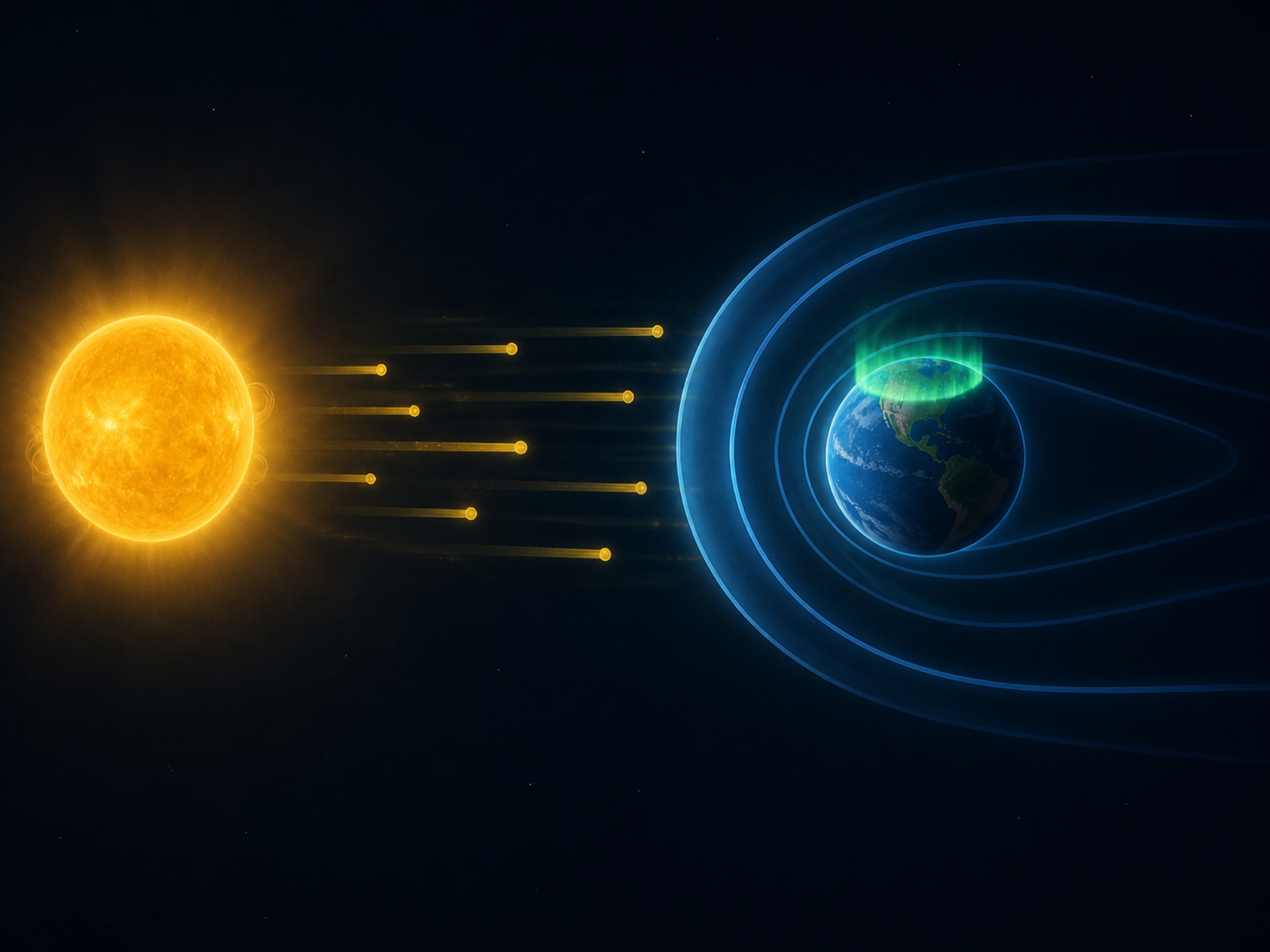
Aurora happens when particles from the Sun hit Earth's magnetic field. So the first thing to check is the state of the solar wind. Faster speed and higher density mean more energy reaches the magnetosphere, and aurora activity is more likely to pick up. When a coronal mass ejection (CME) grazes Earth, you can get unusually strong, outburst-like aurora.
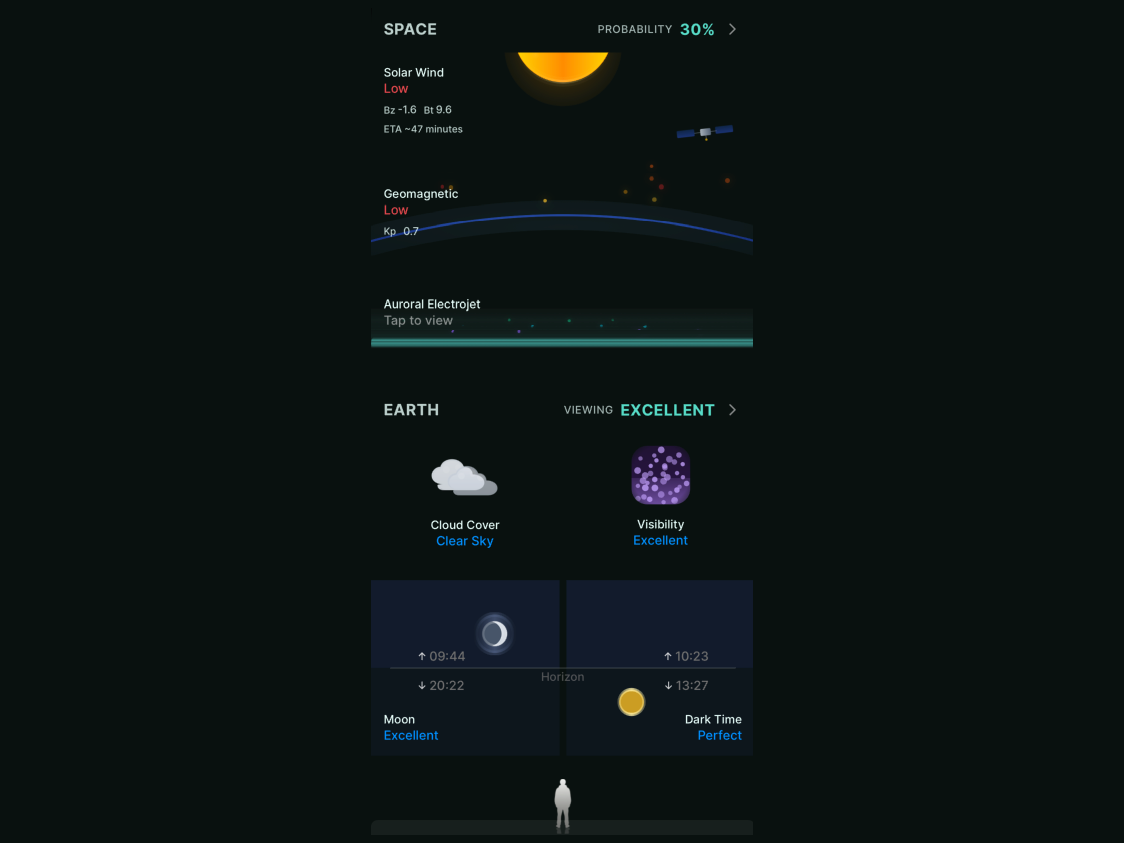
Speed alone isn't enough, though. You need to consider direction (especially Bz), magnetic field strength, and other factors to guess how strong the aurora will be that night and how far south it might reach. In Aurora Eos, solar and space weather metrics are grouped on one screen so you can quickly scan the solar wind conditions first.
2. Geomagnetic Conditions: Kp, Bz, and Ovation
When the solar wind reaches Earth, it interacts with Earth's magnetic field (geomagnetism). The best-known gauge of that global magnetic disturbance is the Kp index. A higher Kp means stronger activity and aurora extending to lower latitudes; a lower Kp means aurora tends to stay at high latitudes.
Kp tells you the overall "mood," but to see how likely aurora is at your location, it helps to use the Ovation model as well. Ovation is a NOAA forecast based on satellite data. It turns measurements of solar wind and the magnetic field into maps of aurora probability around the poles. A practical workflow: use Kp for the big picture, then Ovation to decide whether it's worth stepping outside where you are.
Bz—the north–south component of the interplanetary magnetic field—is also often mentioned. When Bz turns southward (negative), the solar wind couples more effectively with Earth's field, more energy gets in, and aurora is more likely to flare up. When you look at Kp and Ovation, checking how far south Bz has swung often helps you make a better call.
3. Local Weather: The Last Gate
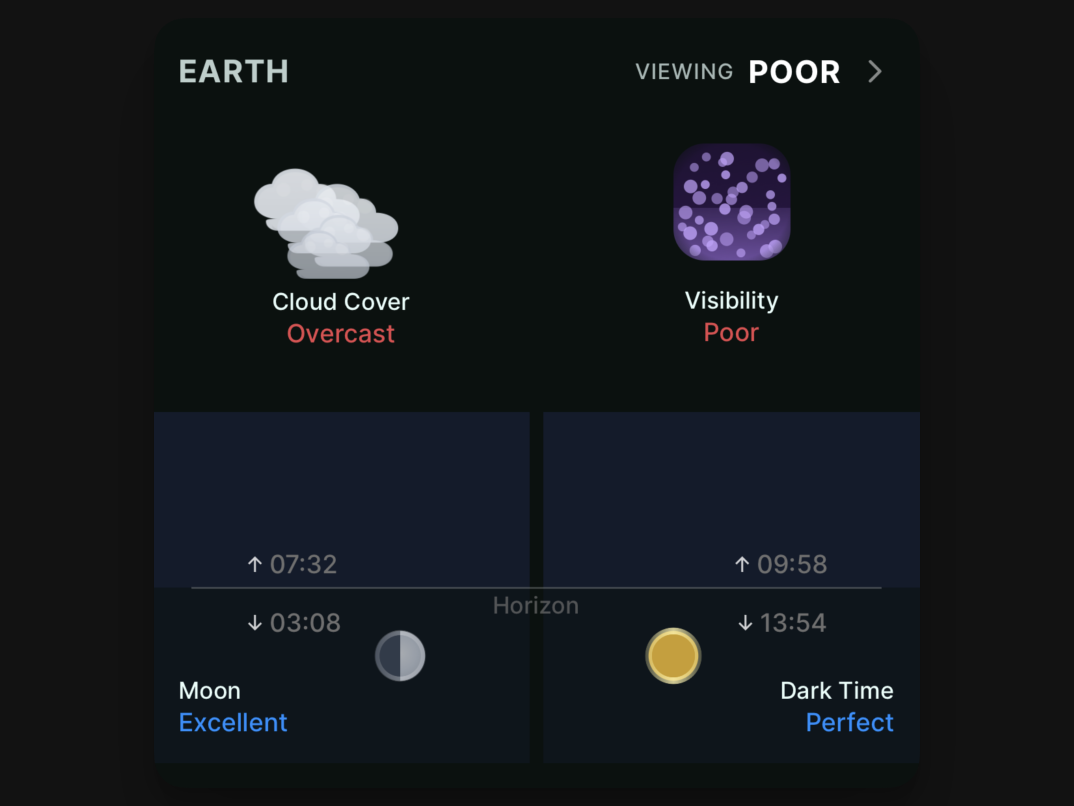
No matter how good the solar wind and geomagnetic conditions are, thick clouds will hide the aurora. So when you interpret aurora conditions, you should always factor in local weather. Clouds change quickly with fronts and low-pressure systems, so it's worth checking the forecast again in the afternoon or evening and, if possible, cloud forecast maps or satellite imagery.
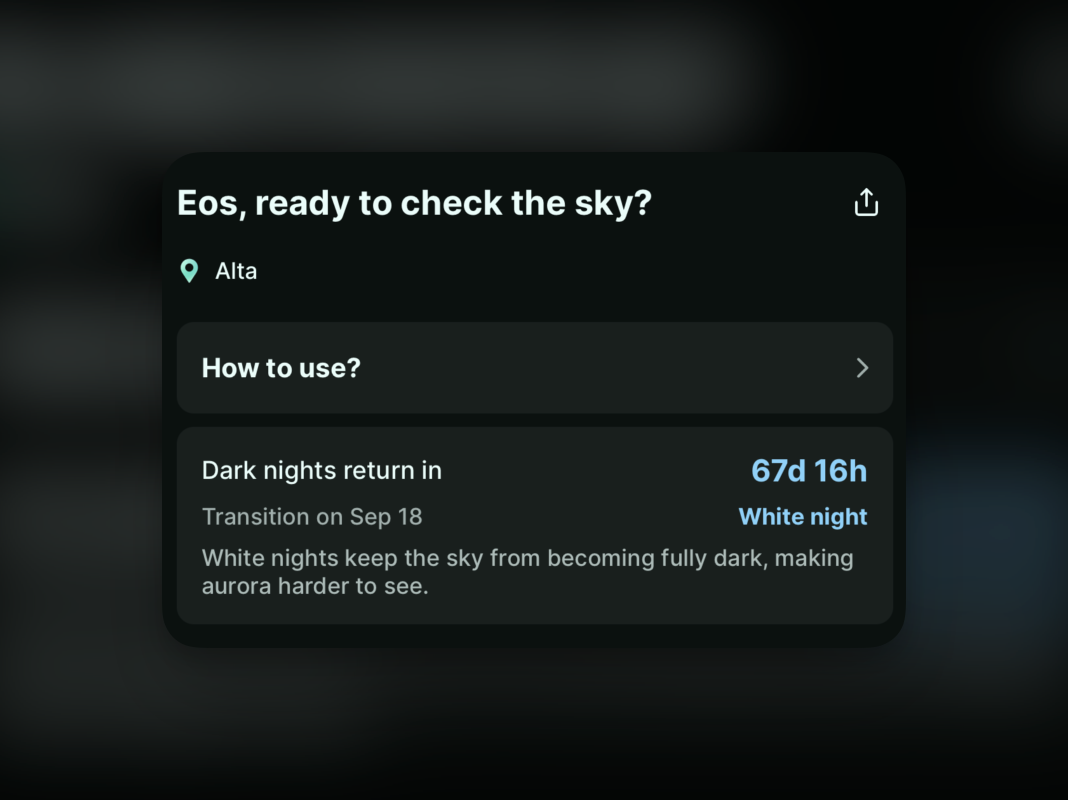
Moonlight matters too. A bright moon washes out faint aurora, while a dark sky—around new moon or when the moon has set—makes it easier to spot. Once you start combining conditions ("Kp and Ovation look good, but it's cloudy," or "clear skies but Kp is low"), it becomes easier to tell which nights are worth going out and which are better to skip.
4. Summary: Reading the Three in One Flow
A natural order for interpreting aurora conditions is solar wind (and space weather) → geomagnetism (Kp, Bz, Ovation) → local weather (clouds, moon). If the solar wind is active and Kp and Ovation suggest it's worth going out, the next step is to check that evening's cloud and moon conditions before you decide.
In Aurora Eos, solar, geomagnetic, and location-based aurora information is laid out to match this flow. You can start by getting comfortable with the Kp bars and Ovation probability, then add solar wind and Bz when you want to dig deeper. The more you practice reading conditions in this order, the more confidently you'll be able to answer "Should I go out tonight?"
Checking solar wind, geomagnetic activity, and local weather together improves your chances of a successful aurora hunt. I hope you catch a clear night under the lights.