I am a developer who loves astronomy. When I hear news about solar or lunar eclipses, or comets approaching, I sometimes go out alone into the dark night, and I also have a hobby of searching for particularly bright planets in the night sky. To me, the aurora was something I could only see by traveling somewhere in Northern Europe with a thick winter jacket. Since Seoul, where I live, is far from cities where auroras are commonly visible in all directions, I had forgotten about it with a faint hope that maybe I could see it someday when I have more financial freedom. Then last year, my family in Canada sent me a photo of the aurora. In this article, I want to share my experience of building my own aurora prediction app and going aurora hunting.
2025 and the Aurora
Solar activity changes in an average 11-year cycle. We are currently at the solar maximum, so the probability of seeing auroras is high even in regions where they are not normally visible. Last year, there were two major solar activities, and auroras were reportedly seen in Mexico and even in South Korea. And this aurora was visible in Ottawa, Canada, where my family was.
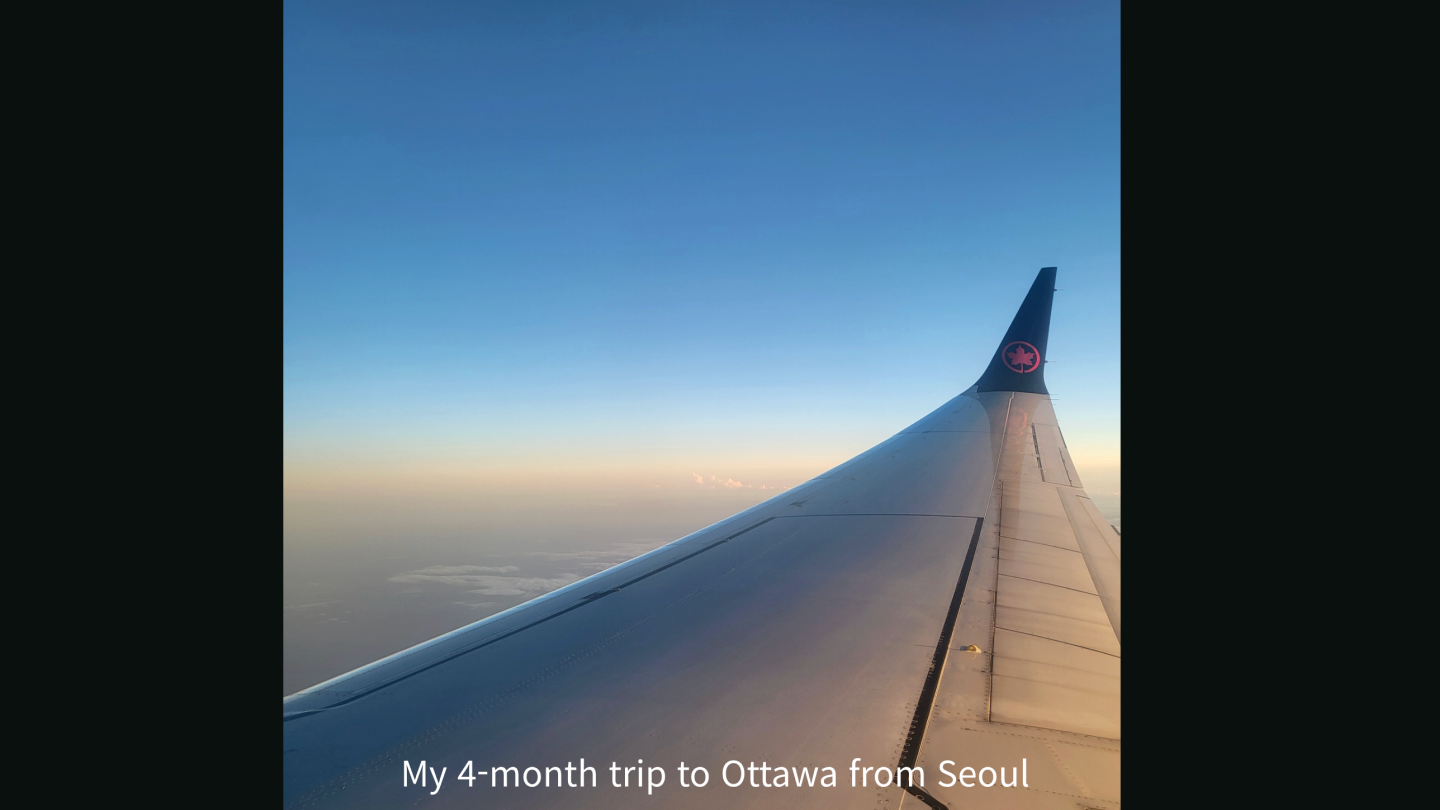
A 4-Month Journey in Canada
Of course, I didn't embark on a long-term trip to Canada just for the aurora. These days, when given multiple choices, I prioritize experiences that are less likely to come my way in the long term. From a career perspective, I chose to become a freelancer to freely create the products I want to build, and from a living situation perspective, I chose Canada where I could rent a room from family and live stably. I also wanted to escape Korea's increasingly hot and humid summers while creating global products that need to experience diverse cultures.
DIY Aurora App
Difficult Existing Apps
Once I arrived in Canada, I realized that aurora hunting is a battle of luck and timing. Looking at popular aurora apps by download count, they showed Kp index and the probability of seeing auroras from my location. However, each app showed different probabilities, and the parameters and charts were unfamiliar, making it difficult to understand what algorithm they used for prediction. While this might be familiar to professional or experienced aurora hunters, I found it hard to judge whether I could see an aurora within four months based on this data alone.
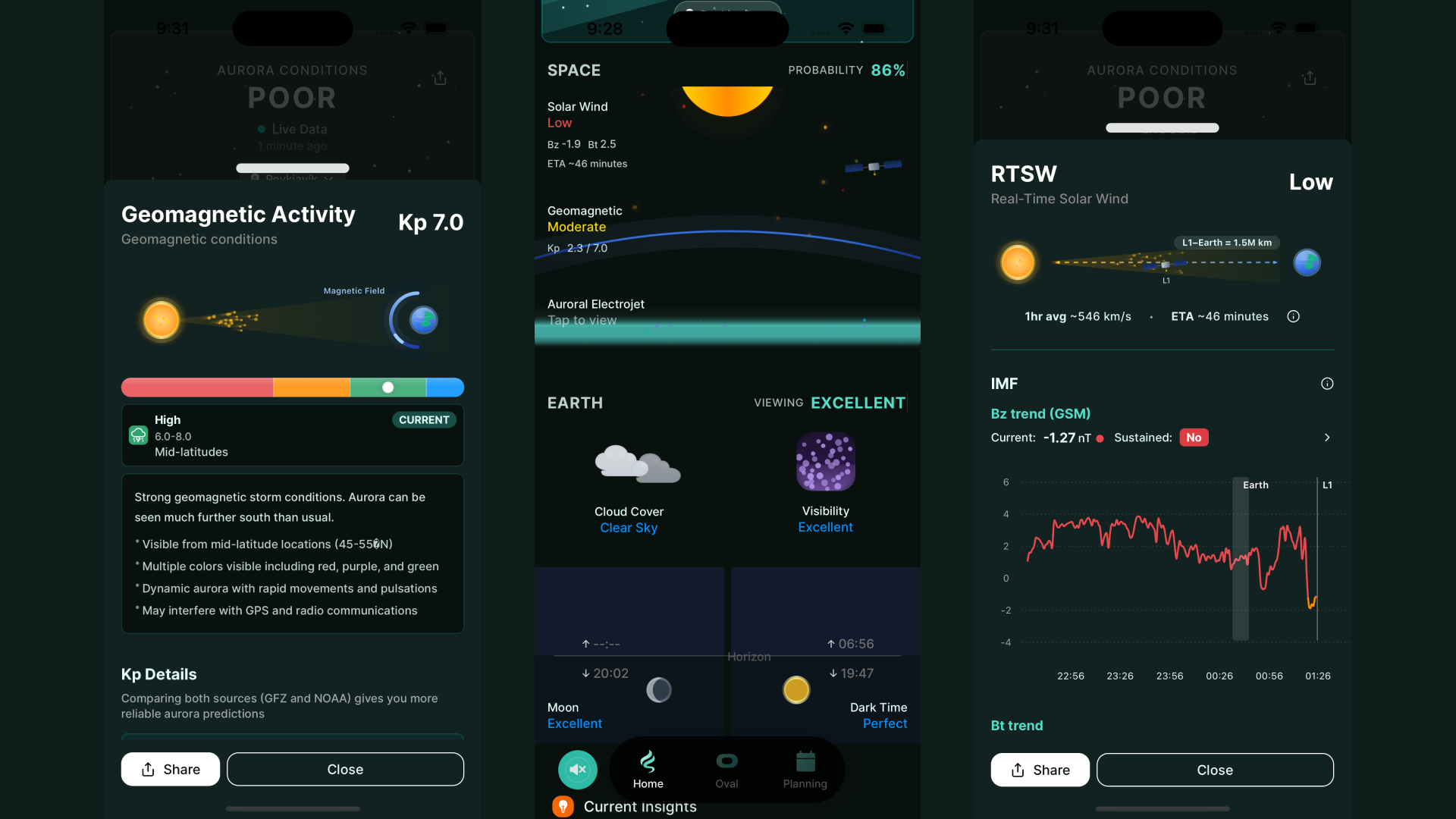
Therefore, I decided to develop an aurora app (Aurora Eos) that would be easy for beginners, thinking of it as studying astronomy again after a long time. While I wanted to use it for my own aurora hunting, I also wanted to help others who, like me, are trying aurora hunting for the first time during this solar maximum. I was also very excited about building an app using NASA's API.
First Prototype's Failure
What I put the most effort into in the first prototype was a 3D aurora globe. The reason was to move beyond existing 2D maps and more intuitively and beautifully visualize how active the Earth's magnetic field is. I tried actual aurora hunting with a prototype that was quickly implemented in just two weeks with only essential features, but I learned that the "Kp index" alone is insufficient to predict substorms, which are localized solar activities.
Simply reducing information and making it easier makes it easier for users to understand, but it reduces the accuracy of forecasts. I went back to the problem I initially defined and began researching the definition of auroras and their causes by reading experts' articles and papers to fundamentally understand the cause.

How to Properly Predict Auroras
How can we predict auroras easily and accurately? What I spent the most time on while building Aurora Eos was not development, but acquiring knowledge about auroras. The method I devised is to report the exact principle of how auroras occur. However, all specialized knowledge is expressed as easy-to-understand illustrations. It shows all the variables from the sun to the Earth's magnetic field, and how auroras reach our eyes while being obscured by Earth's weather. It differentiates difficulty levels according to the user's knowledge maturity.
My Aurora Hunting Story
My first aurora hunting experience was not as fantastical as I imagined.
- On weekdays, I had to drag my tired body and drive about 30 minutes to find a dark place.
- It needs to be darker and more pitch-black than expected.
- Although solar activity repeats in a 28-day cycle due to the sun's rotation, stronger solar activity is needed in Ottawa, so I had to understand other factors as well.
My first aurora hunt started too recklessly. I went to a nearby park about 10 minutes from home, but the city streetlights were brighter than expected and clouds were thick. On my second hunt, I drove 30 minutes to arrive at a pitch-black empty lot, but saw nothing. Also, it was too dark and there were no people around, so I ran away feeling spooked. (lol) I later learned that auroras form around the magnetic pole, so in the Northern Hemisphere, I should have been looking at the northern sky (near the Big Dipper).
A week before returning to Korea, the aurora alert went off again. Since I had already failed twice, my expectations were quite low, but I thought it was my last chance and left home. I went to the empty lot but still couldn't find the aurora. However, I noticed that several cars were passing by our empty lot heading to another place. I moved about 30 seconds by car to another parking lot, and there I saw something green in the sky.
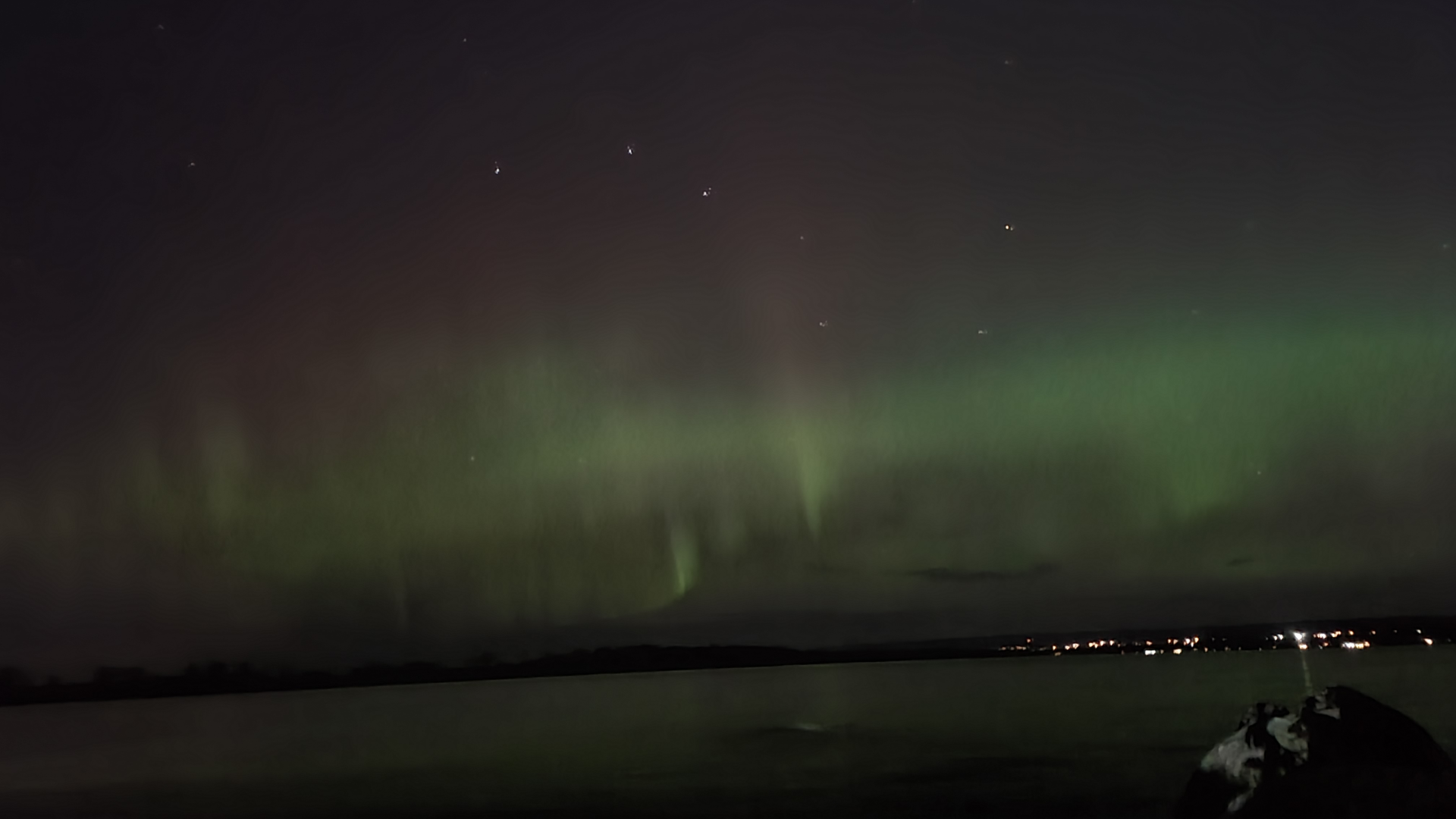
Actually, since Ottawa is not at a high latitude, the aurora didn't look as dramatic as in photos. Nevertheless, after watching the aurora for about an hour, I was able to see subtle aurora curtains. And most of all, I really enjoyed seeing so many stars in the pitch-black night sky. I opened a constellation app for the first time in a while and looked at various stars.
Future Plans
If I hadn't built my own aurora app, I would have been disappointed by the invisible aurora even when the forecast occurred and wouldn't have tried again. I think I've already gained a lot by seeing the aurora with my own app. (My family who saw the aurora with me was very happy saying they saved on aurora tour costs... lol) I later learned that September, when I left Canada, is the optimal time for aurora hunting throughout the year. I heard that a few weeks after I left, stronger solar storms made auroras even more visible.
Although I live in Seoul where the probability of seeing auroras is very low, I hope this app will help beginner aurora hunters like me. Currently back in Korea, I'm working on features that existing aurora apps don't have, such as predicting auroras along flight routes and a home screen forecast widget. I've also added multilingual support so non-English speakers can learn about auroras more comfortably.
I wish all Aurora Eos users successful aurora hunting.